Yoroi-Shinden Samurai Troopers: Sunrise's reheated leftovers that taste like cardboard
There's something uniquely depressing about watching a once-great studio go through the motions, like witnessing a legendary chef microwave yesterday's leftovers and serve them with a straight face. Sunrise, the animation powerhouse that gave us Gundam, Cowboy Bebop, and Code Geass, has returned to the well with Yoroi-Shinden Samurai Troopers, a 12-episode continuation of a franchise that peaked somewhere around the Reagan administration. The premise—five warriors in mystical armor fighting demonic invaders—sounds like the kind of pitch that would have gotten executives excited in 1988, but in 2024, it feels less like a revival and more like an archaeological dig that forgot to bring anything interesting back to the surface. With a MAL score languishing at 6.37 (ranking it #8281 out of, well, everything) and a Crunchyroll score of 5.6, this isn't just a mediocre anime—it's a fascinating case study in franchise fatigue, creative bankruptcy, and what happens when nostalgia isn't enough to sustain actual storytelling.
The ghost of Sunrise past haunts every frame
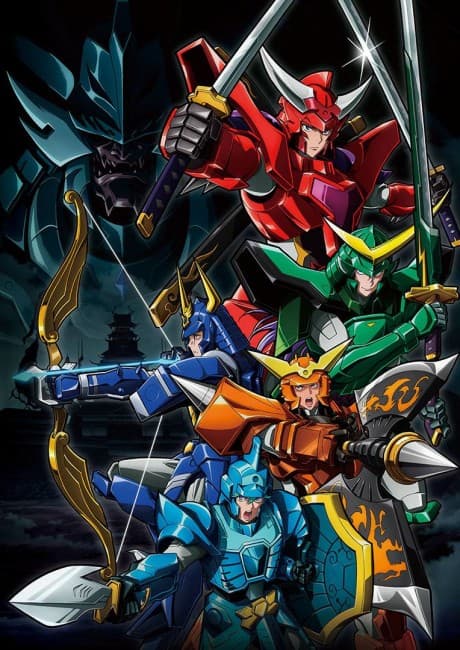
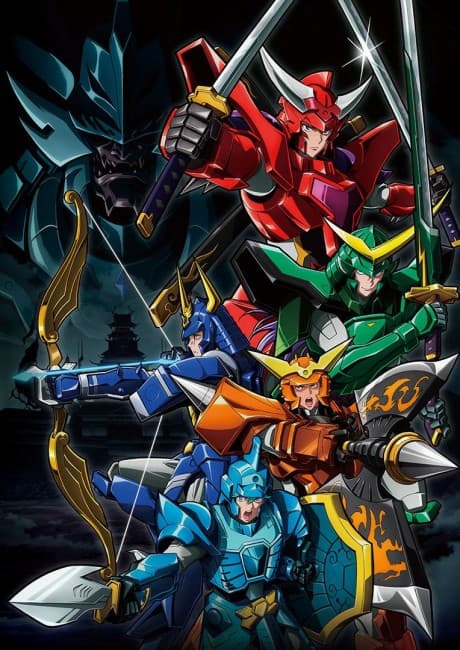
Director Youichi Fujita and series composer Shougo Mutou have assembled what can only be described as a greatest-hits compilation of Sunrise tropes, except someone forgot to include the hits. Watching Yoroi-Shinden Samurai Troopers feels like flipping through a faded photo album of better anime you've already seen. The five warriors—Gai, Yamato, Musashi, Shion, Ryuusei, and Kaito—aren't so much characters as they are archetypes pulled from the 80s shonen playbook: the hothead, the stoic leader, the gentle giant, the smart one, and... well, honestly, after the first three, they all blend together into a blur of interchangeable personalities. What's particularly telling is the MAL data: with only 5,866 members and a paltry 18 favorites across the entire cast (Musashi gets exactly one), it's clear that even the most dedicated fans of the original franchise can't muster much enthusiasm for these cardboard cutouts. The demon invasion plot unfolds with all the urgency of a grocery list, hitting every beat you'd expect without ever finding a reason for us to care. It's like watching someone assemble IKEA furniture while reading the instructions in a language they don't understand—the pieces are there, but the soul is missing.
When production values become production liabilities
Rumi Ishiguro's direction of photography should theoretically be a highlight—Sunrise has historically been a studio that knows how to make things look good even when the writing falters. But here, the visuals feel less like an artistic choice and more like a budgetary constraint. The animation moves with the stiffness of a PowerPoint presentation, with fight scenes that rely on speed lines and dramatic poses rather than actual choreography. The demon designs look like they were pulled from a generic monster manual, lacking the grotesque creativity that makes supernatural threats actually threatening. Compare this to modern Sunrise productions like Gundam: The Witch from Mercury, which uses its visual language to enhance character relationships and political intrigue, and the gap becomes painfully apparent. Yoroi-Shinden doesn't just look dated—it looks indifferent, as if the animators were going through the motions to collect a paycheck. The armor designs, which should be the visual centerpiece, feel like plastic toys rather than mystical artifacts, lacking the weight and presence that made similar concepts work in shows like Ronin Warriors (the American name for the original Samurai Troopers) or even more recent mecha-adjacent series.
The sound of creative exhaustion
Sound director Ryou Tanaka and the music team deserve some credit for at least trying to inject energy into this lethargic production. The opening theme "YOAKE" by blank paper has a certain generic competence, and "POWER" by ONE OR EIGHT as the ending theme at least attempts to create momentum where the narrative fails to. But music can only do so much when the dialogue sounds like it was generated by an AI trained on 80s anime scripts. The voice performances lack conviction, as if the actors know they're participating in something that's going straight to the streaming bargain bin. There's a particular tragedy in watching a studio with Sunrise's pedigree phone it in—this is the same company that gave us Yoko Kanno's iconic Cowboy Bebop soundtrack and the atmospheric sound design of Wolf's Rain. Here, the audio landscape feels as generic as the plot, with demon roars that sound like stock effects and emotional moments that land with all the impact of a deflated balloon. When even the sound design feels like it's going through the motions, you know you're in trouble.
The franchise trap: when legacy becomes a prison
What makes Yoroi-Shinden Samurai Troopers particularly fascinating as a cultural artifact isn't what it is, but what it represents: the desperate scramble to monetize intellectual property in an era of endless reboots and revivals. The existence of both a prequel (Yoroiden Samurai Troopers Message) and a planned sequel (Part 2) suggests that someone at Sunrise thought there was enough gas left in this particular tank to justify multiple trips to the well. The data suggests otherwise. With popularity rankings in the 8000s and member counts that wouldn't fill a small concert venue, this isn't a revival that's capturing new audiences—it's a niche product for an increasingly small niche. The thematic focus on samurai feels particularly anachronistic in 2024, not because the concept is inherently dated, but because the execution lacks the nuance and depth that modern audiences expect. Compare this to shows like Samurai Champloo or even the more recent Blade of the Immortal adaptation, which use historical settings to explore complex themes of honor, violence, and identity. Yoroi-Shinden treats its samurai elements as aesthetic window dressing rather than meaningful cultural exploration, reducing centuries of tradition to cool armor and sword fights.
The characters who forgot to be interesting
Let's talk about Gai, Yamato, Musashi, Shion, Ryuusei, and Kaito—or rather, let's try to remember which is which. The character data from MAL is damning: zero favorites for five out of six main characters suggests that even among the small audience watching this show, nobody is forming meaningful connections with these protagonists. They exist primarily to wear armor and fight demons, with personality traits that can be summarized in single adjectives. Gai is determined, Yamato is serious, Musashi is strong, Shion is smart, Ryuusei is... there, and Kaito is also there. Their relationships lack chemistry, their motivations feel manufactured, and their development follows predictable arcs that wouldn't feel out of place in a children's Saturday morning cartoon from three decades ago. What's particularly frustrating is that Sunrise has proven it can create compelling ensemble casts—the found family dynamics of Cowboy Bebop or the political rivalries of Code Geass demonstrate that this studio knows how to make characters feel real. Here, they feel like action figures being moved around a playset, going through predetermined motions without ever surprising us or themselves.
The bottom line: a cautionary tale in franchise management
Final Score: 4/10 – For completionists only, and even they might want to reconsider.
Yoroi-Shinden Samurai Troopers isn't just a bad anime—it's a sad one. It represents everything that can go wrong when studios prioritize brand recognition over creative vision, when nostalgia becomes a substitute for innovation, and when talented people are tasked with resurrecting something that should probably have been left in peace. Director Youichi Fujita and his team weren't making art; they were filling a content quota, checking boxes on a corporate spreadsheet that demanded another entry in a franchise that stopped being relevant before most of today's anime viewers were born. The most telling detail might be the episode count: at just 12 episodes, this feels less like a passion project and more like a contractual obligation, something produced because the rights were available and someone thought there might still be money in the concept. For Sunrise, a studio with such a storied history, this represents a creative low point—not because it's technically incompetent (though it often is), but because it lacks ambition, heart, and purpose. In an era where anime is more diverse and creatively daring than ever before, Yoroi-Shinden Samurai Troopers feels like a relic from a different time, and not in the charming, retro way. It's the television equivalent of finding your childhood favorite toy in the attic, only to discover it's broken, faded, and not nearly as magical as you remembered.