My Hero Academia's first season is a superhero origin story that feels both revolutionary and painfully familiar
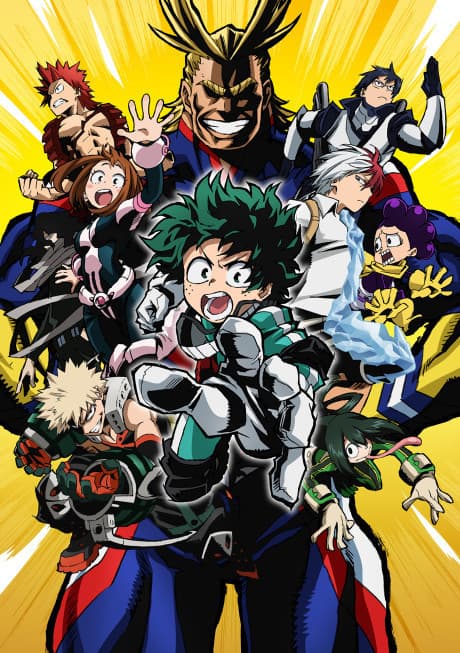
There's a moment early in My Hero Academia's first season that feels like it should be revolutionary: Izuku Midoriya, the Quirkless boy who dreams of being a hero, stands on a rooftop as the world's greatest hero, All Might, deflates before him. The symbol of peace isn't just a man—he's a man running out of time, a hero whose power is literally killing him. This isn't the invincible Superman archetype we've grown accustomed to; this is a superhero narrative that understands the weight of the cape, the physical and psychological toll of saving the world. Yet for all its clever subversions of the genre, My Hero Academia's inaugural 13 episodes often feel like they're wearing training wheels, cautiously navigating the well-worn path of shonen tropes while occasionally daring to sprint ahead. It's a show that wants to be both a love letter to American superhero comics and a critique of their limitations, and in that tension lies its most fascinating contradictions.

When the underdog narrative meets the superhero industrial complex
My Hero Academia operates in a world where 80% of the population has superpowers, which should theoretically democratize heroism. Instead, it creates a rigid hierarchy where Quirkless individuals like Midoriya are treated as evolutionary dead ends. The show's genius lies in how it weaponizes this premise against the very genre it inhabits. When Midoriya inherits One For All from All Might, it's not just a power transfer—it's the passing of a torch in a system that's fundamentally broken. Director Kenji Nagasaki and his team at Studio Bones understand that the most interesting superhero stories aren't about the powers themselves, but about what those powers cost. Midoriya's journey isn't just about learning to control his new abilities; it's about inheriting the trauma and responsibility that comes with them. The show frequently contrasts Midoriya's earnest idealism with the cynical reality of hero-as-profession, creating a tension that feels particularly relevant in our era of influencer culture and performative activism. When characters like Tenya Iida treat heroism as a family business or Ochako Uraraka views it as a path to financial stability, My Hero Academia reveals itself to be less about superheroes and more about the systems that commodify them.
Bakugo Katsuki: The show's most fascinating failure
If there's one character who embodies My Hero Academia's conflicted relationship with shonen conventions, it's Bakugo Katsuki. With 23,983 favorites on MyAnimeList (nearly rivaling Midoriya's 26,158), Bakugo represents both the show's most compelling character study and its most frustrating narrative shortcut. On one hand, he's a brilliant deconstruction of the rival archetype—a character whose explosive Quirk mirrors his volatile personality, whose superiority complex masks deep-seated insecurities. His relationship with Midoriya isn't just competitive; it's toxic, abusive, and psychologically complex in ways that most shonen anime would sanitize. Yet for all this potential, the first season often reduces Bakugo to a one-note antagonist, his character development sacrificed at the altar of plot progression. As community reviewer FugueStar noted in their analysis, the show frequently "sits somewhere in the middle"—too willing to embrace familiar tropes even as it gestures toward something more substantive. Bakugo should be the show's most challenging character, a walking critique of meritocracy and toxic masculinity in a superhero world. Instead, he often feels like a placeholder for deeper exploration that never quite arrives in these initial episodes.
The American superhero influence: Homage or creative crutch?
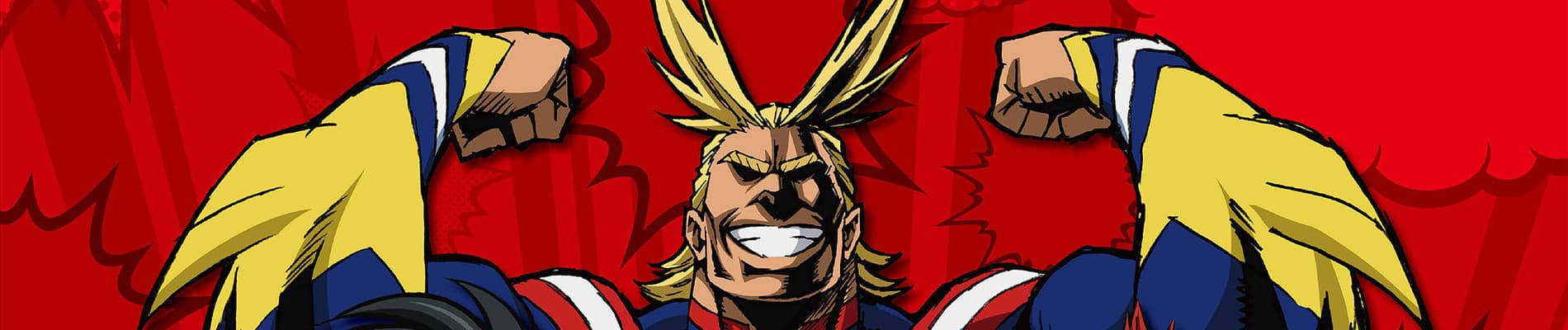
Mangaka Kohei Horikoshi has been transparent about his American comic book influences, and My Hero Academia wears those references like a badge of honor. All Might's design evokes classic Superman iconography, complete with the primary color palette and square-jawed idealism. The character pages borrow directly from Marvel and DC's house styles. Even the show's structure—with its focus on training arcs, villain-of-the-week battles, and school-based hierarchy—feels like a manga-fied version of the X-Men's Xavier Institute. But here's where the analysis gets interesting: Is this cultural borrowing a strength or a limitation? On one level, My Hero Academia successfully translates the visual language and narrative rhythms of Western superhero comics into anime form, creating something that feels both familiar and fresh. The sound direction by Masafumi Mima deserves particular praise here—the heroic brass of the score, the satisfying impact sounds of Quirk usage, all contribute to that comic book feel. Yet there's also a sense that the show sometimes leans too heavily on these references, using them as shorthand for emotional depth that hasn't been fully earned. When All Might delivers his iconic "You too can become a hero" line, it resonates because we recognize it from a hundred other superhero origin stories, not necessarily because My Hero Academia has done the work to make it feel new.
The school setting: Institutional critique or narrative convenience?
UA High School serves as the primary setting for My Hero Academia's first season, and it's here that the show's ambitions and limitations are most apparent. On paper, a superhero academy should be fertile ground for social commentary—a microcosm of the larger hero society, complete with its own hierarchies, prejudices, and institutional failures. And indeed, characters like Shouta Aizawa (the perpetually exhausted homeroom teacher with 7,985 favorites) hint at this potential, his cynical approach to hero training serving as a counterpoint to All Might's inspirational idealism. Yet too often, UA High feels less like a functioning institution and more like a narrative convenience—a place to gather the cast, stage training exercises, and deliver exposition. The school's rigid structure (hero course vs. general studies, constant rankings and evaluations) should create tension and commentary about meritocracy and systemic inequality. Instead, it mostly serves as background for the next fight scene. This is where comparisons to shows like Ansatsu Kyoushitsu (which 28 voters also liked) become instructive—both feature unconventional teachers in school settings, but where Ansatsu Kyoushitsu uses its classroom as a laboratory for philosophical questions about education and morality, My Hero Academia often treats its school as set dressing.

The animation paradox: Studio Bones' restrained spectacle
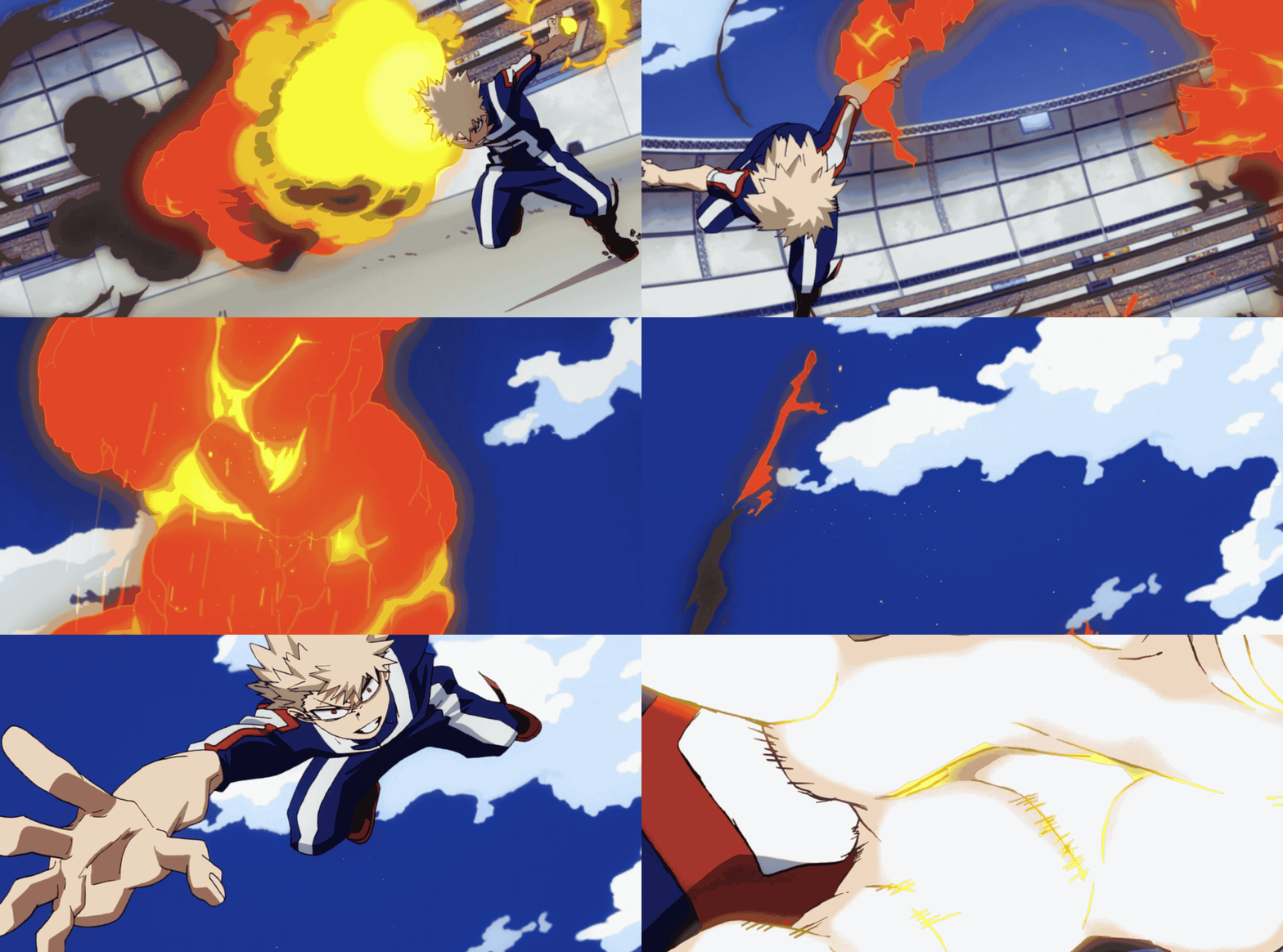
Studio Bones has built its reputation on fluid, dynamic action animation, and My Hero Academia delivers exactly what you'd expect—when it wants to. The fight scenes, particularly Bakugo's explosive confrontations and Midoriya's first, bone-shattering uses of One For All, are kinetic marvels that understand the visual language of superhero combat. There's a weight and impact to the animation that sells the physical toll of these powers, a quality that sets it apart from more weightless shonen action. Yet there's also a curious restraint to much of the season's visual presentation. Outside of key action sequences, the animation often settles into a functional, workmanlike style that prioritizes clarity over flair. This isn't necessarily a criticism—the show's 7.6/10 score suggests it's executing its vision competently—but it does create a tonal inconsistency. The visual peaks are so high (that stunning shot of All Might's final punch against the Nomu) that the valleys feel particularly noticeable. It's as if the production, aware that this is just the first season of what would become a massive franchise, is saving its visual fireworks for later. This creates a strange paradox: a show about extraordinary powers that often looks remarkably ordinary.
The soundtrack of aspiration: When music becomes character
Few elements of My Hero Academia's first season work as cohesively as its music. Porno Graffitti's opening theme "The Day" isn't just a catchy J-rock track—it's a statement of intent, all soaring vocals and determined guitar riffs that perfectly capture Midoriya's journey from zero to hero. Brian the Sun's ending theme "HEROES" provides the necessary emotional counterpoint, a more reflective track that hints at the cost of that aspiration. But it's Yuki Hayashi's score that does the heaviest lifting, weaving heroic leitmotifs throughout the season that give emotional weight to moments that might otherwise feel clichéd. When Midoriya finally activates One For All to save Uraraka, it's not just the animation that sells the moment—it's the swelling orchestra, the sense of musical destiny being fulfilled. The soundtrack understands something crucial about superhero narratives: They're not just stories about power, but stories about the music we imagine accompanying our own heroic moments. In a genre that often treats music as atmospheric background, My Hero Academia uses it as character development.
The cultural moment: Why this, why now?
My Hero Academia premiered in 2016, arriving at a cultural moment when superhero fatigue was beginning to set in for Western audiences. The Marvel Cinematic Universe was entering its third phase, DC's extended universe was struggling to find its footing, and the conversation had shifted from whether superhero stories were viable to whether they were crowding out other narratives. Into this landscape comes an anime that both embraces and critiques the genre, created by a mangaka who clearly loves American comics but isn't beholden to their narrative conventions. The show's massive popularity (ranked #7 on MyAnimeList with over 3.2 million members) speaks to its ability to tap into something universal—the desire to be special, to matter, to leave a mark on the world. Yet as community reviewer littlemyosotis astutely noted in their 81/100 review, this first season "does not have a superb story" on its own; it's "a great start toward a potentially amazing storyline." My Hero Academia understands that we live in an age of aspiration, where everyone wants to be the hero of their own story, and it packages that desire in the familiar, comforting rhythms of shonen storytelling. It's not revolutionary, but it understands why revolution appeals to us.
The verdict: A promising foundation with visible cracks
My Hero Academia's first season is a fascinating cultural artifact—a show that wants to have its superhero cake and deconstruct it too. It succeeds most when it leans into its contradictions: the institutional critique of UA High that coexists with its celebration of institutional authority, the deconstruction of superhero tropes that still relies on those tropes for emotional payoff, the American comic book influences filtered through distinctly Japanese storytelling sensibilities. With a MAL score of 7.83/10 and ranked #1031, the consensus seems to be that this is very good shonen that hasn't yet become great. The 13 episodes feel like an extended prologue, establishing characters and concepts that would pay off in later seasons but leaving this initial installment feeling somewhat incomplete on its own terms. Yet there's an undeniable heart to these episodes, a sincerity that cuts through the genre conventions. When Midoriya cries (and he cries often), it never feels manipulative—it feels earned, the emotional release of a character who has been told his entire life that his dreams are impossible. That emotional honesty is My Hero Academia's secret weapon, the quality that elevates it above more cynical superhero fare. It's not the revolution it sometimes pretends to be, but it's a damn good start.
Final Score: 7.6/10 – A solid foundation for what would become a cultural phenomenon, held back by its own cautious adherence to genre conventions.