Wash It All Away finds profound beauty in the quiet stains of everyday life
There's a particular kind of anime that feels like discovering a forgotten photograph in a thrift store—slightly faded around the edges, carrying the faint scent of someone else's memories, yet somehow containing more emotional truth than the most polished blockbuster. Wash It All Away, the latest from Okuruto Noboru (a studio whose name literally translates to 'growing up'), is precisely this kind of discovery. In an era where anime increasingly resembles theme park attractions—all bombastic spectacle and narrative rollercoasters—this quiet, unassuming series about a laundry shop owner in a seaside hot springs town feels almost radical in its commitment to stillness. With a MAL score hovering around 6.91 and a popularity ranking that suggests it's flying under most radars, Wash It All Away is the television equivalent of that small, perfect coffee shop you stumble upon while lost, the one that makes you wonder why anyone bothers with the crowded chains. It doesn't reinvent the slice-of-life wheel so much as it polishes it to a gentle, comforting shine, reminding us that sometimes the most revolutionary act in contemporary storytelling is simply to slow down and pay attention.
The quiet revolution of the mundane
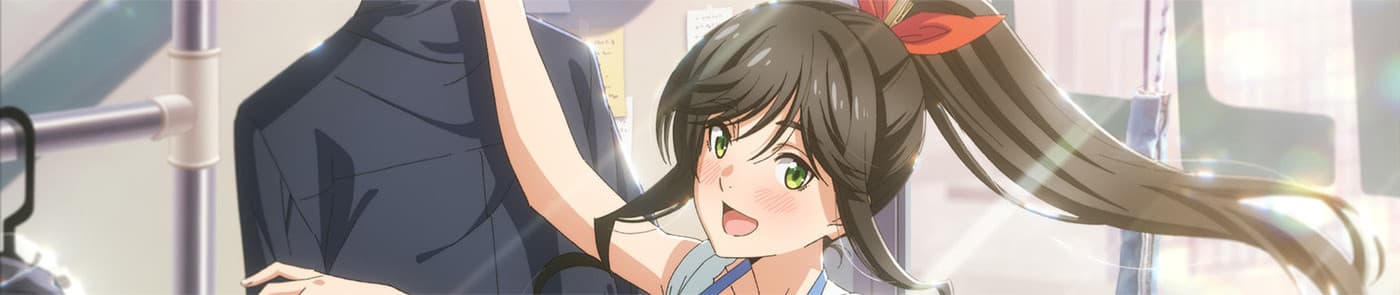
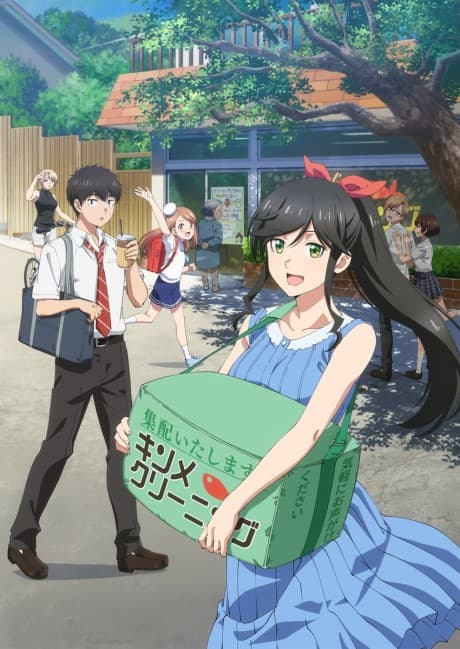
What makes Wash It All Away immediately compelling isn't its premise—which could be summarized as 'cheerful woman runs laundry shop, meets people'—but its execution. Director Kenta Oonishi, working from Touko Machida's series composition, understands something fundamental about the seinen demographic: adults don't need their stories to be constantly exciting so much as they need them to feel true. The series operates on the principle that the most interesting dramas aren't found in epic battles or supernatural phenomena, but in the small, almost invisible moments of human connection. When Kinme Wakana carefully folds a shirt for a customer, there's a reverence in the animation that transforms the mundane into something approaching ritual. The show's visual language—soft color palettes, deliberate pacing, lingering shots on hands at work—creates a hypnotic rhythm that feels less like traditional television and more like visual ASMR. This isn't accidental; it's a deliberate aesthetic choice that aligns perfectly with the show's thematic concerns about care, attention, and the quiet labor that holds communities together.
The laundry shop as confessional booth
Wakana's laundry shop functions as more than just a business—it's the narrative's emotional engine, a secular confessional where townspeople bring not just their dirty clothes but their unspoken burdens. The genius of the setup lies in its metaphorical richness: stains become symbols of emotional baggage, the washing process represents catharsis, and the act of returning clean clothes suggests the possibility of renewal. In one particularly affecting early episode, a middle-aged man brings in a suit he hasn't worn since his wife's funeral, the fabric still carrying the faint scent of her perfume. The conversation that unfolds between him and Wakana—never melodramatic, always understated—becomes a masterclass in how to handle grief without resorting to sentimentality. Scriptwriter Touko Machida, whose previous work includes similarly character-driven narratives, understands that real emotional breakthroughs often happen in quiet moments, not dramatic declarations. The show's PG-13 rating feels appropriate not because of any objectionable content, but because its emotional maturity requires a certain life experience to fully appreciate—this isn't a series about discovering who you are, but about learning to live with who you've become.
The bittersweet symphony of seaside melancholy
Atami, the real-life hot springs town where the series is set, becomes as much a character as any of the human players. The seaside setting isn't just picturesque backdrop—it's integral to the show's emotional texture. There's something inherently melancholic about coastal towns in the off-season, a quality the animation captures beautifully through empty beaches, steam rising from hot springs into cold air, and the particular quality of winter light on water. Composer Eri Chichibu's score deserves special mention here, weaving traditional Japanese instruments with gentle piano melodies to create a soundscape that feels both timeless and deeply specific. The opening theme, "Kirei." by Yuu., with its hopeful yet wistful tone, perfectly encapsulates the series' emotional register—it's music that acknowledges life's stains while still believing in the possibility of cleaning them. This atmospheric richness connects Wash It All Away to a particular tradition of Japanese storytelling that finds profundity in transience, from the mono no aware of classical literature to the quiet melancholy of Ozu's films. The show understands that seaside towns, like laundry, are all about cycles—the tide comes in, the tide goes out, clothes get dirty and get clean again.
Why comparisons to Aria miss the point (and also don't)
It's telling that the primary comparison MAL users make is to Aria the Animation, another series about finding wonder in everyday work in a water-based setting. The connection is obvious but somewhat superficial—both shows share a commitment to gentle pacing and atmospheric world-building. Where they diverge is in their emotional stakes. Aria operates in a fantasy version of Venice, its conflicts softened by the remove of science fiction. Wash It All Away is grounded in a real, recognizable Japan, with real economic pressures (running a small business), real aging populations (Atami's actual demographic challenges), and real emotional baggage. The show's seinen demographic isn't incidental—this is a series fundamentally concerned with adult problems: regret, responsibility, the quiet compromises of middle age. When Wakana interacts with characters like Kyuushou Ishimochi (tellingly, the character with only one favorite on MAL, suggesting how the show prioritizes ensemble over individual stars), their conversations carry the weight of lived experience. The show's 23-minute episodes feel perfectly calibrated—long enough to develop emotional complexity, short enough to avoid becoming ponderous. It's the narrative equivalent of a perfectly brewed cup of tea: simple in ingredients, complex in execution, deeply satisfying in its completeness.
The gentle subversion of romance expectations
Given its 'romance' genre tag, one might expect Wash It All Away to follow conventional narrative patterns—will-they-won't-they tension, dramatic confessions, relationship milestones. Instead, the series offers something more interesting: romance as background radiation rather than foreground drama. Wakana's potential connections with various townspeople (including the intriguingly underdeveloped Kyuushou) unfold with the subtlety of real adult relationships—glances held a moment too long, conversations that trail off into meaningful silence, small acts of service that speak louder than declarations. This approach feels particularly refreshing in an anime landscape where romance often follows predictable genre beats. The show seems to argue that for adults, romance isn't about dramatic gestures but about showing up—day after day, load of laundry after load of laundry. The closing theme, "Wakaba no Koro" by Natsumi Kiyoura, with its nostalgic lyrics about youth, creates an interesting counterpoint to the series' present-tense concerns, suggesting that our past selves are just another kind of stain we carry forward. It's this nuanced understanding of human connection that elevates Wash It All Away beyond mere comfort viewing into something approaching wisdom literature.
The quiet confidence of understated animation
Okuruto Noboru isn't a studio known for flashy animation or cutting-edge techniques, and Wash It All Away makes no attempt to pretend otherwise. Instead, it demonstrates the power of doing a few things exceptionally well. Character designs are simple but expressive, with particular attention paid to hands—Wakana's competent, working hands, an elderly customer's trembling hands, a child's eager hands. The animation finds beauty in practical motion: the swirl of water in a washing machine, the precise fold of a towel, the steam rising from a hot spring. This isn't the kind of animation that wins awards for technical achievement, but it's the kind that serves story and character with quiet integrity. In an industry increasingly dominated by digital perfection, there's something almost radical about the show's analog warmth—it looks like something that could have been made twenty years ago, in the best possible way. The color palette deserves particular praise: muted blues and grays for the seaside winter, warm browns and golds for the laundry shop interior, creating a visual language that feels both realistic and emotionally resonant.
Final thoughts: Why we need shows that dare to be small
Wash It All Away isn't going to top any 'anime of the year' lists, and with its current MAL rankings, it's clearly not capturing the zeitgeist. But in its quiet way, it's doing something more important: creating space for a different kind of storytelling. In a media landscape obsessed with escalation—bigger stakes, louder emotions, more shocking twists—this series finds power in reduction. It understands that sometimes the most courageous thing a story can do is simply bear witness to ordinary lives. The show's 6.5/10 score on some platforms feels like a misunderstanding of its ambitions—this isn't a series trying to be an 8 or 9, any more than a perfectly made cup of tea is trying to be a five-course meal. Its value lies precisely in its specificity, its modesty, its commitment to finding beauty in what other stories might consider background detail. As the series continues its release (with episode count still unspecified, suggesting a flexibility that suits its episodic structure), it represents not just a particular show worth watching, but an argument for a different way of making television—one where small stories are given room to breathe, where quiet moments are treated as events, and where cleaning someone else's clothes can be framed as the profound act of care it truly is. In the grand laundry cycle of anime trends, Wash It All Away may not be the loudest or brightest item, but it's the one you'll find yourself returning to on difficult days, finding comfort in its clean, well-ordered world.