
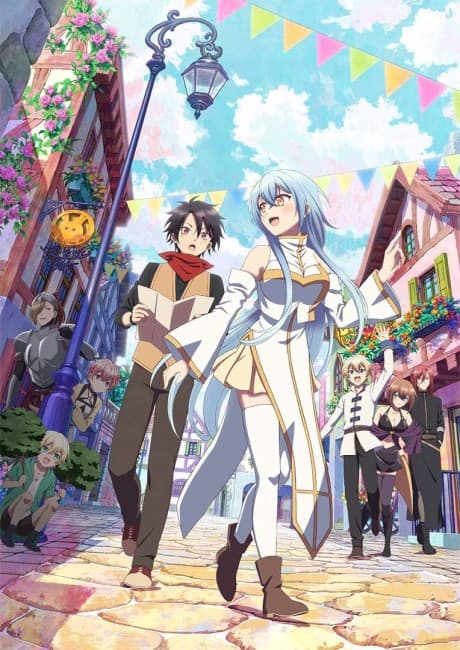
There Was a Cute Girl in the Hero's Party, So I Tried Confessing to Her is a rom-com that forgot to pack the romance or the comedy
Let's start with the premise, because it's the only interesting thing about There Was a Cute Girl in the Hero's Party, So I Tried Confessing to Her (a title so cumbersome it feels like a SEO keyword dump). A demon named Youki, reincarnated from our world, is supposed to destroy the hero's party. Instead, he falls for the priestess Cecilia and decides to confess his feelings, betraying the Demon King in the process. On paper, this sounds like the kind of deliciously stupid high-concept premise that could either be brilliant satire or gloriously bad camp. In practice, it's neither. It's the anime equivalent of someone telling you they have a hilarious story, then forgetting the punchline halfway through the setup. Directed by Tomonori Mine and Yasutaka Yamamoto with series composition by Yukie Sugawara, this Gekkou production demonstrates how even the most promising elevator pitch can become a 13-episode exercise in squandered potential, limping along with a 6.3/10 score that feels more like a participation trophy than an actual assessment of quality.
The Isekai Industrial Complex's Most Tepid Rebellion
There Was a Cute Girl in the Hero's Party exists firmly within what we might call the 'Isekai Industrial Complex'—that relentless churn of fantasy reincarnation stories where the initial novelty of the genre has long since curdled into formula. The show checks all the boxes: a protagonist from modern Japan (Youki), a fantasy world with RPG mechanics, and a contrived reason for the protagonist's specialness. But its supposed twist—the demon falling for the hero's priestess—is less a subversion than a lateral move. It's trading one tired trope (demon vs. hero) for another (forbidden romance) without bringing anything new to either table. The show's MAL data reveals its place in the ecosystem: ranked #7302 with 57,208 members, it's firmly in the middle of the pack, the kind of show that gets watched because it's there, not because anyone is particularly passionate about it. The 154 favorites across all characters (with Cecilia getting 20 and Youki a paltry 6) speaks volumes about the emotional investment it inspires. Compared to other 'demon with a heart of gold' or 'enemies to lovers' narratives in the 'Fans Also Liked' section—like Koi wa Sekai Seifuku no Ato de (Love After World Domination), which executes a similar premise with far more energy and self-awareness—this anime feels like a first draft that never got revised.
A Romance Without Chemistry, A Comedy Without Jokes
Here's the fundamental failure of Sugawara's script: it wants to be a romantic comedy but seems allergic to both romance and comedy. The central relationship between Youki and Cecilia should crackle with tension—he's a demon, she's a holy priestess sworn to destroy his kind. Instead, their interactions are about as electrically charged as two wet socks. Youki's confession, which should be the dramatic engine of the entire series, happens with all the fanfare of someone ordering a coffee. The show then spends episodes having him awkwardly hang around the hero's party, with Cecilia alternating between mild annoyance and bemused tolerance. There's no real development, no meaningful obstacles beyond the superficial 'he's a demon' problem, and certainly no swoon-worthy moments. The comedy, meanwhile, relies on the most exhausted isekai humor: Youki making modern references nobody understands, slapstick misunderstandings, and the hero party's generic reactions. It's the kind of humor that elicits a sigh rather than a laugh, the anime equivalent of a sitcom laugh track trying to convince you something funny just happened. In a genre where shows like Kaguya-sama: Love Is War have redefined romantic comedy with razor-sharp wit and genuine emotional stakes, this feels like a relic from a less demanding time.
Visual and Aural Ambiance That Screams 'Mid'
Gekkou Studio's production values are exactly what you'd expect from a mid-tier seasonal anime: serviceable but utterly forgettable. The character designs are generic fantasy fare—Cecilia looks like every blonde priestess you've ever seen, and Youki's demon form is about as intimidating as a slightly annoyed cat. The animation rarely rises above functional, with action scenes that lack weight or creativity and dialogue scenes that are mostly static shots of characters talking. There's no visual flair, no distinctive style that makes the world feel lived-in or magical. It's fantasy-by-numbers. The sound design under Nobuyuki Abe is similarly anonymous, with generic fantasy town music and battle cues that could be swapped into any other isekai without anyone noticing. The opening theme, "Lavish!!" by Yoshino, is catchy in that generic J-pop way that you'll hum once and immediately forget. Oliver Good's score does its job without ever distinguishing itself. In an era where even mediocre anime often have one standout production element—a stunning OP sequence, inventive creature design, a memorable soundtrack—There Was a Cute Girl in the Hero's Party offers nothing to remember visually or aurally. It's the aesthetic equivalent of beige wallpaper.
The Curse of the 13-Episode Commitment
One of the most telling aspects of this anime is its 13-episode count and PG-13 rating. This isn't a passion project that needed more time to find its voice; it's a seasonal filler show designed to occupy a time slot and maybe sell some manga volumes. The pacing reflects this mercenary approach: plot points are introduced and resolved with mechanical efficiency, character moments feel rushed or skipped entirely, and the entire enterprise has the feeling of checking boxes rather than telling a story. The 23-minute episodes often feel padded, with scenes that drag on longer than necessary because there isn't enough substantive material to fill them. This is the curse of the modern anime production cycle: shows greenlit not because they have a story that needs telling, but because the source material exists and a slot needs filling. The manga adaptation by the same name presumably has more room to breathe, but the anime feels like a CliffsNotes version that forgot to highlight the important parts. When compared to tighter, more focused romantic fantasies—even flawed ones—this anime's structural weaknesses become glaringly apparent.
The Bottom Line: A Confession That Should Have Been Left Unsaid
Final Score: 5/10 – For completionists only. There Was a Cute Girl in the Hero's Party, So I Tried Confessing to Her is the anime equivalent of a shrug. It's not offensively bad—it's competently made, inoffensive, and occasionally mildly amusing. But in a media landscape overflowing with exceptional fantasy, inventive rom-coms, and clever isekai deconstructions, 'not offensively bad' is damning with the faintest of praise. The central premise had potential for either genuine sweetness or delicious absurdity, but the execution is so tepid that it achieves neither. Youki and Cecilia's relationship never feels star-crossed or forbidden—it just feels like two vaguely attractive anime characters who occasionally share screen space. The comedy lands with a thud, the fantasy elements are generic, and the whole production has the distinct aroma of a committee-designed product. For 57,208 MAL members, it was apparently worth the watch. For anyone with limited time and a desire for something—anything—with more personality, ambition, or heart, this is one confession you can safely ignore. Sometimes, the cute girl in the hero's party is better left as a fantasy.