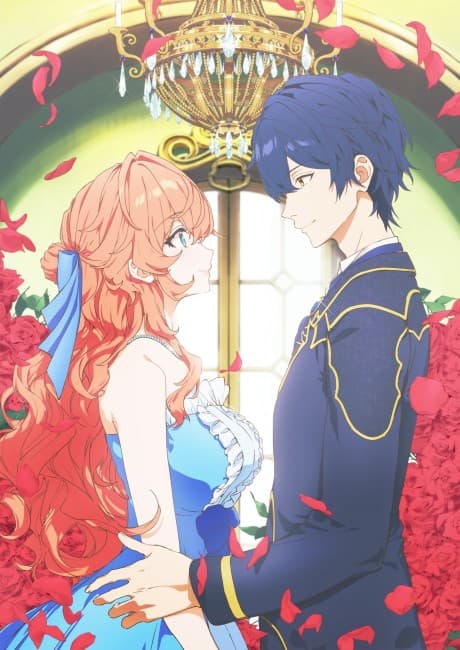
The Villainess Is Adored by the Prince of the Neighbor Kingdom offers comfort food for the genre-weary, but forgets to add seasoning
There's a particular kind of exhaustion that sets in after consuming too much of any genre, a fatigue that makes you crave something—anything—that feels different. For fans of the villainess isekai subgenre, that exhaustion has been building for years, as countless light novels, manga, and anime have recycled the same basic premise: a modern woman dies, reincarnates as the doomed villainess of an otome game, and uses her foreknowledge to avoid her tragic fate. It's a premise so thoroughly mined that even its variations feel like rearranging deck chairs on the Titanic. Enter The Villainess Is Adored by the Prince of the Neighbor Kingdom, Studio DEEN's latest contribution to the genre, which arrives not with a revolutionary new take, but with the quiet confidence of a show that knows exactly what it is: comfort food for the genre-weary. The problem is that comfort food, while satisfying in the moment, rarely leaves you feeling nourished.
When familiarity breeds not contempt, but complacency
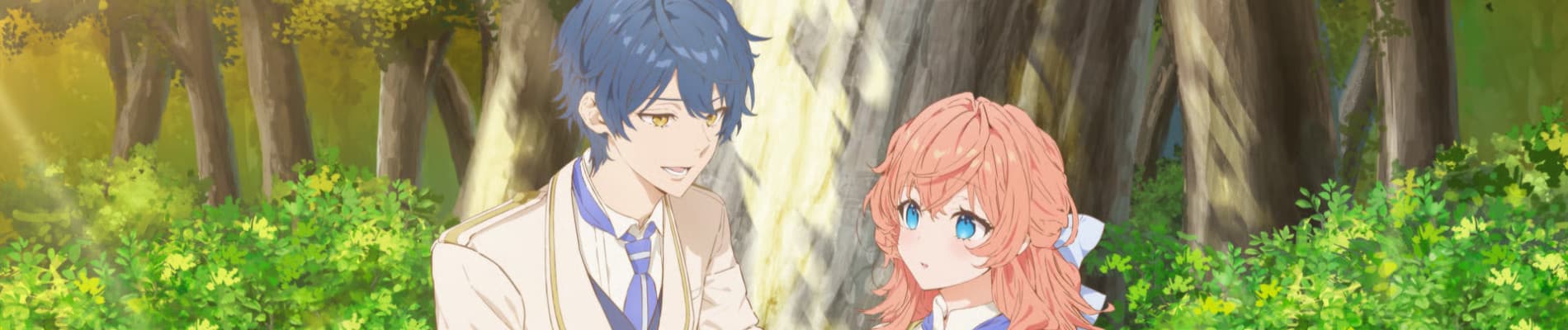
Director Takayuki Hamana, whose resume includes everything from Fruits Basket to K-On!, approaches this material with the steady hand of someone who understands the assignment. There are no grand stylistic flourishes here, no attempts to reinvent the wheel. Instead, Hamana delivers exactly what the genre demands: pastel color palettes, sparkly magical effects, and character designs that could have been lifted from any shoujo fantasy of the last decade. This isn't necessarily a criticism—there's something to be said for executing a formula competently—but it does highlight the show's fundamental limitation. The Villainess Is Adored operates within such narrow parameters that it feels less like a creative work and more like a product assembled from prefabricated parts. The opening sequence alone, with its swirling rose petals and dramatic orchestral swells, could serve as a template for a dozen other shows in the genre. This isn't homage; it's photocopying.
Tiararose Lapis Clamentile: The most passive protagonist in a genre built on agency
What's particularly fascinating about Tiararose as a protagonist is how she embodies the genre's evolution—or lack thereof. Early villainess stories, like My Next Life as a Villainess: All Routes Lead to Doom!, featured protagonists who actively worked to change their fates, using their knowledge of the game's mechanics to forge new paths. Tiararose, by contrast, is remarkably passive. She remembers her past life, realizes she's doomed, and then... waits. Her salvation doesn't come from her own cleverness or determination, but from the intervention of Aquasteed, the crown prince of the neighboring kingdom who proposes to her out of nowhere. This narrative choice fundamentally changes the story's power dynamics. Rather than being a story about a woman taking control of her destiny, it becomes a story about a woman being saved by a man's whim. In a genre that initially promised female empowerment through knowledge and strategy, this regression feels particularly disappointing. Tiararose has five favorites on MyAnimeList, which suggests some audience connection, but one has to wonder if that connection is based on genuine character depth or simply on her fulfilling the expected role of the beautiful, tragic heroine.
The aesthetic of adequacy: Studio DEEN's workmanlike approach
Studio DEEN has had a fascinating trajectory over the years, producing everything from the legendary Rurouni Kenshin to the notoriously bad Pupa. Their work on The Villainess Is Adored falls somewhere in the middle—neither exceptional nor terrible, just... adequate. Art director Kazuhiro Arai creates a world that looks exactly like what you'd expect: castles with too many spires, ballrooms that shimmer with CGI chandeliers, and gardens that bloom with impossible colors. The character animation is serviceable but rarely expressive, with emotions often conveyed through exaggerated sparkles in the eyes rather than nuanced facial expressions. Satoshi Houno's musical score similarly plays it safe, offering exactly the kind of sweeping romantic themes and delicate piano melodies the genre demands without ever surprising the listener. There's a technical competence here that's admirable in its way—this is clearly a professionally produced show—but that competence never rises to the level of artistry. It's the difference between a perfectly cooked microwave meal and a chef's tasting menu; both will fill your stomach, but only one will linger in your memory.
The villainess industrial complex and the law of diminishing returns
The Villainess Is Adored exists within what we might call the "villainess industrial complex," a self-perpetuating ecosystem of light novels, manga adaptations, and anime that feed off each other's success. The show's source material is part of a wave of similar stories that have flooded the market in recent years, and the MAL data tells a revealing story: with a score of 6.32/10 and ranking at #8544, this isn't a show that's setting the world on fire. Its popularity at #4503 suggests a dedicated but modest audience, while the mere 97 favorites indicates limited passionate engagement. When we look at the "Fans Also Liked" section—featuring titles like Kanpekisugite Kawaige ga Nai to Konyaku Haki sareta Seijo wa Ringoku ni Urareru and Akuyaku Reijou nanode Last Boss wo Kattemimashita—we see the genre's echo chamber in action. These shows aren't competing with each other so much as they're variations on the same theme, appealing to an audience that knows exactly what it wants and isn't particularly interested in deviation. This creates a strange paradox: the very predictability that makes these shows comforting also limits their potential for greatness. They're solving for audience expectations rather than artistic expression.
Opening and ending themes as microcosms of the whole
Ayahi Takagaki's dual performances on both the opening theme "Ai no Fanfare" and ending theme "Mahou no Oto" (both featuring Yu Shirota) offer a perfect encapsulation of the show's strengths and weaknesses. The songs are pleasant, professionally performed, and thematically appropriate—they sound exactly like what you'd expect from a romantic fantasy anime. But they also lack any distinctive personality. Compare them to, say, the unforgettable opening of Revolutionary Girl Utena or the haunting ending of Madoka Magica, and the difference becomes stark. Those songs became iconic because they enhanced and commented on their respective shows, adding layers of meaning through their lyrics and musical choices. Takagaki's contributions here, while competent, feel more like genre requirements than artistic statements. They're the aural equivalent of the show's visual aesthetic: pretty, polished, and ultimately forgettable. In a medium where music can elevate material from good to transcendent, The Villainess Is Adored settles for merely adequate.
The bottom line: Comfort has its price
The Villainess Is Adored by the Prince of the Neighbor Kingdom is the anime equivalent of a Hallmark movie: it delivers exactly what it promises to its target audience, with professional polish and zero surprises. For viewers who simply want more of what they already love—the beautiful costumes, the romantic tension, the fantasy setting—it will likely satisfy. But for anyone hoping the genre might evolve beyond its well-worn tropes, or for Studio DEEN to bring some distinctive visual flair to the material, the show will feel like a missed opportunity. Its 6/10 score feels appropriate: this is neither terrible nor great, but firmly in the middle of the road. In an era where anime is pushing boundaries in every direction, from the psychological complexity of Oshi no Ko to the visual experimentation of Chainsaw Man, there's something almost quaint about a show that's content to be merely pleasant. Comfort has its place in our media diet, but when it becomes the entire meal, we risk forgetting what real nourishment tastes like.
Final Score: 6/10 – Perfectly adequate comfort viewing that never aspires to be more.