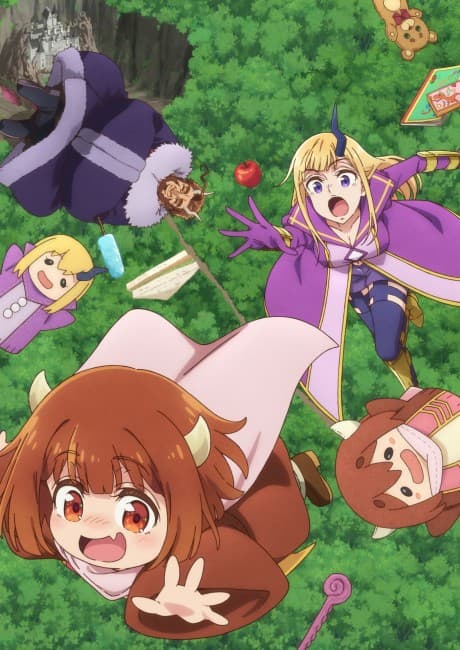
The Demon King's Daughter is Too Kind!! weaponizes cuteness against the entire fantasy genre
There's a particular kind of cultural whiplash that occurs when you realize the most terrifying force in a fantasy universe isn't a fire-breathing dragon or a world-ending spell, but a small child who just wants everyone to get along. The Demon King's Daughter is Too Kind!! understands this cognitive dissonance better than any anime in recent memory, positioning itself as both a gentle slice-of-life comedy and a quiet revolution against the foundational tropes of fantasy storytelling. In a landscape where isekai protagonists routinely conquer kingdoms and shonen heroes punch their way to godhood, this unassuming series from EMT Squared asks a radical question: what if the real power fantasy wasn't about domination, but about dismantling the very concept of conflict? The answer arrives in the form of Dou, a character so disarmingly sweet that she doesn't just melt hearts—she melts the entire narrative architecture of her genre.
When kindness becomes the ultimate subversion
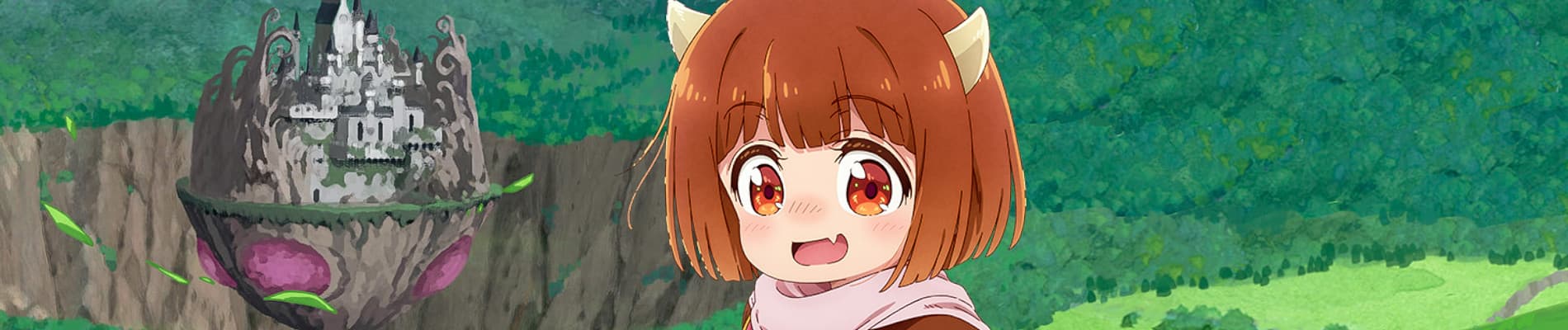
At first glance, The Demon King's Daughter appears to be playing a familiar game: take a powerful, intimidating figure (in this case, the Demon King Ahriman, voiced with gravelly gravitas by Akio Ootsuka) and render them harmless through domesticity. We've seen this formula before—the fearsome warrior turned doting parent, the terrifying monster who just wants to bake cookies. But director Masahiko Oota and series composer Takashi Aoshima aren't content with simple role reversal. They're building something more ambitious: a systematic deconstruction of fantasy's obsession with hierarchy and violence. Every time Dou (Misaki Kuno) offers a flower to a demon soldier or shares her lunch with a would-be enemy, she isn't just being nice—she's rejecting the fundamental premise that different species must be in conflict. The show's central joke isn't that demons are secretly softies; it's that the entire concept of 'demon' versus 'human' versus 'angel' is an arbitrary social construct that collapses under the weight of genuine empathy. In a genre where characters are often defined by their ability to fight, Dou's power lies in her refusal to participate in the system at all.
The production team's quiet rebellion against fantasy expectations
EMT Squared isn't exactly a studio known for genre-defying work—their portfolio includes competent but conventional adaptations like If It's for My Daughter, I'd Even Defeat a Demon Lord—which makes their approach here all the more fascinating. The visual language of The Demon King's Daughter deliberately avoids the epic spectacle we associate with fantasy anime. There are no sweeping battle sequences, no elaborate magic circles, no dramatic transformations. Instead, cinematographer Taiki Okutani frames everything with the intimacy of a family drama, using soft lighting and close-ups that emphasize emotional connection over physical conflict. Even the character designs work against type: Ahriman looks less like a traditional demon lord and more like a tired middle manager who's been forced into a costume party, while Jahy (Ayaka Ohashi) resembles a frustrated office worker trying to enforce corporate policy. This aesthetic choice creates a fascinating tension—we're watching characters who inhabit the visual trappings of fantasy while living lives that feel distinctly mundane. It's as if the production team decided to stage Game of Thrones as a workplace sitcom, complete with petty office politics and passive-aggressive memos about proper demonic conduct.
The childcare theme as cultural commentary
MyAnimeList lists 'childcare' as the show's primary theme, which feels both accurate and misleading. Yes, much of the plot revolves around Ahriman and Jahy's attempts to raise Dou according to demonic principles, but the show is less about parenting techniques than about the anxiety of cultural transmission. What happens when a generation raised on conquest and domination tries to pass those values to a child who fundamentally rejects them? The series becomes a surprisingly sharp allegory for intergenerational conflict in a rapidly changing world. Jahy's increasingly desperate attempts to teach Dou about proper demon behavior—lessons in intimidation, lectures on the importance of fear—aren't just comedic setpieces; they're the death throes of an ideology that can't survive contact with genuine innocence. The show understands that the most radical act a child can perform isn't rebellion, but simply refusing to accept the premises of the world they've inherited. In this sense, Dou becomes a fantasy version of the 'woke' generation that baffles their conservative elders not through argument, but through the sheer force of their different moral imagination.
The soundtrack's deceptive simplicity and what it reveals
Music director Yasuhiro Misawa and sound director Yasunori Ebina have crafted a sonic landscape that perfectly complements the show's thematic ambitions. The opening theme, "We Can Do!!" by Kaori Ishihara, sounds like a standard upbeat anime song—until you listen to the lyrics, which celebrate cooperation and mutual understanding rather than individual triumph. The ending theme, performed by the main cast, is even more revealing: a cheerful, almost childlike tune about simple happiness that feels deliberately at odds with the epic orchestral scores we expect from fantasy series. This musical choice isn't an aesthetic failure; it's a statement. The show is telling us that the real emotional stakes aren't in battles or conquests, but in small moments of connection. When Dou's kindness causes a hardened demon soldier to tear up, the swelling strings aren't there to signal victory—they're there to underscore emotional vulnerability as the show's true climax. In a genre where music often serves to amplify action, The Demon King's Daughter uses it to amplify intimacy instead.
Why the 6.9/10 score misses the point entirely
The critical reception for The Demon King's Daughter has been mixed, with some viewers dismissing it as 'too sweet' or 'not enough plot.' But these criticisms fundamentally misunderstand what the show is attempting. This isn't a fantasy series that happens to have cute moments; it's a systematic interrogation of why we find certain narratives satisfying in the first place. The show's relatively low MAL score (7.2/10) and modest popularity (#4737) speak to a deeper cultural truth: we're so conditioned to expect conflict as the engine of storytelling that a show that actively rejects it feels unsatisfying on a structural level. The 28,140 members who've watched it represent a fascinating case study in audience expectations—how many dropped it because they were waiting for 'something to happen,' not realizing that the absence of traditional conflict was the point? The show's gentle pacing (23 minutes of characters mostly just talking and being nice to each other) feels like a deliberate challenge to the binge-watching, plot-driven model of modern anime consumption. It demands that we find satisfaction not in narrative resolution, but in emotional resonance.
The bottom line: A quiet revolution that might be too kind for its own good
The Demon King's Daughter is Too Kind!! is the kind of show that will either feel like a revelation or a disappointment depending on what you bring to it. If you're looking for epic battles, complex magic systems, or high-stakes drama, you'll find yourself frustrated by its deliberate pace and refusal to engage with traditional fantasy tropes. But if you're willing to meet it on its own terms, you'll discover something rare: a genuinely subversive work that questions the very foundations of its genre while maintaining a warm, consistent tone. The show's greatest strength—its unwavering commitment to kindness as both theme and aesthetic—is also its greatest limitation, as it occasionally veers into sentimentality that undercuts its sharper observations. Still, in an anime landscape crowded with power fantasies and wish-fulfillment narratives, there's something quietly revolutionary about a show that suggests the most radical power fantasy of all might be imagining a world where nobody has to fight. Final Score: 7.5/10 – A flawed but fascinating experiment in genre deconstruction that proves sometimes the kindest thing you can do to a trope is give it a hug until it stops working.