
SPY×FAMILY Season 3 weaponizes domestic bliss as the ultimate spycraft
There's a moment in the third season of SPY×FAMILY where Loid Forger—codename Twilight, master spy, and man who could probably disarm a nuclear warhead with a toothpick—finds himself utterly defeated by a kindergarten art project. As he stares at Anya's finger-painted monstrosity that vaguely resembles a family portrait, the world's most dangerous operative experiences something far more terrifying than any enemy agent: genuine paternal pride. This is the central paradox that director Yukiko Imai and her team at WIT STUDIO explore with surgical precision across these thirteen episodes—how the very artifice of domesticity becomes the most authentic thing in these characters' lives, and how pretending to be a family might just be the only way to become one.
The spy who came in from the cold and found the thermostat set to 'cozy'
What separates SPY×FAMILY Season 3 from its predecessors isn't just more hijinks or higher stakes—it's the show's growing confidence in letting its characters simply be. While earlier seasons established the premise's delightful absurdity (telepathic child! assassin wife! spy dad! none of them know each other's secrets!), this installment leans into the quiet moments between explosions and schoolyard dramas. The community review from EastRane on AniList hits on something crucial when they note "the weight of a peaceful smile"—this season understands that the most revolutionary act in a world of espionage and political intrigue might be a family dinner where nobody's trying to kill anyone. WIT STUDIO, fresh off their work on Attack on Titan and Vinland Saga, brings a surprising tenderness to the animation, particularly in scenes like Yor and Anya's quiet moments at home, where the lighting does more emotional work than any dialogue could.

Anya Forger: The telepathic glue holding together the world's most dysfunctional found family
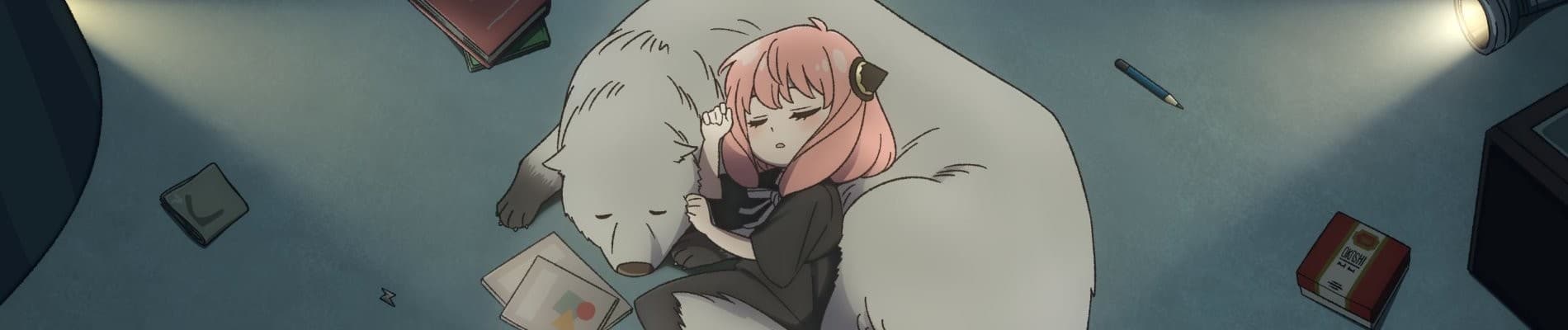
With 15,277 favorites on MyAnimeList—nearly double Loid's count and significantly more than Yor's—Anya isn't just the show's breakout character; she's its beating heart and moral compass. Season 3 deepens her role beyond the adorable comic relief, positioning her as the only person who truly understands the precarious balancing act that is the Forger household. While Loid sees Operation Strix as a mission and Yor sees marriage as a convenient cover, Anya sees what they're all too afraid to admit: they're building something real. Her telepathy, often played for laughs when she reads her classmates' thoughts about peanuts or her teacher's secret love life, becomes a poignant narrative device here—she's the only one who knows everyone's secrets, yet chooses to protect the fragile fiction because she understands its value better than the adults do. When she manipulates situations to keep her parents together (like orchestrating "family bonding" activities), it's not just childish scheming—it's the most sophisticated intelligence operation in the series.
The comedy of errors that accidentally becomes a love story
SPY×FAMILY has always operated in the delicious space between genre expectations—it's a spy thriller that spends more time on parent-teacher conferences than dead drops, a supernatural story where the powers are used to ace kindergarten exams rather than save the world. Season 3 leans harder into this hybridity, with episode directors like Yasuhiro Akamatsu and Takahiro Harada finding surprising emotional resonance in what should be pure farce. Consider the recurring theme of meals throughout the season: every shared dinner at the Forger table becomes a microcosm of their evolving dynamic. Loid, trained to analyze every detail for strategic advantage, finds himself genuinely enjoying Yor's cooking (despite its occasional lethality). Yor, who entered this marriage as a transactional arrangement, starts setting the table with actual care. And Anya, who just wants her spy dad and assassin mom to stay together, reads their growing affection in real-time. The show's PG-13 rating belies its sophistication—this isn't just family-friendly entertainment, but a nuanced exploration of how love can grow in the most artificial of circumstances.

WIT STUDIO's visual language: Where slapstick meets subtlety
After two seasons with CloverWorks, the transition to WIT STUDIO for Season 3 could have been jarring. Instead, it feels like the series found its perfect visual partner. WIT brings their signature fluid action sequences (see: any of Yor's "assassin moments") but pairs them with a remarkable attention to domestic detail. Notice how the lighting in the Forger apartment changes throughout the season—early episodes have a cooler, more sterile quality, while later ones glow with warm yellows and oranges. Sound director Shouji Hata deserves particular praise for the audio landscape, which balances Spitz's melancholically hopeful opening theme "Hi wo Mamoru" with the subtle sounds of domestic life: the clink of dishes, the rustle of school uniforms, the quiet hum of a refrigerator in a peaceful home. These aren't just production details—they're narrative tools that tell us more about the characters' emotional states than any monologue could.
The supporting cast: Becky, Yuri, and Damian as mirrors to our main trio
While the Forgers rightfully dominate the narrative, Season 3 gives its supporting players more nuanced roles than simple comic relief or obstacles. Becky Blackbell (with her mere 138 favorites on MAL—a criminal underrating) evolves from spoiled rich girl to genuine friend, her admiration for Yor becoming a quiet commentary on what healthy female relationships look like in this universe. Yuri Briar, Yor's overprotective brother, transitions from antagonist to tragic figure—a man so devoted to his sister that he can't see she's found happiness without him. And Damian Desmond, the ostensible "mission target," becomes increasingly sympathetic as we see the emotional neglect that fuels his bratty behavior. Each represents a different facet of the family dynamics the show explores: Becky wants the closeness she sees in the Forgers, Yuri represents toxic familial obligation, and Damian shows what happens when family is purely transactional. They're not just side characters—they're alternative outcomes for our main trio.
The shounen demographic playing house
It's worth pausing on that MAL demographic tag: shounen. Typically associated with battle manga and power fantasies, SPY×FAMILY represents a fascinating evolution of the genre. Yes, there are fights (Yor remains one of anime's most delightfully overpowered characters), and yes, there's a mission with world-ending stakes. But the real battles here are emotional: Loid fighting his own conditioning to remain detached, Yor battling her insecurity about being a "real" wife and mother, Anya struggling to maintain her secret while desperately wanting her parents to be happy. The "childcare" and "super power" themes listed on MAL aren't separate categories—they're intertwined. Anya's telepathy is the ultimate childcare tool, allowing her to understand and manipulate her parents' emotions for their own good. In a genre often criticized for its simplistic morality, SPY×FAMILY offers something radical: a shounen where the strongest power isn't a energy blast or transformation, but the courage to be vulnerable with the people you're supposed to be deceiving.

The cultural moment of found family fiction
SPY×FAMILY arrives at a perfect cultural moment, joining a wave of media exploring chosen families over biological ones. From The Last of Us to Guardians of the Galaxy, we're seeing a shift away from destiny-bound bloodlines toward families built through shared experience and mutual protection. What sets SPY×FAMILY apart is its meta-awareness—these characters are literally performing family as a job, yet the performance becomes reality through repetition. There's a beautiful irony that in an age of social media where people curate perfect family images for public consumption, this show about spies pretending to be happy actually finds authentic happiness in the pretending. The community reviewer Spaceasce on AniList called it "a slice of life comfort"—and they're right, but it's comfort with teeth. This isn't escapism; it's a radical proposition that maybe we're all performing our relationships to some degree, and maybe that's okay if the performance leads to genuine connection.
The verdict: A mission accomplished, with room for more
With a MAL score of 8.22/10 and ranking at #408, SPY×FAMILY Season 3 sits in that sweet spot of critical and popular acclaim—respected but not overhyped, beloved but not uncritically worshipped. The 13-episode structure feels just right, giving the season room to breathe without overstaying its welcome. While some might argue that the plot advances slowly (we're three seasons in and Operation Strix is still ongoing), that's missing the point. The mission was never really about infiltrating elite political circles—it was about three broken people finding wholeness in each other. When Anya looks at her finger-painted family portrait and declares it "perfect," she's not wrong. The lines are messy, the colors don't quite match, and nobody's face looks quite right—but it's theirs. And in a world of espionage and assassination, that might be the most dangerous and beautiful thing of all.
Final Score: 8.2/10 – SPY×FAMILY Season 3 proves that the most explosive action isn't in gunfights or car chases, but in the quiet moment when a spy, an assassin, and a telepath realize they'd rather be a family than complete their missions.