Sentenced to Be a Hero weaponizes eternal punishment to question the very nature of heroism
There's a particular kind of existential dread that comes from watching someone trapped in a Sisyphean nightmare, pushing the same boulder up the same hill for eternity. Now imagine that boulder is a horde of monstrous abominations, the hill is a battlefield soaked in blood and ichor, and the punishment isn't just for eternity—it's the entire premise of your existence. Sentenced to Be a Hero doesn't just present us with a fantasy world; it presents us with a cosmic HR department that's decided the best use for condemned criminals is to make them fight monsters until they die, resurrect them, and send them right back out again. It's the ultimate gig economy nightmare, where your soul is the app and the five-star rating is staying alive for more than five minutes. In an era where anime heroes are either born special or earn their powers through training montages, director Takashima Hiroyuki and Studio KAI have created something far more cynical and far more interesting: a world where heroism isn't a calling, but a sentence.
The opening 58-minute gambit: When a premiere needs to break its own rules
Let's start with the most audacious creative decision: that 58-minute first episode. In an industry where runtime is as standardized as the 24-minute episode format itself, breaking that mold immediately signals that Sentenced to Be a Hero isn't playing by the usual rules. This isn't just padding or a two-episode premiere stitched together—it's a deliberate narrative choice that establishes the show's central conceit through experiential storytelling. We don't just hear about Xylo Forbartz's eternal punishment; we live through multiple cycles of it. We watch him die in brutal, creative ways (the show's R-17+ rating is earned within the first twenty minutes), only to see him resurrected and thrown right back into the meat grinder. The extended runtime allows the show to establish its unique rhythm: not the typical shonen escalation, but a grim, repetitive cycle that makes the eventual break—Xylo's encounter with the mysterious goddess—feel genuinely revolutionary rather than just another plot point. It's the television equivalent of making you run on a treadmill for an hour before letting you step off, and the relief is palpable.
Xylo Forbartz: The anti-hero who didn't ask for any of this
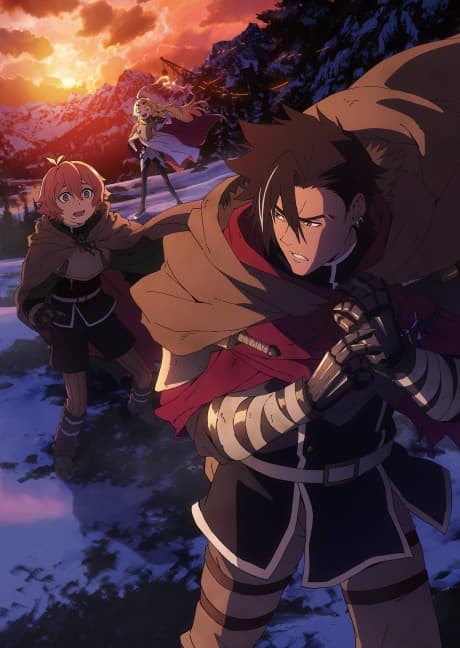
Xylo Forbartz isn't your typical protagonist, and not just because he's a condemned goddess-killer (though that's certainly a unique resume bullet point). What makes him compelling is his complete lack of heroic ambition. He's not fighting for justice, redemption, or even survival—he's fighting because the alternative is presumably worse, though the show smartly never clarifies what that might be. In a landscape populated by Dekus who cry about wanting to save people and Erens who scream about freedom, Xylo's weary resignation is refreshingly bleak. His 65 favorites on MyAnimeList (significantly higher than any other character) suggest audiences are responding to this particular flavor of protagonist fatigue. He's less like the determined soldiers of 86 (one of the show's 'fans also liked' comparisons) and more like a particularly grumpy Sisyphus who's decided that if he has to push this boulder forever, he might as well complain about it the whole time. His dynamic with the rest of Penal Hero Unit 9004—particularly the more earnest Patausche Kivia and the mysterious Venetim Leopool—creates a fascinating tension between those who've accepted their punishment and those still looking for a way out.
The sound of chains: SPYAIR's 'Kill the Noise' as thematic statement
Music in anime often serves as emotional punctuation, but SPYAIR's opening and ending theme 'Kill the Noise' feels like something more deliberate. The fact that it serves as both OP and ED (in alternating episodes) creates a sonic bookending that reinforces the show's cyclical nature. More importantly, the title itself becomes a kind of mission statement for the series. In a world where heroism is literally punishment, where the characters are trapped in endless combat against monstrous 'abominations,' what does it mean to 'kill the noise'? Is it about silencing the screams of battle, the bureaucratic drone of the penal system, or the internal voices telling these characters they deserve their fate? Sound director Morita Yuuichi (working with a team of episode directors including Hirayama Takanari and Mita Arata) creates a soundscape that alternates between chaotic battle noise and eerie silence, making the moments when Xylo and the goddess communicate feel genuinely sacred—or at least, genuinely different from everything else in this hellscape.
Penal Hero Unit 9004: When your squad is also your prison
The ensemble cast of Sentenced to Be a Hero represents one of the show's smartest narrative choices. By giving us not just Xylo but the entire Penal Hero Unit 9004—including the relatively popular Patausche Kivia (22 favorites) and the more obscure members like Dotta Luzulas and Jayce Partiract—the show creates a microcosm of different responses to eternal punishment. Some fight with desperate hope, others with grim determination, and others with what looks suspiciously like enjoyment. This isn't the found family of Nanatsu no Taizai (another 'fans also liked' entry) or the military camaraderie of traditional war stories; it's a group of people thrown together because they've all committed crimes bad enough to warrant this specific hell. Their interactions are tinged with the knowledge that any of them could permanently die at any moment (or as permanently as death gets in this system), and that resurrection will just bring them back to do it all again. It's workplace drama if your workplace was literally designed to kill you repeatedly.
The goddess problem: When your rebellion comes with divine complications
The central twist of Sentenced to Be a Hero—Xylo's encounter with a mysterious new goddess—works precisely because the show has spent so much time establishing why this should be impossible. Xylo is a goddess-killer, condemned to this punishment specifically for that crime. The penal system that resurrects him and sends him back into battle is presumably run by the very divine beings he's shown hostility toward. So when a goddess appears who doesn't want to punish him but instead offers an alliance, it doesn't just break the cycle—it suggests the entire system might be more fragile than anyone realized. This is where the show moves from interesting premise to genuinely compelling narrative. The rebellion that sparks isn't just against their punishment; it's against the very cosmology that defines their world. In a genre filled with heroes who unquestioningly serve higher powers or fight against clearly evil ones, Sentenced to Be a Hero presents a world where the gods might be neither benevolent nor malevolent, but simply... bureaucratic.
Studio KAI's visual punishment: Making eternity look exhausting
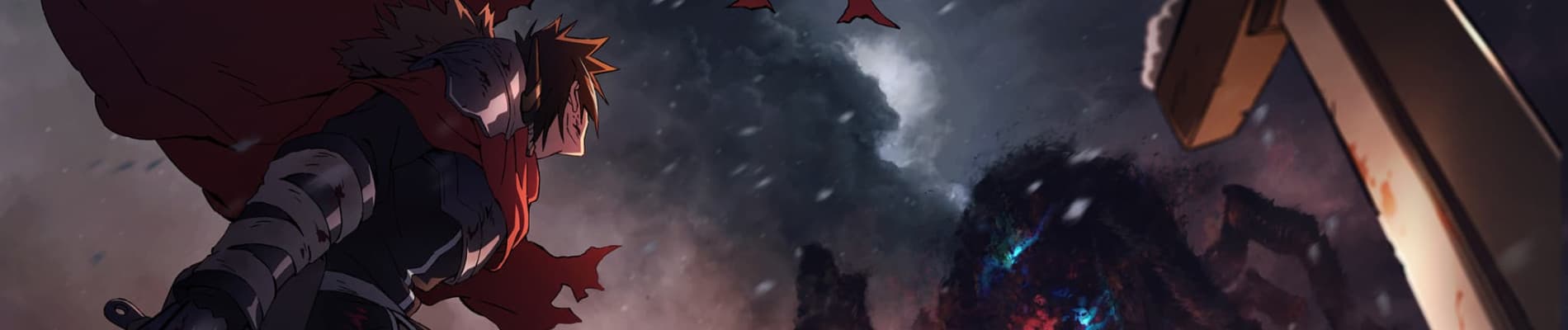
Studio KAI, a relatively young studio founded in 2017, brings a distinctive visual style to what could have been generic fantasy action. The character designs—particularly Xylo's perpetually tired expression and the goddess's ethereal, almost glitchy appearance—communicate personality before anyone speaks. The action sequences don't feel like thrilling set pieces so much as exhausting labor, with animation that emphasizes weight, impact, and most importantly, fatigue. When Xylo swings his weapon for the thousandth time, you can feel the muscle memory and the resentment in equal measure. The color palette shifts dramatically between the bleak, desaturated battlefields and the more vibrant, mysterious spaces where the goddess appears, creating a visual language that reinforces the show's central dichotomy: punishment versus possibility, cycle versus change.
The 8.26/10 question: Why this show resonates now
With a MyAnimeList score of 8.26/10 (ranking #358) and a Crunchyroll score of 8/10, Sentenced to Be a Hero is clearly connecting with audiences despite its relatively niche popularity (#1331 in popularity with 206,192 members). Part of this is timing. In a post-pandemic world where many feel trapped in cycles of work, consumption, and digital distraction, a show about characters literally trapped in an endless, punishing cycle feels uncomfortably relevant. But more importantly, the show taps into a growing fatigue with traditional hero narratives. We've seen so many chosen ones, so many power fantasies, so many stories about characters who want to be heroes that a story about characters who are forced to be heroes—and who might tear the whole system down—feels like a necessary correction. It's the anti-My Hero Academia, not because it's cynical (though it is), but because it questions the very infrastructure of heroism rather than just celebrating it.
The bottom line: Essential viewing for anyone tired of easy answers
Final Score: 8.5/10 – Sentenced to Be a Hero isn't just another action-fantasy anime; it's a sustained interrogation of what heroism costs when it's not chosen but imposed. With its clever use of extended runtime, its weary but compelling protagonist in Xylo Forbartz, and its willingness to question the divine bureaucracy that governs its world, the show represents one of the more intellectually ambitious releases of its season. The fact that it manages to be genuinely funny in places (the dark comedy of eternal punishment provides some surprisingly sharp moments) while never undermining its central themes is a testament to Takashima Hiroyuki's direction and the source material's strong foundation. In a landscape crowded with heroes who love their jobs, sometimes you need a show about heroes who hate theirs—and are willing to start a revolution over it.