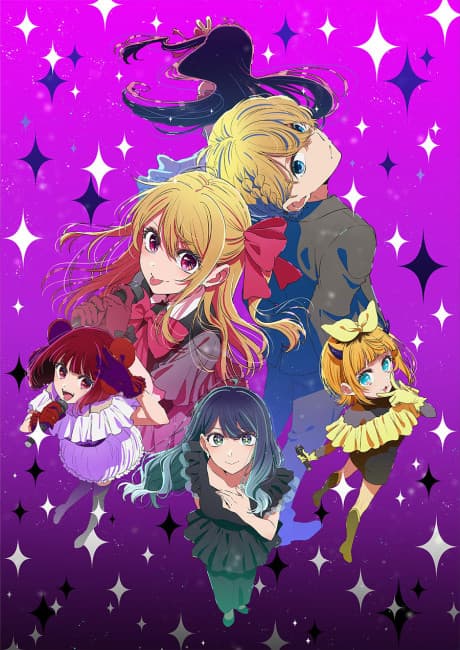
Oshi No Ko Season 3 weaponizes the entertainment industry's lies to expose its brutal truths
There's a moment in the third season of Oshi No Ko that feels like watching a magician reveal their trick while still performing it. As Ruby Hoshino ascends through the entertainment world, weaponizing the very lies that once destroyed her mother Ai, the series performs its own delicate balancing act: exposing the brutal machinery of celebrity culture while still delivering the glossy, emotionally-charged drama that makes that culture so seductive. This isn't just another season of an anime about showbiz—it's a surgical dissection of how trauma becomes currency, how performance becomes identity, and how the entertainment industry doesn't just reflect our desires but actively shapes them into weapons. Under Daisuke Hiramaki's direction, what could have been a straightforward continuation instead becomes a fascinating exploration of how we use fiction to survive reality, and how sometimes the most authentic performance is the one that's completely fake.
The performance of grief as career strategy
Six months after the events of POP IN 2, the characters of Oshi No Ko have transformed their various traumas into professional assets with chilling efficiency. Ruby's rise through the entertainment world isn't just about talent or ambition—it's a calculated campaign fueled by the unresolved grief over her mother's murder and her previous life as Sarina. What makes this season particularly compelling is how it interrogates the ethics of using personal tragedy as professional fuel. Ruby isn't just processing her trauma; she's weaponizing it, turning her pain into marketable authenticity. This creates a fascinating tension: the more "real" she appears to audiences, the more she's performing a version of herself curated for maximum emotional impact. The series smartly contrasts this with Kana Arima's arc, where her loss of cheerfulness represents a different kind of authenticity crisis. While Ruby learns to perform her pain, Kana seems to be losing her ability to perform at all, creating a compelling dialectic about what happens when entertainers can no longer separate their stage personas from their private selves. It's a theme that resonates beyond anime, echoing everything from celebrity memoir culture to the way social media encourages us to monetize our personal struggles.
Doga Kobo's visual language of deception and revelation
Studio Doga Kobo's work this season deserves particular attention for how it visually reinforces the series' themes of performance and truth. There's a deliberate contrast between the polished, almost hyper-realistic sequences depicting B-Komachi's performances and the more subdued, intimate moments where characters drop their masks. The animation during musical numbers isn't just spectacle—it's a narrative device that shows us what the audience sees versus what's actually happening backstage. Director Daisuke Hiramaki and his team of episode directors (including veterans like Yasuhiro Irie) understand that in a story about entertainment, the form must reflect the content. The camera lingers on micro-expressions, those fleeting moments when a character's carefully constructed persona slips, revealing the turmoil beneath. This visual approach creates a fascinating tension: we're watching characters who are constantly being watched, performers who are always performing, even when they think they're alone. The production team's background in both dramatic and comedic works (Doga Kobo has handled everything from YuruYuri to Shirobako) gives them the versatility to navigate Oshi No Ko's tonal shifts—from the glittering spectacle of idol performances to the quiet horror of characters realizing they've become the roles they're playing.
The supernatural as metaphor for industry reincarnation
Oshi No Ko has always used its reincarnation premise as more than just plot mechanics—it's a potent metaphor for the entertainment industry's endless cycles of reinvention and repetition. In Season 3, this theme deepens as Ruby and Aqua's past lives as Sarina and Goro become less about supernatural mystery and more about how history repeats itself in the world of entertainment. The industry doesn't just create stars; it resurrects archetypes, recycles narratives, and demands that performers constantly reinvent themselves while staying marketably familiar. Ruby's journey mirrors this perfectly: she's both completely new (a rising idol) and hauntingly familiar (carrying Sarina's memories and Ai's legacy). The series suggests that in showbiz, everyone is a reincarnation of someone who came before, whether they know it or not. This connects to the seinen demographic's interest in more mature, psychologically complex narratives—Oshi No Ko isn't just telling a story about idols; it's using the idol industry as a lens to examine larger questions about identity, legacy, and how we carry our pasts into our present selves. The supernatural elements become less about fantasy and more about the very real way trauma and memory shape who we become.
B-Komachi's music as narrative weapon
The opening theme "B no Revenge (Bのリベンジ)" performed by B-Komachi isn't just catchy J-pop—it's a narrative statement of intent. The title alone ("B's Revenge") signals the season's thematic concerns: payback, justice, and the transformation of pain into power. What's particularly clever is how the music functions within the story's reality. These aren't just songs we hear as viewers; they're songs that exist within the Oshi No Ko universe, performed by characters whose lives are increasingly entangled with their art. The ending theme "TEST ME" by CHANMINA provides a contrasting, more introspective counterpoint to B-Komachi's polished pop, suggesting the tension between public persona and private self that defines the season. Sound director Takeshi Takadera deserves credit for how the audio landscape reinforces the series' themes—the contrast between the perfectly produced idol tracks and the more naturalistic sound design of the characters' private moments creates an auditory representation of the divide between performance and reality. In a season about weaponizing art, the music itself becomes part of the arsenal.
The supporting cast as mirrors to our main performers
While Ruby's quest for truth drives the season's plot, it's the supporting characters who provide the most nuanced commentary on the entertainment industry's psychological toll. Akane Kurokawa's smooth career trajectory serves as a fascinating contrast to Ruby's more turbulent rise—she represents what happens when talent and professionalism aren't complicated by supernatural baggage or revenge plots. Yet the series subtly suggests that Akane's success might be its own kind of performance, a different mask worn just as carefully. Meanwhile, MEM-Cho's hard work propelling B-Komachi toward their major break shows the less glamorous side of entertainment—the grind, the collaboration, the behind-the-scenes effort that makes the magic possible. Even the ghost of Ai Hoshino (or more accurately, her legacy) functions as a constant presence, a reminder of what's at stake when personal and professional lives become dangerously entangled. These characters aren't just supporting players; they're different facets of the same diamond, each reflecting light (and shadow) in their own way, showing us the many paths through the entertainment industry's labyrinth.
The bottom line: Truth in a world of beautiful lies
Oshi No Ko Season 3 achieves something remarkable: it makes us complicit in the very system it critiques. We watch Ruby weaponize her trauma, we enjoy B-Komachi's performances, we get invested in the mysteries and relationships—all while the series is showing us how these narratives are constructed, how emotions are manipulated, how truth becomes just another commodity. The 8.3/10 score (and MAL's 8.51) feels appropriate for a season that's both highly entertaining and deeply thoughtful, though it occasionally struggles with balancing its many plot threads and thematic concerns. What ultimately makes this season work is its refusal to offer easy answers. The entertainment industry isn't presented as purely evil or purely wonderful—it's presented as a complex ecosystem where art and commerce, truth and performance, trauma and healing are constantly negotiating with each other. In an age where we're all performers on social media's various stages, Oshi No Ko's exploration of how we construct our identities feels particularly relevant. The series understands that sometimes the most honest thing you can do is admit you're lying, and sometimes the most powerful performance is the one that reveals the machinery behind the magic. Final Score: 8.5/10 – A sharp, sophisticated continuation that proves the series has plenty more to say about the stories we tell and the selves we sell.