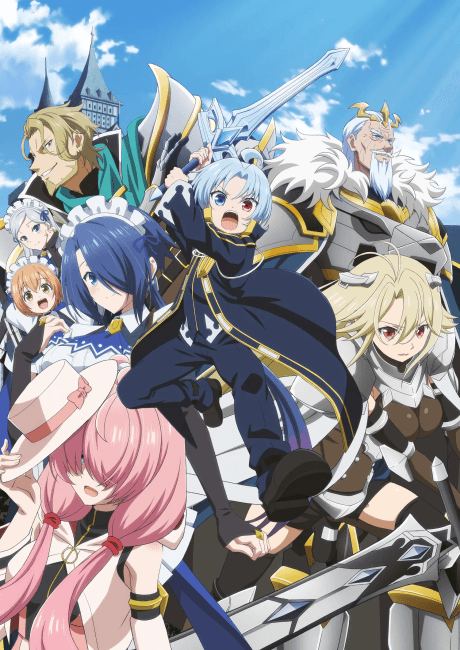
Noble Reincarnation: Born Blessed, So I'll Obtain Ultimate Power is the anime equivalent of a trust fund baby complaining about taxes
There's a particular kind of fantasy that's become distressingly common in the anime landscape of the late 2020s: the power fantasy so complete, so unearned, that it becomes less about wish fulfillment and more about watching someone win the cosmic lottery and then complain about the paperwork. Enter Noble Reincarnation: Born Blessed, So I'll Obtain Ultimate Power, a title so on-the-nose it might as well be called I'm Special and You're Not: The Anime. Directed by Michio Fukuda and streaming three days ahead of its TV broadcast on ABEMA and Anime Hodai starting January 5, 2026, this series represents the logical endpoint of the isekai/reincarnation genre's evolution from fish-out-of-water stories to pure aristocratic cosplay. Noah Ararat, our six-year-old protagonist who's been reborn as the emperor's thirteenth child with infinite level caps and the ability to stack powers from his subordinates, isn't just overpowered—he's the narrative equivalent of being born with a silver spoon, a platinum credit card, and a cheat code for life itself. The show asks us to sympathize with his plight of navigating palace intrigue while possessing abilities that would make a god blush, creating a fascinating tension between its premise and its emotional stakes that it never quite resolves.
The privilege paradox: When your protagonist has everything but still wants more
At the heart of Noble Reincarnation lies what I'm calling the privilege paradox: the show wants us to care about Noah's struggles in a world of conspiracies and power struggles while simultaneously reminding us every five minutes that he's functionally invincible. This creates a narrative tension that's more fascinating in theory than in execution. Noah's infinite level cap and power-stacking ability—essentially the ability to absorb the strengths of anyone who serves him—makes him less a character and more a walking plot device. The series attempts to generate drama through political machinations and court intrigue, but when your protagonist could theoretically solve any problem through sheer power accumulation, the stakes feel artificial. It's like watching someone play chess with a nuclear missile in their back pocket—theoretically they could still lose, but you're constantly aware they have an option that renders the entire game moot. This speaks to a larger trend in contemporary fantasy anime where power escalation has become so extreme that traditional narrative tension has evaporated, replaced by a kind of narrative hedonism where the pleasure comes not from overcoming obstacles but from watching obstacles be vaporized.
The aesthetics of aristocracy: CompTown's visual approach to power fantasy
Art directors Kang Yoo-hyun and Lin Zhiyan have created a world that looks exactly like what you'd expect from a series about imperial privilege: all gleaming marble, intricate gold filigree, and costumes so elaborate they probably have their own staff. The visual language of Noble Reincarnation is one of excess, with every frame dripping in the trappings of wealth and power. This creates an interesting dissonance with the show's PG-13 rating and relatively modest production values—the ambition is there in the design, but the execution sometimes feels like watching a middle-tier mobile game cutscene. Fukuda's direction leans heavily on establishing shots of palace interiors and slow pans across court gatherings, creating a sense of scale that the animation budget can't always support. When the action does kick in—Noah demonstrating his abilities or the occasional skirmish—it's competent but rarely spectacular, suggesting that CompTown understands the assignment but lacks the resources to truly excel at it. The character designs, particularly Noah's perpetually serene six-year-old face, reinforce the central contradiction: he looks like a child but carries himself with the weary gravitas of someone who's seen it all before, which he literally has.
The soundtrack of entitlement: SUPER★DRAGON's opening and the emotional disconnect
Sound director Nobuyuki Abe has assembled a musical package that perfectly encapsulates the show's tonal confusion. SUPER★DRAGON's opening theme "Break off" is exactly the kind of generic rock anthem that could accompany any action anime from the last decade, all soaring vocals and guitar riffs that promise excitement the series rarely delivers. More interesting is Alichey's (voiced by Azusa Tachibana) ending theme "You'll Be In My Heart Soba ni," a surprisingly tender ballad that suggests emotional connections the main narrative struggles to establish. This musical dichotomy mirrors the show's central problem: it wants to be both a power fantasy and a character drama, but these two modes often work at cross-purposes. The score during palace intrigue scenes leans heavily on traditional orchestral arrangements with harpsichords and strings, creating a sense of historical weight that contrasts oddly with Noah's game-like power system. It's as if the music department and the writing team are working from different playbooks—one aiming for The Crown, the other for The Gamer.
The reincarnation industrial complex: How we got here from Mushoku Tensei
To understand Noble Reincarnation, we need to place it in the broader context of what I've come to call the reincarnation industrial complex. Starting with watershed series like Mushoku Tensei and exploding through the 2020s, the isekai/reincarnation genre has evolved from stories about second chances to elaborate power fantasies with increasingly convoluted rule systems. Noble Reincarnation represents the genre's late-stage capitalism phase: the protagonist isn't just reincarnated with advantages, he's reincarnated as literal royalty with cheat abilities that break the world's fundamental rules. The show's light novel origins are evident in its exposition-heavy approach to world-building and its fascination with quantifying power through level caps and stacking mechanics. This places it firmly in conversation with other recent entries like Tensei Kizoku, Kantei Skill de Nariagaru (one of the "fans also liked" recommendations), suggesting an entire subgenre of aristocratic power fantasies has emerged. What's fascinating is how these series have shifted from the underdog narratives of earlier isekai to stories about maintaining privilege—Noah isn't fighting his way up from nothing, he's fighting to maintain his position at the top of a hierarchy he was born into.
The six-year-old sage: Noah Ararat as the ultimate power fantasy avatar
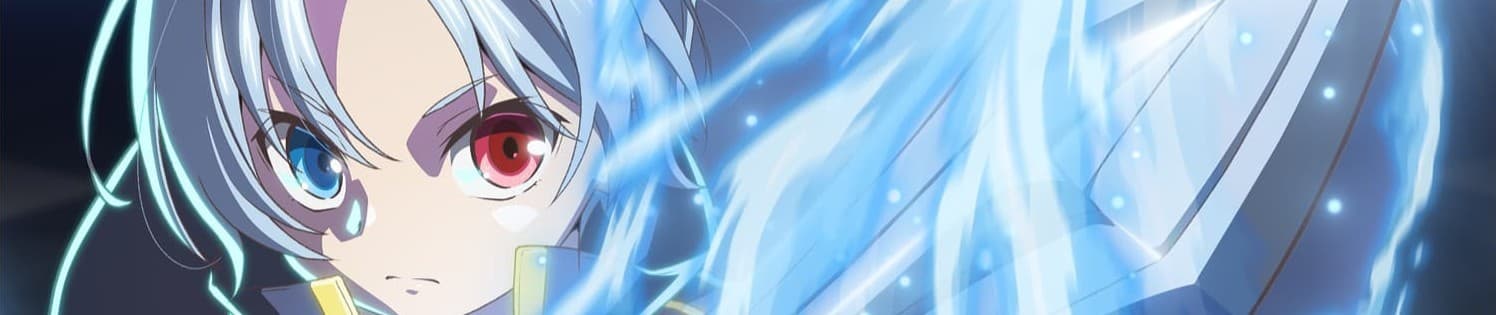
Noah Ararat presents a fascinating case study in protagonist design for the power fantasy genre. As a six-year-old with the memories and knowledge of his previous life, he exists in a perpetual state of cognitive dissonance—physically a child, mentally an adult, and supernaturally a demigod. This creates opportunities for interesting character moments that the series occasionally grasps but rarely holds onto. The tension between his childlike appearance and his adult perspective could have been mined for genuine pathos or comedy, but instead it mostly serves as a justification for why other characters underestimate him before he demonstrates his power. With only one favorite on MyAnimeList (a telling statistic), Noah feels less like a character and more like a vehicle for the audience's fantasies of effortless superiority. His power-stacking ability—absorbing the strengths of those who serve him—becomes a metaphor for aristocratic extraction, literally taking from subordinates to enhance himself. In a different show, this might be framed as critique, but here it's presented as just another cool power, missing the opportunity to say something meaningful about the systems it depicts.
The glittering facade: Palace intrigue when everyone knows the ending
The palace politics that form the backbone of Noble Reincarnation's plot suffer from the same problem as the rest of the series: we know Noah will win. The conspiracies, schemes, and power struggles mentioned in the synopsis lack tension because the outcome is never in doubt. This isn't Game of Thrones where anyone can die—this is a narrative where the protagonist has plot armor so thick it might as well be a force field. The political maneuvering becomes less about whether Noah will succeed and more about how quickly he'll dispatch his opponents, turning what could be compelling drama into a foregone conclusion. The show attempts to compensate by introducing increasingly convoluted schemes and rival factions, but without genuine stakes, these feel like narrative busywork rather than meaningful conflict. It's telling that the series ranks #8968 on MyAnimeList with a score of 6.26—audiences can recognize competent execution, but they're not connecting with material that offers spectacle without substance.
The bottom line: Power without purpose makes for empty fantasy
Final Score: 5.5/10 – Noble Reincarnation: Born Blessed, So I'll Obtain Ultimate Power is the anime equivalent of eating an entire cake by yourself: initially satisfying, ultimately empty, and leaving you wondering why you bothered. There's technical competence here—Fukuda's direction is serviceable, the art direction shows ambition, and the voice work is professional—but it's in service of a premise that's fundamentally uninterested in meaningful conflict or character growth. The show represents the endpoint of a troubling trend in fantasy storytelling where power has become so absolute that narrative tension evaporates, leaving behind only the hollow spectacle of superiority. In an era where actual inequality continues to shape our world, there's something particularly tone-deaf about a fantasy that asks us to sympathize with someone who was born with every advantage and still wants more. The series will likely find its audience among those who enjoy pure power fantasy without complication, but for anyone looking for substance with their spectacle, this noble's reign will feel frustratingly hollow.