My Dress-Up Darling Season 2 stitches together a romance that's surprisingly comfortable in its own skin
There's a moment in the second season of My Dress-Up Darling where Marin Kitagawa, the effervescent cosplay enthusiast whose energy could power a small city, confesses her feelings to Wakana Gojo, the quiet hina doll artisan turned cosplay tailor. What's remarkable isn't the confession itself—romance anime have been building to that moment since the genre's inception—but the quiet, almost mundane way it's received. Gojo doesn't stammer, blush, or run away. He simply accepts it with the same thoughtful consideration he gives to fabric choices and stitch patterns. This isn't the explosive climax of a will-they-won't-they narrative; it's the beginning of a more interesting conversation about what happens after the confession, a territory most romantic comedies fear to tread. In its second season, My Dress-Up Darling evolves from a charming odd-couple story about cosplay into something more substantial: a meditation on how shared passions can build bridges between people who, on paper, should have nothing in common.

The quiet revolution of a confession that actually matters
Most romance anime treat the confession as the finish line—the moment the credits roll, the story complete. My Dress-Up Darling Season 2, under director Keisuke Shinohara's steady hand, understands that the confession is merely the starting pistol for the real race. Marin's declaration of love in the early episodes doesn't resolve tension so much as it redirects it. Suddenly, the show isn't about whether these two will get together, but about how they'll navigate a relationship built on mutual respect for each other's crafts. This is where the series distinguishes itself from its peers. While other shows might milk the "will they or won't they" dynamic for seasons, My Dress-Up Darling respects its audience enough to move forward, trusting that the chemistry between its leads is strong enough to sustain a story about an actual relationship rather than just the pursuit of one.
This approach speaks to the seinen demographic the manga originally targeted—older readers who might appreciate a more mature take on romance than the endless misunderstandings and accidental groping that plague so many high school love stories. The community response on platforms like MyAnimeList reflects this appreciation, with reviewers like "NDfan" praising the season for "scoffing at the undeserved reputation this show has become known for," referencing the ecchi elements that dominated discussions of the first season. Indeed, while there are still moments of fanservice (this is, after all, still an anime with an ecchi tag), they feel less like titillation and more like natural extensions of Marin's unapologetic comfort with her own body and sexuality—a character trait rather than a marketing strategy.
Cosplay as the ultimate character development tool
If the first season used cosplay as a metaphor for vulnerability—Marin exposing her passions, Gojo learning to share his skills—the second season treats it as a language of intimacy. Each costume project becomes a conversation between the characters, a way of communicating feelings that might otherwise remain unspoken. When Gojo meticulously crafts Sajuna Inui's Juju costume or helps Shinju Inui with her more modest cosplay ambitions, he's not just sewing fabric; he's learning to understand different perspectives, different approaches to the same hobby. The show smartly expands its cosplay circle beyond the central duo, introducing supporting characters like the Inui sisters and Nowa Sugaya not as romantic rivals or comic relief, but as fellow travelers on the same creative journey.
This expansion serves a crucial narrative purpose: it demonstrates that Marin and Gojo's relationship exists within a community, not in isolation. Their romance isn't threatened by other cosplayers; it's enriched by them. The show understands something fundamental about hobbyist communities—that shared passion creates bonds that transcend traditional social hierarchies. The high school setting becomes almost incidental; what matters are the convention halls, the photoshoot locations, the shared excitement over a perfectly executed prop. In this sense, My Dress-Up Darling shares DNA with shows like Keep Your Hands Off Eizouken! or even Shirobako, where the creative process itself becomes the dramatic engine, and the relationships that form around it feel earned rather than contrived.
The visual language of comfort and craftsmanship
CloverWorks' animation in this second season deserves particular praise for how it visualizes the show's thematic concerns. There's a tactile quality to the animation that makes the cosplay creation process feel tangible—the way fabric drapes, the precision of a needle through cloth, the weight of a wig being adjusted. This attention to detail extends to character expressions as well. Marin's boundless enthusiasm is conveyed not just through her dialogue but through her physicality—the way she leans into Gojo's personal space not as invasion but as invitation, the genuine awe in her eyes when she sees a finished costume. Gojo, meanwhile, speaks volumes through his silences and subtle gestures. His character growth is measured in small moments: maintaining eye contact a second longer, offering a rare smile, the confident way he handles materials he once considered beyond his skill level.

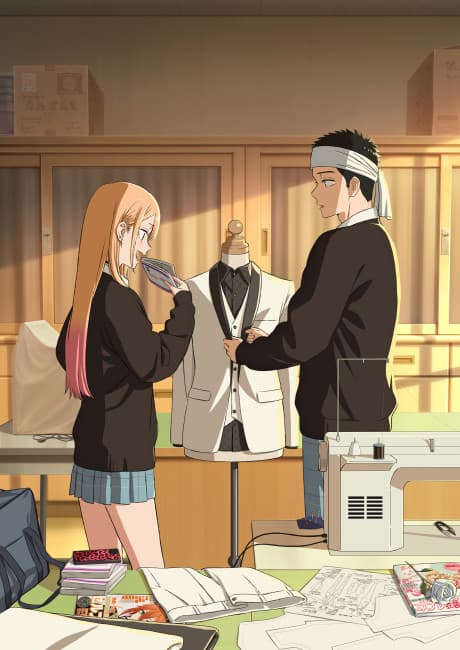
The color palette deserves special mention. While many romance anime opt for soft pastels or dramatic contrasts, My Dress-Up Darling Season 2 uses color to signify emotional states. Warm golds and oranges dominate scenes of creative collaboration, while cooler blues appear during moments of introspection or uncertainty. The sunset scene captured in the community-sourced image above isn't just pretty background art; it's visual storytelling. The warm light bathing Marin and Gojo represents the comfortable intimacy they've achieved—a far cry from the awkward distance of their early interactions in Season 1.
When "slice of life" means actually living
The slice-of-life genre often gets criticized for its lack of narrative momentum—for being all atmosphere and no plot. My Dress-Up Darling Season 2 offers a compelling counterargument: that the most meaningful developments in our lives often happen in quiet moments between bigger events. The 12-episode structure allows for a rhythm that feels true to life—bursts of creative energy during cosplay projects, followed by periods of rest and reflection. This isn't a show about dramatic confrontations or life-or-death stakes; it's about the gradual accumulation of shared experiences that form the foundation of a lasting relationship.
Community reviewer "melamuna" hits on this when they call the season "seamless and earnest," praising how it "stays true to its heart." That heart isn't just romance or cosplay, but the intersection where passion meets vulnerability. The show understands that letting someone see your creative process—the mistakes, the frustrations, the moments of doubt—is often more intimate than physical affection. When Gojo shows Marin a doll he's working on, or when Marin shares her extensive knowledge of a niche anime series, they're offering pieces of themselves. In a media landscape saturated with grand romantic gestures, My Dress-Up Darling finds profundity in the simple act of paying attention to what someone loves.
The soundtrack of growing confidence
Music in romance anime often serves as emotional shorthand—a swelling orchestra tells us when to feel moved, a gentle piano signals tenderness. My Dress-Up Darling Season 2, with sound direction by Akiko Fujita, takes a more integrated approach. The opening theme, "Ao to Kirameki" by Spira Spica, captures the season's dual focus with its blend of energetic pop and softer melodic passages—much like Marin and Gojo's contrasting personalities finding harmony. More interesting is how the show uses diegetic sound—the whir of a sewing machine, the rustle of fabric, the click of a camera shutter—to ground its emotional beats in physical reality.
The ending theme, "Kawaii Kaiwai" by PiKi, deserves particular analysis for how its placement evolves across the season. Early episodes use it to punctuate moments of uncertainty or unresolved tension, while later episodes deploy it after scenes of genuine connection, transforming its meaning through context. This isn't background music; it's part of the narrative architecture, helping to chart the emotional journey from tentative affection to comfortable partnership.
The bottom line: A romance that wears its heart on its expertly tailored sleeve
My Dress-Up Darling Season 2 accomplishes something rare in the crowded field of romance anime: it grows up without losing its charm. The ecchi elements that dominated conversations about the first season recede into the background, not because the show has become prudish, but because it has found more interesting things to explore. The relationship between Marin and Gojo matures from infatuation to genuine partnership, built on mutual respect for each other's passions and personalities.
With its 8.2/10 score and respectable ranking among hundreds of thousands of series on MyAnimeList, the show has clearly resonated with audiences looking for romance that feels earned rather than engineered. It understands that the most compelling love stories aren't about overcoming impossible obstacles, but about navigating the ordinary challenges of being vulnerable with another person. In an era where anime romance often defaults to fantasy fulfillment or melodrama, My Dress-Up Darling offers something more valuable: a believable portrait of two people learning how to love each other through the things they create together.
Final Score: 8/10 – A thoughtful evolution that proves sometimes the quietest relationships make the loudest statements.