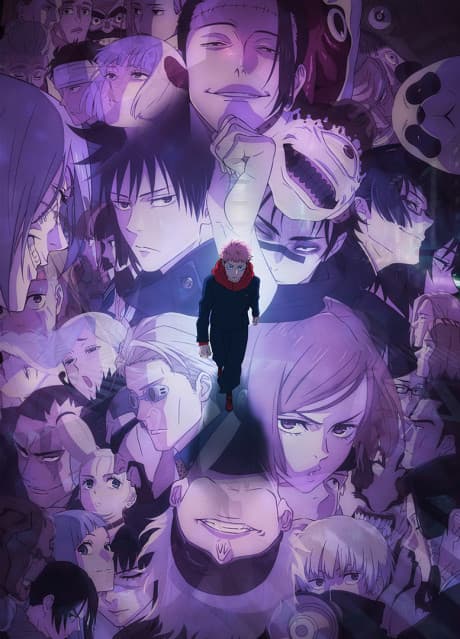
Jujutsu Kaisen Season 2 weaponizes nostalgia to break your heart, one brilliant frame at a time
There's a particular kind of violence in Jujutsu Kaisen Season 2 that transcends the spectacularly animated gore and cursed energy explosions—it's the violence of memory, of seeing what was and knowing what will be. Director Shouta Goshozono and the MAPPA team don't just adapt Gege Akutami's manga; they weaponize our affection for these characters against us, crafting a season that functions as both prequel and tragedy in equal measure. While the first season established the rules of this world of curses and sorcerers, Season 2 reveals the emotional cost of living in it, delivering a masterclass in how to make audiences care deeply about characters whose fates we already know. It's the rare shonen sequel that understands that sometimes, the most devastating battles aren't fought with fists or cursed techniques, but with the ghosts of friendships past.
The Hidden Inventory arc: When Gojou and Getou were just boys with dreams
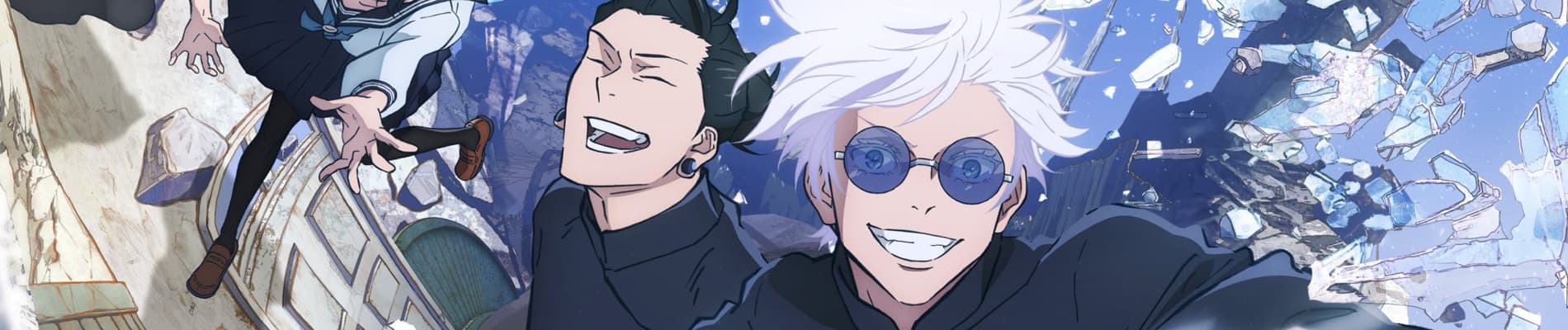
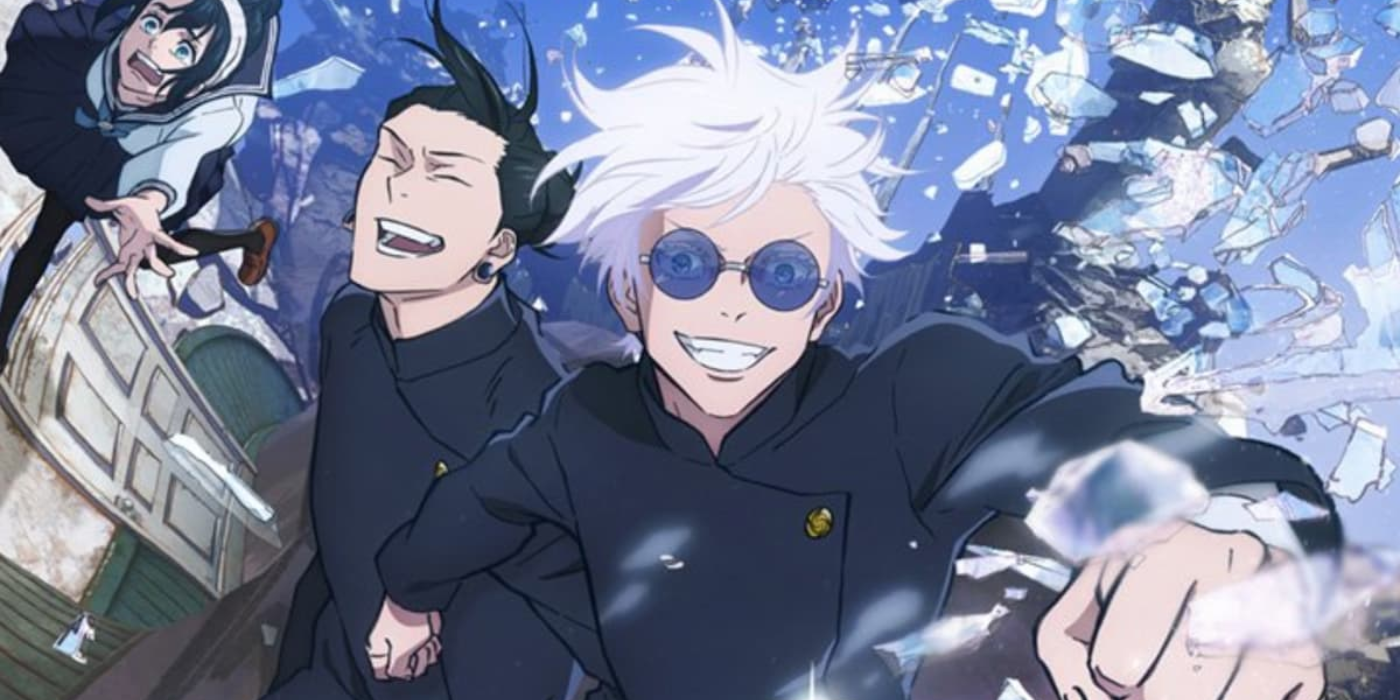
Before he became the untouchable, sunglasses-wearing powerhouse we know from Season 1, Satoru Gojou was just a teenager with too much power and not enough perspective. The Hidden Inventory arc—those first five episodes that chronicle Gojou and Suguru Getou's mission to protect Riko Amanai—does something remarkable: it makes Gojou human. Not just powerful, not just arrogant, but vulnerable in ways that retroactively color every scene he appears in throughout the franchise. When community reviewer Lenlo calls this arc "the best the series has to offer," they're not wrong—it's a character study disguised as a mission narrative, showing us the exact moment when two best friends begin walking divergent paths toward their inevitable confrontation. The genius lies in how MAPPA's animation team, under Goshozono's direction, contrasts the fluid, almost playful combat of their youth with the brutal efficiency of their adult selves. Every frame of Gojou's Six Eyes technique feels like a promise that will eventually become a curse.
MAPPA's animation: A feast for the eyes that comes with ethical indigestion
Let's address the elephant in the room: Jujutsu Kaisen Season 2 is visually stunning in ways that should be illegal. The Shibuya Incident arc, which comprises the bulk of the season, features some of the most fluid, inventive, and downright beautiful action animation in recent anime history. From the kaleidoscopic chaos of Gojou's Unlimited Void to the visceral, bone-crunching simplicity of Yuji Itadori's punches, every fight feels distinct, purposeful, and breathtaking. Sound director Yasunori Ebina deserves particular praise for making cursed energy sound like the universe tearing itself apart. But as community reviewer ddaaww notes, this excellence comes with "frustrating" context—the well-documented production issues at MAPPA, where animators worked under brutal conditions to deliver this quality. There's an uncomfortable tension in watching something this beautiful while knowing the human cost behind it, making Season 2 a complicated masterpiece. It's the anime equivalent of a blood diamond: undeniably brilliant, ethically questionable, and impossible to look away from.
Getou's descent: The most terrifying villain is the one who makes sense
What makes Suguru Getou's transformation from idealistic sorcerer to genocidal curse user so compelling isn't the shock of it—we know where he ends up from Season 1—but the horrifying logic of it. Season 2 shows us his breaking point not as a sudden snap, but as the slow accumulation of disillusionment, each tragedy chipping away at his faith in humanity until only bitterness remains. When he declares his plan to create a world without non-sorcerers, it doesn't feel like cartoon villainy; it feels like the inevitable conclusion of watching too many innocent people suffer while the powerful do nothing. This is where Jujutsu Kaisen transcends its shonen trappings—it understands that the best antagonists aren't evil for evil's sake, but people whose trauma has calcified into ideology. Getou's relationship with Gojou becomes the season's emotional core, a friendship so genuine in flashbacks that its eventual destruction feels less like plot development and more like watching a car crash in slow motion.
The Shibuya Incident: Where shonen tropes go to die screaming
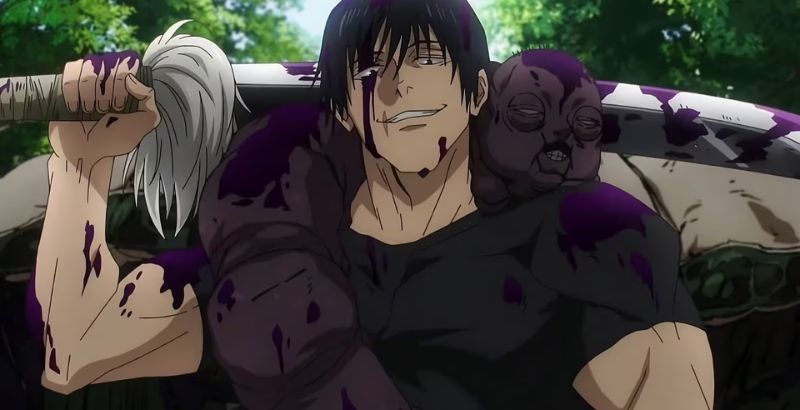
If the Hidden Inventory arc is the tragedy, the Shibuya Incident is the apocalypse. Spanning episodes 6 through 23, this extended sequence represents one of the boldest narrative choices in modern shonen anime: taking everything audiences love about these characters and systematically breaking it. Mainstays like Nobara Kugisaki and Megumi Fushiguro aren't just sidelined—they're put through physical and emotional wringers that leave permanent scars. Yuji Itadori's journey from enthusiastic hero to traumatized survivor happens in real time, with each victory feeling more pyrrhic than the last. Community reviewer walgreens18 isn't exaggerating when they say the season had their "jaw on the floor every week"—this is anime that constantly raises the stakes while lowering any expectation of happy endings. The Shibuya Incident doesn't just advance the plot; it fundamentally changes what kind of story Jujutsu Kaisen is, transitioning from a supernatural action series to something closer to horror, where the monsters aren't just curses but the consequences of power itself.
The music of melancholy: How sound tells the story visuals can't
Tatsuya Kitani's opening theme "Ao no Sumika" (Blue Dwelling) and Soushi Sakiyama's ending "Akari" (Light) deserve special mention for how perfectly they encapsulate Season 2's dual nature. Kitani's track, with its melancholic piano and yearning vocals, sounds nothing like a typical shonen battle anthem—it's a lament for lost innocence that plays over scenes of young Gojou and Getou, establishing the emotional tone before a single line of dialogue is spoken. Sakiyama's ending, meanwhile, feels like the aftermath of the Shibuya Incident given sound: sparse, haunting, and beautiful in its devastation. These aren't just songs to bookend episodes; they're essential components of the season's storytelling, providing emotional context that the breakneck plot sometimes can't afford to linger on. In a season where so much is said through action, the music becomes the voice of what goes unsaid—the nostalgia, the regret, the quiet moments between catastrophes.
The community divide: Why loving JJK Season 2 feels complicated
Reading through the community reviews reveals a fascinating split in how audiences received this season. On one side, you have reviewers like TheAnimeBingeWatcher who call it "a masterpiece and I kind of hate it," capturing the ambivalence of watching something this excellent come from such problematic production circumstances. On the other, there's walgreens18's unadulterated enthusiasm for the weekly spectacle. This division speaks to a larger conversation in anime fandom about separating art from artist (or in this case, studio). Can we celebrate the artistic achievement while condemning the working conditions that produced it? Season 2 doesn't offer easy answers, instead presenting itself as a paradox: a work of staggering creativity born from what many consider creative exploitation. It's this tension that makes discussions about the season so rich—we're not just evaluating animation quality or narrative choices, but wrestling with the ethics of our consumption.
The bottom line: Essential viewing that comes with emotional baggage
Jujutsu Kaisen Season 2 achieves something remarkable: it makes a prequel feel urgent and a tragedy feel inevitable. By focusing on character over plot—specifically, on the relationships that define these characters—it transforms what could have been mere backstory into the emotional foundation of the entire series. Every frame of Gojou's youthful arrogance hits differently when we know the loneliness awaiting him; every moment of Getou's idealism becomes a knife twist. The MAL score of 8.71/10 feels almost conservative for a season this ambitious, this beautifully executed, and this emotionally devastating. Yes, the production issues at MAPPA cast a shadow over the achievement, and yes, the relentless darkness of the Shibuya Incident might test some viewers' endurance. But as a piece of pop culture storytelling, it's nearly flawless—a reminder that the best shonen isn't about who wins the fight, but about what the fighting costs. Final Score: 9/10 – A brutal, beautiful masterpiece that will leave you emotionally wrecked and desperately awaiting Season 3.