Jack-of-All-Trades, Party of None serves reheated revenge fantasy with a side of identity crisis
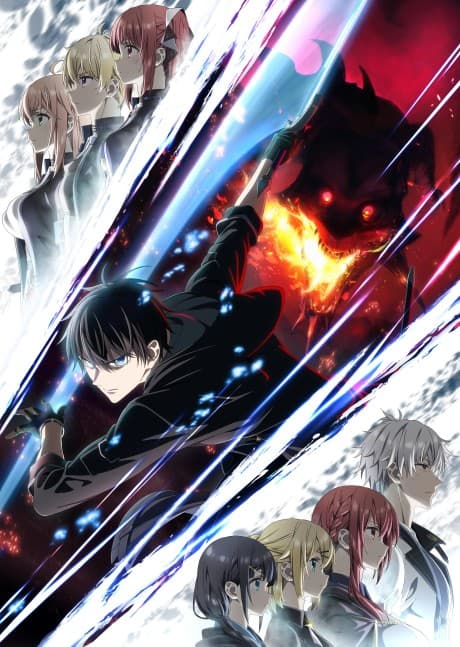
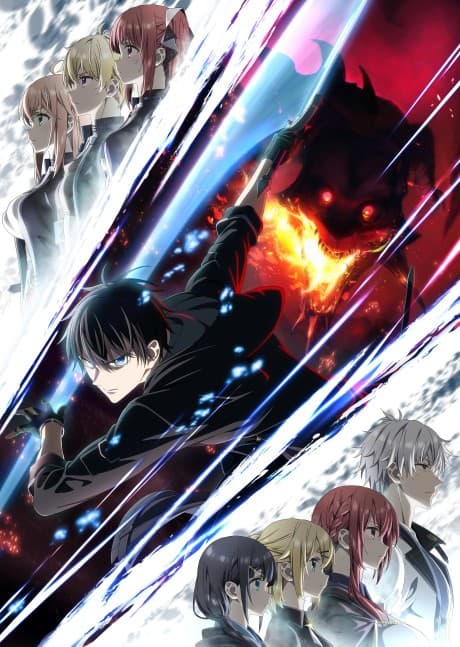
There's a particular kind of anime that feels like it was assembled from a checklist rather than conceived from inspiration—a Frankenstein's monster of genre tropes stitched together with just enough competence to keep you watching, but not enough soul to make you care. Jack-of-All-Trades, Party of None is that anime, a 10-minute-per-episode revenge fantasy that manages to feel both rushed and formulaic, like someone tried to cram a 24-episode arc into a TikTok attention span. The premise—betrayed enchanter Orhun Dura cast out by his childhood friend and former party—is the kind of setup that's been reheated so many times in light novels and web manga that it's lost all nutritional value. Yet here we are, watching another protagonist rise from the ashes of betrayal to prove everyone wrong, because apparently the market for wounded male egos finding validation through violence remains insatiable.
What's fascinating about Jack-of-All-Trades isn't its originality (it has none), but rather how perfectly it embodies the current state of algorithm-driven anime production. With a MAL score languishing at 6.12/10 and a popularity ranking that puts it at #12561—just behind whatever obscure OVA from 1997 someone rediscovered last week—this show exists in that strange liminal space between 'actively bad' and 'forgettable mediocrity.' It's the streaming equivalent of background noise, something to half-watch while scrolling through your phone, occasionally looking up when the combat animation spikes above its usual baseline. The fact that it's adapted from a web manga (the modern farm system for anime ideas) and runs for only 10 minutes per episode suggests a production team that knows exactly what they're making: content, not art. And in 2024, there's something almost admirable about that level of self-awareness, even as it makes for profoundly unmemorable viewing.
The 10-minute format: compression sickness in the age of infinite content
Let's talk about those 10-minute episodes, because they're not just a runtime—they're a symptom. In an era where attention spans have been whittled down to the length of a Reel or TikTok, Jack-of-All-Trades represents the logical endpoint of content optimization. Each episode feels like a highlight reel of what should be a longer narrative, jumping from plot point to plot point with the frantic energy of someone trying to explain their entire D&D campaign during a commercial break. Character development happens in bullet points: Orhun is betrayed (minute 1-2), Orhun feels sad (minute 3), Orhun fights something (minutes 4-7), Orhun has a moment of determination (minutes 8-9), cliffhanger (minute 10). Rinse and repeat.
This compression creates a peculiar dissonance. The show wants us to believe in Orhun's emotional journey from loyal enchanter to solo adventurer, but we're never given the breathing room to actually experience that transformation. His betrayal happens so quickly it feels less like a tragic turning point and more like a narrative checkbox being ticked. Compare this to classic revenge narratives like Gankutsuou: The Count of Monte Cristo (which actually understood that vengeance needs time to marinate) or even more recent takes like Vinland Saga (which explores the psychological cost of revenge with actual nuance), and Jack-of-All-Trades feels like revenge fantasy for people with ADHD. The format fundamentally undermines the very emotions it's trying to evoke, reducing what should be a slow-burn character study to a series of narrative soundbites.
The 'jack-of-all-trades' protagonist as the ultimate power fantasy for the mediocre
Orhun Dura's defining characteristic—being branded 'a jack-of-all-trades but a master of none'—is supposed to be his tragic flaw, the insult that fuels his journey. But in practice, it functions as the ultimate power fantasy for anyone who's ever felt undervalued in a specialized world. Here's the secret the show reveals in its very first episodes: being a jack-of-all-trades in a fantasy setting isn't a weakness—it's cheat codes. Orhun can enchant, fight, strategize, and apparently do everything except specialize, which makes him uniquely suited to... well, everything. The betrayal narrative serves primarily as justification for him to go solo and prove how amazing he really is, which turns the entire premise into a 2000s-era self-help book with swords.
This taps into a particularly modern anxiety about specialization versus generalization. In a world where we're constantly told to 'find our niche' and become experts in increasingly narrow fields, Orhun represents the fantasy of being good at everything—the ultimate generalist in a specialist's world. The problem is that the show never actually grapples with what being a generalist means. There's no exploration of the trade-offs, no moments where Orhun genuinely struggles because he lacks deep expertise in a particular area. Instead, his versatility is treated as a superpower waiting to be unlocked, which undermines the very premise the title promises. It's like if Rocky was about a boxer who was actually great at boxing from the start but just needed people to notice.
Animation studio42 and the aesthetics of competent blandness
Let's give credit where it's due: animation studio42 (a name so generic it sounds like a placeholder) knows how to deliver exactly what's expected and nothing more. The action sequences are serviceable—competently choreographed, decently animated during key moments, and entirely forgettable five minutes after watching. There's a particular flatness to the visual style that feels intentional, as if the artists were working from a template labeled 'Generic Fantasy Anime #7.' The color palette leans heavily on browns, grays, and muted blues, creating a world that looks like it was filtered through three layers of 'gritty reboot.'
What's missing is any sense of visual personality. Compare this to studios that have carved out distinctive identities—Kyoto Animation's lush, detailed environments, Science SARU's experimental fluidity, MAPPA's muscular intensity—and studio42 feels like a contractor hired to assemble IKEA furniture. They follow the instructions perfectly, but you're left with something that looks exactly like everyone else's. The 10-minute format exacerbates this, as there's no time for establishing shots, atmospheric moments, or visual storytelling that isn't directly plot-related. Every frame has to advance the narrative, which means the world never feels lived-in or real. It's a series of backdrops for fights and speeches, a fantasy setting with all the depth of a green screen.
The supporting cast: Dabao, Jiang, and Tang as narrative furniture
According to the provided data, the main characters include Dabao Zhang, Jiang Haojie, and Tang Jing—three names with exactly zero favorites among MAL's 2,008 members. This statistic speaks volumes, but let's be generous and assume they serve some narrative purpose beyond occupying screen space. In a show about a solo adventurer, supporting characters typically serve one of three functions: obstacles, mentors, or mirrors that reflect different aspects of the protagonist. Based on the synopsis' promise of 'unexpected allies,' we can assume these three fall into the latter category, though the show's breakneck pace gives them about as much development as your average NPC in a RPG side quest.
What's telling is that the synopsis doesn't even mention them, focusing entirely on Orhun's solo journey. This suggests they exist primarily as plot devices rather than characters—people who show up when Orhun needs something (information, a temporary alliance, someone to save) and disappear when he doesn't. In better shows, supporting characters have their own motivations, backstories, and arcs that intersect with the protagonist's journey. In Jack-of-All-Trades, they feel like features on a checklist: 'Add 2-3 side characters for variety.' Their Chinese names (in a show that otherwise uses Turkish-inspired naming for its protagonist) suggest either a multicultural fantasy world or a production team grabbing names from different cultural buckets without much thought—and given everything else about the show, I'm leaning toward the latter.
The R-17+ rating: violence and profanity as substitute for substance
With an age rating of R-17+ for violence and profanity, Jack-of-All-Trades joins the long tradition of anime using mature content as a shortcut to seeming 'serious' or 'edgy.' The violence here isn't the carefully choreographed ballet of something like Sword of the Stranger or the psychological horror of Berserk—it's functional, serving primarily to demonstrate Orhun's growing power and resolve. People get stabbed, blood sprays (within the limits of the animation budget), and the occasional curse word gets dropped, all in service of maintaining that 'this isn't for kids' vibe.
The problem is that mature themes require mature storytelling, and Jack-of-All-Trades has the emotional depth of a puddle. Adding blood and swearing to a fundamentally juvenile power fantasy doesn't make it adult—it just makes it a juvenile power fantasy with blood and swearing. Compare this to shows that actually earn their mature ratings through complex themes—Monster's philosophical exploration of evil, Psycho-Pass's dystopian critique of surveillance society, even Attack on Titan's gradual descent into moral ambiguity—and the violence here feels like decoration rather than substance. It's the narrative equivalent of a teenager putting on a leather jacket and thinking it makes them look tough, without understanding what toughness actually requires.
The 'fans also liked' section: a lonely island in the recommendation algorithm
MAL lists exactly one show in the 'fans also liked' category: Shuangsheng Lingtan with one vote. This statistical loneliness is more revealing than any review score. It suggests that Jack-of-All-Trades exists in such a specific niche of mediocrity that even the recommendation algorithms—which normally can connect anything to anything through six degrees of separation—struggle to find meaningful connections. Usually, even bad shows get grouped with similar bad shows, creating little ecosystems of comparable content. But here? One vote for one obscure title.
This isolation speaks to the show's fundamental lack of distinctive identity. It's not bad enough to be memorable (like the so-bad-it's-good cult classics), not good enough to be recommended, and not weird enough to develop a niche following. It's the anime equivalent of beige wallpaper—present, but unnoticed. In a media landscape where even failure can be interesting (see: the passionate defenses of widely panned shows like Wonder Egg Priority or the cult following of messy experiments like Kabaneri of the Iron Fortress), being this forgettable might be the worst fate of all.
The solo comeback narrative in the age of collective anxiety
Perhaps what's most interesting about Jack-of-All-Trades is its timing. The 'solo comeback' narrative—the individual rising alone after betrayal—arrives during a historical moment defined by collective crisis and systemic failure. We live in an era of pandemics, climate disasters, economic inequality, and political polarization, all problems that require collective action and systemic solutions. Yet our entertainment keeps serving us fantasies of individual triumph, of one person overcoming everything through sheer will and personal growth.
Orhun's journey from party member to solo adventurer mirrors a broader cultural fantasy of going it alone, of being so self-sufficient that you don't need anyone else. It's the ultimate libertarian power fantasy: society (represented by the party that betrayed him) is corrupt and limiting, so true fulfillment comes from striking out on your own. What the show never questions is whether going solo is actually sustainable or desirable. There's no exploration of loneliness, no cost to cutting yourself off from community, no acknowledgment that even the most independent adventurer still exists within systems and societies. It's individualism as wish fulfillment, untouched by the complexities of actual human existence.
The bottom line: competent, forgettable, and perfectly of its moment
Final Score: 5/10 – The anime equivalent of fast food: it satisfies a craving in the moment but leaves you hungry for something substantial 10 minutes later.
Jack-of-All-Trades, Party of None isn't actively terrible—it's competently executed on a technical level, with pacing that never drags and action that meets minimum requirements. But competence isn't the same as quality, and meeting expectations isn't the same as exceeding them. This is a show that exists exactly at the intersection of market research and production schedules, a product designed to fill a slot in a streaming catalog rather than to say anything meaningful or memorable.
In another era, it might have been a forgettable OVA lost to time. In 2024, it's a perfect case study in content production—efficient, optimized, and utterly soulless. The 10-minute episodes reflect our fragmented attention spans, the revenge fantasy taps into our anxieties about being undervalued, and the solo narrative speaks to our collective disillusionment with institutions. It's a mirror that shows us what we want right now, even if what we want isn't particularly good for us. And maybe that's the most damning critique of all: Jack-of-All-Trades gives us exactly what we've been trained to consume, and in doing so, reveals how low our standards have fallen.