In the Clear Moonlit Dusk trades gender subversion for cozy shoujo comfort food
There's a moment early in In the Clear Moonlit Dusk when Yoi Takiguchi—the high school girl who's so handsome she's nicknamed "Prince"—stands in front of a mirror, adjusting her tie with the practiced ease of someone who's been performing masculinity her entire life. It's a quiet scene, barely remarked upon by the show itself, but it speaks volumes about what this anime could have been versus what it actually is. With its premise of a female "prince" navigating high school while being mistaken for a boy, the series from East Fish Studio initially promises something radical: a genuine interrogation of gender performance in the rigidly codified world of Japanese high school romance. Instead, what we get is a perfectly pleasant, perfectly safe shoujo romance that uses its gender-bending premise as little more than decorative wrapping paper for a conventional love story. The result is a show that's as comfortable as a warm blanket but about as challenging as a glass of warm milk—which, depending on your perspective, might be exactly what you're looking for in the current anime landscape.
The Prince and the Prince: When subversion becomes aesthetic
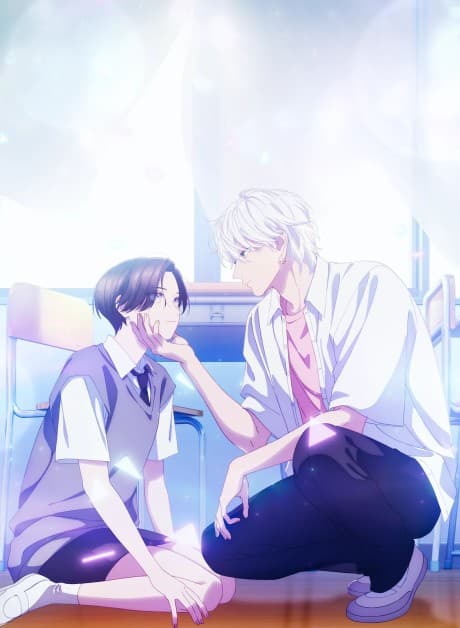
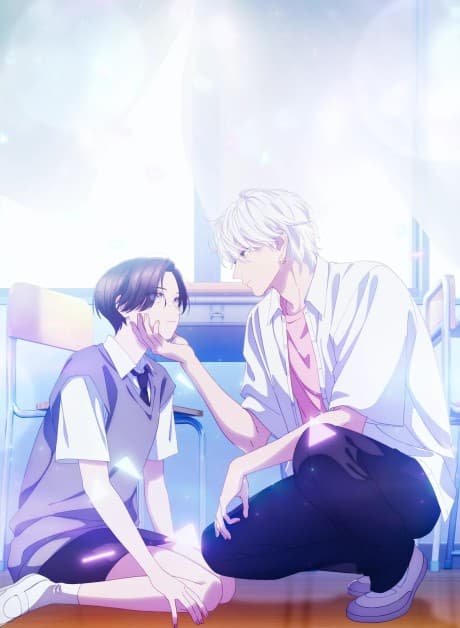
In the Clear Moonlit Dusk's central premise feels like it was pulled from a Tumblr prompt circa 2014: what if a girl was so handsome she was mistaken for a boy, and what if she fell for the actual male prince of the school? It's a setup ripe with potential for exploring how gender is performed, perceived, and policed in adolescent spaces. Yet the show consistently sidesteps these richer thematic possibilities in favor of more traditional shoujo beats. Yoi's androgyny becomes less a lived experience with social consequences and more a quirky character trait—the narrative equivalent of giving a character heterochromia or a mysterious scar. When Kohaku Ichimura, the school's actual male "prince," becomes the first person to truly see Yoi as a girl, the moment should feel revolutionary. Instead, it plays like a standard romance anime meet-cute with slightly different window dressing.
This isn't to say the show is poorly executed—far from it. The animation from East Fish Studio is consistently lovely, with particular attention paid to the subtle shifts in Yoi's expressions as she navigates the gap between how others perceive her and how she perceives herself. But the series seems content to use its gender-bending premise as aesthetic rather than substance. Compare it to something like Ouran High School Host Club (which, tellingly, appears in the "fans also liked" section), where Haruhi's gender presentation becomes a vehicle for satirizing class, gender roles, and the absurdity of high school social hierarchies. In the Clear Moonlit Dusk lacks that satirical edge or deeper interrogation, opting instead for a gentler, more straightforward approach that prioritizes romantic tension over social commentary.
The shoujo comfort food industrial complex
At a time when anime is increasingly dominated by isekai power fantasies and battle shonen with increasingly convoluted power systems, there's something almost radical about In the Clear Moonlit Dusk's commitment to being a straightforward romance. With its PG-13 rating and school setting, the show fits squarely within the shoujo demographic's wheelhouse, offering the kind of gentle, character-driven storytelling that has become increasingly rare in mainstream anime. The 7.2/10 score (7.5 on MyAnimeList) suggests a show that's executing its genre conventions competently if not spectacularly—the television equivalent of a perfectly baked chocolate chip cookie when you were expecting artisanal pastries.
This speaks to a larger trend in contemporary anime: the rise of what might be called "comfort food" series. These are shows that don't aim to reinvent the wheel or challenge their audience but instead provide reliable, predictable pleasures within established genre frameworks. In the Clear Moonlit Dusk fits this mold perfectly, offering the familiar beats of high school romance—the accidental meetings, the misunderstandings, the slow-burn realization of feelings—with just enough of a twist (the gender presentation angle) to feel slightly fresh. It's the anime equivalent of putting a new topping on a classic pizza: recognizable, satisfying, and unlikely to offend anyone's palate.
The music of missed opportunities
Perhaps nowhere is the show's conflict between potential and execution more evident than in its music. Both the opening "Uruwashi" and ending "Azalea no Kaze" are performed by UNISON SQUARE GARDEN, a band known for their energetic, complex arrangements that have graced shows with far more narrative ambition (most notably Tiger & Bunny and Mob Psycho 100). The songs themselves are perfectly pleasant J-pop-rock tracks, but they feel oddly disconnected from the show's gentle, slice-of-life tone. It's as if someone at the production meeting said, "We need something that sounds like an anime opening," without considering whether that sound actually served the story being told.
This musical mismatch speaks to a larger issue with In the Clear Moonlit Dusk: it often feels like a collection of competent parts that don't quite cohere into a compelling whole. The character designs are attractive but generic, the school setting is rendered with adequate detail but lacks personality, and even the central romance between Yoi and Kohaku progresses at such a measured pace that it occasionally threatens to stall entirely. In an era where romance anime like Kaguya-sama: Love Is War have redefined what the genre can accomplish through innovative storytelling and razor-sharp comedy, In the Clear Moonlit Dusk feels content to occupy a much more traditional, much safer space.
The ghost of what could have been
What makes In the Clear Moonlit Dusk particularly fascinating—and occasionally frustrating—is how close it comes to being something truly special. There are moments, particularly in Yoi's quieter scenes, where the show hints at a deeper exploration of identity and perception. When she reflexively adopts more masculine mannerisms in public only to catch herself and wonder why she's performing this way, there's a glimpse of the more psychologically complex series this could have been. Similarly, Kohaku's recognition of Yoi's femininity despite her appearance suggests an interesting commentary on how we see versus how we perceive.
But these moments are fleeting, quickly subsumed by more conventional romantic plotting. The show seems afraid to fully commit to its most interesting ideas, perhaps worried that doing so would alienate its target shoujo audience. This creates a strange tension throughout the series: you can almost feel the creative team pulling their punches, opting for the safer choice at every narrative crossroads. It's the television equivalent of someone who buys a motorcycle but only ever rides it in their driveway—all the potential for adventure is there, but the execution remains frustratingly tame.
The bottom line: Cozy, competent, and completely unambitious
In the Clear Moonlit Dusk is the kind of show that's difficult to criticize because it's so clearly achieving what it sets out to do. It wants to be a gentle, romantic slice-of-life series about two high school "princes" finding each other, and that's exactly what it is. The animation is solid, the voice acting is competent, and the central romance develops with the kind of slow, steady progression that shoujo fans have come to expect and appreciate. At 23 minutes per episode, it's perfectly paced for casual viewing, and its PG-13 rating makes it accessible to a wide audience.
But therein lies the rub: in playing it so safe, the show squanders its most interesting premise. What could have been a thoughtful exploration of gender, perception, and identity in adolescence becomes instead a perfectly pleasant but ultimately forgettable romance. It's the anime equivalent of ordering a gourmet burger and receiving a perfectly adequate fast-food version instead: it'll satisfy your hunger, but you'll spend the entire meal thinking about what could have been.
Final Score: 6.5/10 – A competently executed shoujo romance that consistently chooses comfort over challenge, leaving its most interesting ideas frustratingly unexplored. Perfect for viewers seeking gentle, undemanding entertainment, but likely to disappoint anyone hoping for the gender-bending revolution its premise initially promises.