Hunter x Hunter (2011) dismantles shonen tropes while somehow becoming the genre's ultimate expression
There's a particular moment in the Chimera Ant arc—roughly 100 episodes into this 148-episode odyssey—where Hunter x Hunter stops feeling like an anime and starts feeling like a philosophical treatise disguised as a battle shonen. It's the point where the series, which began as a deceptively simple story about a boy searching for his father, reveals its true ambition: to systematically dissect every convention of its genre while simultaneously delivering the most satisfying version of that genre imaginable. This 2011 adaptation from MADHOUSE, directed by Hiroshi Koujina, doesn't just tell a story about Hunters; it hunts down the very DNA of shonen storytelling, examines it under a microscope, and then rebuilds it into something smarter, darker, and more emotionally complex than anything in the genre's history.

The deceptive simplicity of a boy's journey that becomes everyone else's trauma
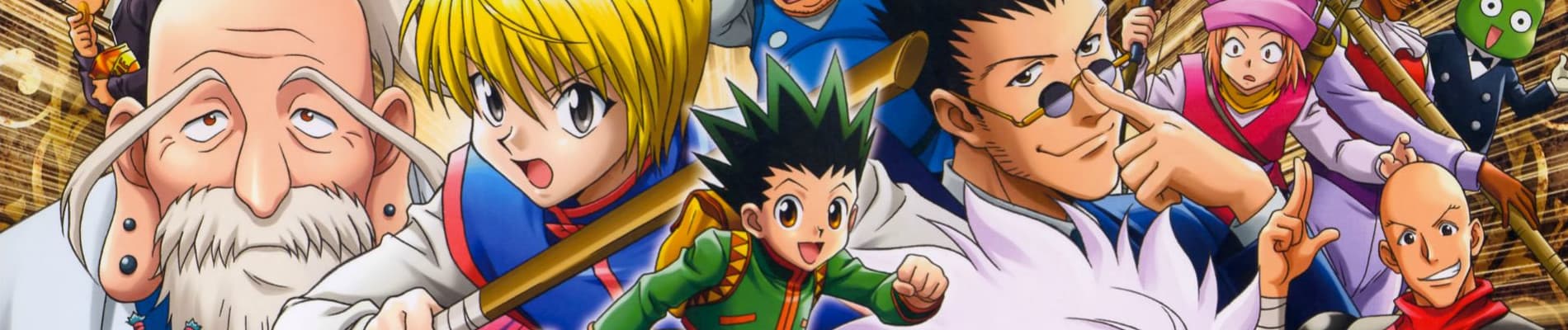
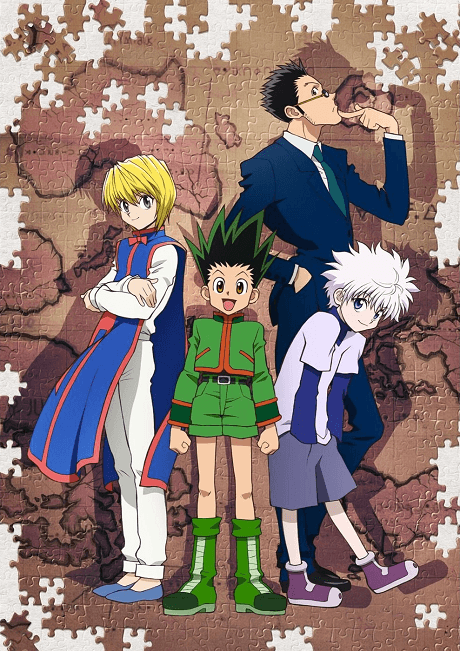
On the surface, Gon Freecss's quest to find his absentee father Ging follows the classic shonen template: young protagonist with special potential, a world of magical systems to master, tournaments to win, and friends to make along the way. But Yoshihiro Togashi's genius—and the adaptation's faithful execution—lies in how quickly this template gets subverted. Gon isn't just a plucky hero; he's a moral wildcard whose simplistic worldview becomes increasingly dangerous as the series progresses. His friendship with Killua Zoldyck, the ex-assassin with 100,468 favorites on MyAnimeList (tellingly, more than quadruple Gon's count), isn't just a buddy-cop dynamic but a study in how trauma and innocence can become mutually destructive. While community reviewer 'KaizokuOtaku' correctly notes that HxH "gives you insight on what shonen anime can become if done slightly differently," they undersell the radical nature of that difference. This isn't a slight variation—it's a complete reimagining of what emotional stakes in battle anime can be, where victories often feel like losses and character growth looks suspiciously like psychological damage.
Nen: The magic system that exposes storytelling's mathematical heart
Most shonen series treat their power systems as narrative conveniences—Dragon Ball's ki, Naruto's chakra, One Piece's devil fruits—designed primarily to enable cool fights. Hunter x Hunter's Nen system, introduced around episode 26, functions instead as a narrative philosophy made manifest. By categorizing abilities into six distinct types with strict rules, limitations, and conditions, Nen becomes a metaphor for character itself. Kurapika's quest for revenge isn't just emotional motivation; it literally shapes his Nen abilities, binding him to restrictions that could kill him. The system forces characters to confront their deepest selves to gain power, making every battle a psychological profile. When community reviewers praise HxH for avoiding "power-ups which makes no sense," they're touching on something more profound: this is a series where power has narrative consequences, where abilities have thematic weight, and where the magic system itself becomes a character study tool. It's the difference between giving a character a bigger gun and forcing them to examine why they need the gun in the first place.

The Chimera Ant arc: Where shonen grows up and gets terrifying
Approximately a third of the series' runtime is devoted to the Chimera Ant arc, a narrative decision so audacious it either makes or breaks the show for viewers. This is where director Hiroshi Koujina and his team—including episode directors like Hiroyasu Aoki and Junichi Fujise—transform what could have been a monster-of-the-week storyline into a harrowing meditation on evolution, humanity, and the nature of evil. The arc's central antagonist, Meruem, begins as a generic destroyer-of-worlds trope but evolves into one of anime's most complex villains, experiencing something resembling enlightenment even as he plans genocide. Meanwhile, Gon's journey reaches its logical, horrifying conclusion: what happens when a shonen protagonist's unwavering determination meets a situation where determination isn't enough? The answer involves a transformation so disturbing it permanently alters how we view the cheerful boy from episode one. While fans on MyAnimeList debate whether this arc's pacing (stretching across nearly 50 episodes) is a masterpiece or self-indulgent, they're missing the point: the slowness is the point. This isn't a battle arc; it's a descent, meticulously documented in real narrative time.
The supporting cast as narrative counterpoints: Why Leorio matters more than you think
In a series with flamboyant characters like Hisoka the murderous magician or the Phantom Troupe's theatrical criminals, it would be easy to overlook Leorio Paladiknight and his mere 7,567 favorites on MAL. But Leorio's relative normalcy—he wants to be a doctor to help people, a motivation almost quaint in this world of revenge quests and assassin families—serves as the series' moral anchor. While Gon's innocence curdles into something dangerous, Kurapika's revenge consumes him, and Killua's trauma defines him, Leorio represents what these characters might have been in a less broken world. His occasional appearances, particularly later in the series, function as reality checks, reminding us that most people in this universe aren't superpowered Hunters but regular humans trying to survive. Even minor supporting characters like Knuckle Bine (882 favorites) receive surprising depth, with entire episodes devoted to their philosophies and motivations. This commitment to even tertiary characters creates a world that feels lived-in rather than constructed solely for the protagonist's journey.
The soundtrack of controlled chaos: How music mirrors narrative structure
Sound director Chiaki Yamada's work on HxH deserves particular attention for how it reinforces the series' thematic ambitions. The opening theme "departure!" by Masatoshi Ono is deceptively upbeat—a cheerful, almost generic shonen anthem that plays over 76 episodes, becoming increasingly ironic as the series darkens. By contrast, the first ending theme "Just Awake" by Fear, and Loathing in Las Vegas is a chaotic metalcore track that better represents the series' true emotional core. This musical dichotomy—surface simplicity masking underlying complexity—mirrors the entire narrative approach. The score knows when to swell with traditional orchestration during emotional moments and when to drop into unsettling silence during the Chimera Ant arc's most horrific sequences. It's a soundtrack that understands this isn't just another adventure anime but a story constantly questioning what adventure even means.
The legacy problem: Why Hunter x Hunter can't have a proper ending (and why that might be perfect)
Here's the uncomfortable truth that the 9.03/10 MAL score and #9 ranking can't quite capture: Hunter x Hunter (2011) adapts an incomplete manga. The anime concludes at a logical stopping point—Gon finally meets his father—but it's not the story's true ending because the manga continues in fits and starts, plagued by Togashi's health issues. This creates a fascinating paradox: the 2011 adaptation is both a complete masterpiece and fundamentally unfinished. Unlike its frequently compared peer Fullmetal Alchemist: Brotherhood (which 77 MAL users also liked), HxH doesn't offer narrative closure so much as emotional resolution. Gon's journey concludes, but the world continues, with Kurapika's story particularly left dangling. Some might call this a flaw, but in a series that consistently subverts expectations, perhaps an unconventional ending is the only appropriate one. The community is divided on this point—some, like reviewer 'HajimeSaitou,' call it a "masterpiece" regardless, while others feel the incompleteness undermines the achievement—but this very debate reflects the series' complexity: even its structural imperfections feel intentional, challenging our expectations of what a complete story should be.
The bottom line: Not just a great shonen, but a great argument about what shonen could be
Hunter x Hunter (2011) achieves something nearly impossible: it deconstructs its genre while simultaneously delivering that genre's greatest hits with more intelligence and emotional depth than almost any competitor. The 148-episode journey—meticulously adapted by MADHOUSE, beautifully scored, and featuring some of anime's most complex character work—doesn't just tell a story about Hunters; it hunts down the soul of battle shonen itself. When it's funny, it's genuinely hilarious (often thanks to Killua's deadpan reactions). When it's dark, it's psychologically harrowing. When it fights, the battles feel like chess matches where every move reveals character. The series earns its 8.9/10 score not through perfection but through ambition, consistently choosing narrative risk over safety, emotional complexity over simplicity, and philosophical depth over easy answers. In a landscape crowded with shonen adventures, Hunter x Hunter remains the genre's most brilliant anomaly: a show that understands the rules so completely that it can break them better than anyone else.
Final Score: 9.5/10 – A landmark achievement that redefines what battle anime can accomplish, both emotionally and intellectually.