Hell's Paradise: MAPPA's beautiful, broken attempt to find meaning in the void
There's a particular kind of anime disappointment that stings more than outright failure—the show that has everything going for it on paper but somehow manages to fumble the execution. MAPPA's Hell's Paradise is that show, a gorgeously animated, conceptually rich series that somehow feels less than the sum of its parts. Watching it is like witnessing a master chef prepare an elaborate feast with the finest ingredients, only to serve it cold. The bones of something truly special are here—a Buddhist-inspired island of horrors, a cast of death row convicts seeking redemption, stunning visual design—but the connective tissue between these elements feels frayed, rushed, and ultimately unsatisfying. In an era where anime adaptations are increasingly treated as prestige television, Hell's Paradise feels like a relic of an older, more haphazard approach to adaptation, where beautiful moments don't necessarily add up to a beautiful whole.
The island as character: When setting outshines story
Hell's Paradise's greatest strength lies in its central location—the mysterious island that serves as both setting and antagonist. This isn't just a backdrop for action sequences; it's a fully realized character with its own logic, history, and malevolent intelligence. The island's design borrows from Buddhist cosmology while injecting enough body horror and surrealism to keep viewers constantly off-balance. Those eerie manmade statues that populate the landscape aren't just set dressing—they're remnants of failed expeditions, monuments to human ambition turned to stone. The hermits who rule the island aren't typical villains but rather tragic figures who've achieved immortality at the cost of their humanity. This is where Hell's Paradise shines brightest: in creating a world that feels genuinely alien and dangerous. The problem, as several AniList reviewers noted, is that the show often seems more interested in showing us this fascinating world than in telling a compelling story within it. We get breathtaking vistas and nightmarish creatures, but the narrative engine driving our characters through this landscape often sputters. It's the classic video game problem—the side quests are more interesting than the main story.

Gabimaru and Sagiri: A partnership that never quite clicks
At the heart of Hell's Paradise should be the evolving dynamic between Gabimaru, the emotionless shinobi seeking redemption, and Yamada Asaemon Sagiri, his executioner-turned-companion. On paper, this is classic odd-couple material—the killer who wants to live versus the lawkeeper who's questioning her purpose. In execution, however, their relationship feels strangely inert. Gabimaru's motivation—reuniting with his wife—should be emotionally compelling, but his stoic characterization makes him difficult to connect with. Sagiri fares slightly better as the moral compass of the story, but her development feels rushed across the series' 13 episodes. This is where the show's pacing problems become most apparent: we're told these characters are forming a bond, but we're rarely shown the small moments that would make that bond feel earned. Compare this to similar partnerships in anime—Guts and Griffith in Berserk, Spike and Jet in Cowboy Bebop—and the difference in emotional resonance becomes stark. As AniList user douveAtomique put it, "the author has all the right ingredients but doesn't know how to cook." The potential for a truly memorable character dynamic is here, but it's never fully realized.
The convict ensemble: Wasted potential in paradise
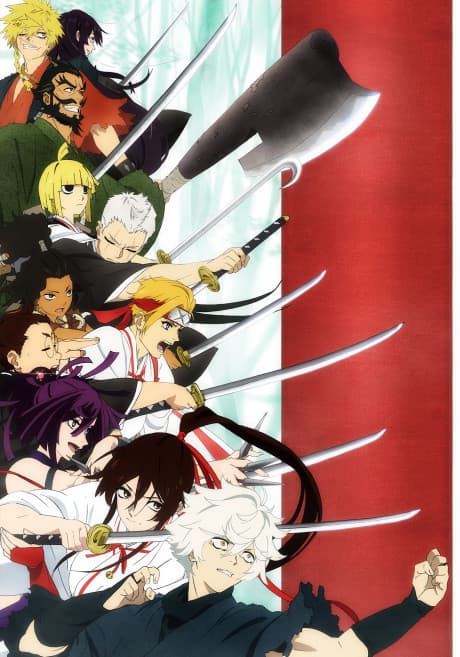
One of Hell's Paradise's most intriguing elements is its ensemble cast of death row convicts, each with their own tragic backstory and desperate motivation for finding the Elixir of Life. This should be fertile ground for exploring themes of redemption, morality, and what makes life worth living. Instead, most of these characters feel underdeveloped, serving more as obstacles or cannon fodder than as fully realized individuals. The show introduces fascinating concepts—a doctor who experiments on the island's creatures, a warrior seeking to atone for past sins—but rarely gives them the screen time they deserve. This is particularly frustrating given the show's relatively short 13-episode run; every minute feels precious, and spending time on characters who won't be properly developed feels like a missed opportunity. The community seems divided on this point—some reviewers praise the show's willingness to kill off characters unexpectedly, while others lament the wasted potential. What's clear is that Hell's Paradise struggles with balancing its large cast against its limited runtime, a problem that becomes more pronounced as the series progresses.
MAPPA's animation: Beauty with diminishing returns
Let's be clear: Hell's Paradise is a beautiful show. MAPPA continues to prove why they're one of the most visually distinctive studios working today, with fluid action sequences, detailed character designs, and some truly breathtaking environmental art. The island itself is a character thanks to the animation team's efforts, with lush vegetation that seems to pulse with malevolent life and supernatural phenomena that feel genuinely otherworldly. The problem, as several community reviewers noted, is that the animation quality isn't consistent. There are moments of sheer brilliance—particularly in the early episodes—followed by sequences that feel rushed or underproduced. This inconsistency becomes a metaphor for the show itself: flashes of genius surrounded by mediocrity. It's worth noting that Hell's Paradise aired during a particularly busy period for MAPPA, who were simultaneously working on multiple high-profile projects. As AniList user Mcsuper noted in their review titled "Definitely Not MAPPA's Favourite Child," the studio's divided attention shows. The animation is never bad, but it's rarely as consistently excellent as it should be given the source material's visual potential.

The Buddhist framework: Philosophy as window dressing
Hell's Paradise's most ambitious element is its incorporation of Buddhist concepts into its narrative framework. The island is explicitly described as Sukhavati, the Buddhist pure land, and the quest for the Elixir of Life becomes a metaphor for enlightenment. Characters grapple with concepts of karma, rebirth, and the nature of suffering. On paper, this should elevate the show beyond typical action-adventure fare. In practice, however, the philosophical elements often feel like window dressing rather than integral components of the story. The show introduces complex ideas about the nature of immortality and the price of enlightenment, but rarely explores them with the depth they deserve. This is particularly frustrating given how rich Buddhist philosophy is as a source of narrative tension—the conflict between worldly desire and spiritual liberation could have been the show's central theme. Instead, it becomes just another element in an already crowded narrative. As nightcrawller noted in their review, "the idea sounds interesting and makes us excited to know more," but the execution doesn't live up to the premise's promise.
The rushed conclusion: When pacing kills potential
Perhaps Hell's Paradise's greatest sin is its rushed conclusion. With only 13 episodes to adapt a significant portion of the manga, the show's pacing becomes increasingly frantic as it approaches its finale. Major revelations feel unearned, character arcs are truncated, and the emotional payoff that should come from Gabimaru's journey feels hollow. This is where the show's structural problems become most apparent: there's simply too much story for the allotted runtime. The result is a finale that feels less like a satisfying conclusion and more like a checklist of plot points that need to be addressed. This pacing problem isn't unique to Hell's Paradise—it's a common issue with anime adaptations that try to cover too much ground too quickly—but it's particularly damaging here because the show's philosophical and emotional weight depends on taking its time. When characters make life-altering decisions in the span of a single episode, those decisions feel less meaningful. When major revelations are delivered in exposition dumps rather than earned through narrative development, they lose their impact.
Final thoughts: A beautiful failure worth examining
Hell's Paradise is ultimately a frustrating experience—not because it's bad, but because it's so clearly capable of being great. Every element of a masterpiece is here: stunning visual design, fascinating philosophical concepts, a unique setting, and a premise ripe with dramatic potential. What's missing is the connective tissue that would bind these elements into a cohesive whole. The show feels like a collection of beautiful moments rather than a complete narrative, a series of highlights without the substance to support them. This might explain the divided community response: some viewers (like Roixesae, who gave it 91/100) are willing to overlook the flaws for the moments of brilliance, while others (like Mcsuper with their 50/100) find the inconsistency too damaging to ignore. Personally, I fall somewhere in between. There's enough here to make Hell's Paradise worth watching for anime fans interested in Buddhist themes or MAPPA's visual style, but not enough to recommend it as essential viewing. It's the kind of show that will likely be remembered more for what it could have been than for what it actually is—a beautiful, broken attempt to find meaning in the void. Final Score: 6/10 – Flawed but fascinating, worth watching for its high points but ultimately unsatisfying as a complete narrative.