Hell Mode: The Hardcore Gamer Dominates in Another World with Garbage Balancing is the isekai genre's most honest admission of creative bankruptcy
There's a particular kind of exhaustion that sets in around the 37th isekai of the season, a weariness that comes not from the genre's inherent flaws but from its refusal to acknowledge them. It's the fatigue of watching the same story told with slightly different character designs, the same power fantasies repackaged with marginally different magic systems. Enter Hell Mode: The Hardcore Gamer Dominates in Another World with Garbage Balancing, a title so transparently descriptive it feels less like marketing and more like a confession. Director Makoto Tamagawa's latest offering for Yokohama Animation Lab doesn't just follow the isekai playbook—it photocopies it, staples the pages together, and hands it back to us with a shrug that says, "Yeah, we know." The show's very existence feels like the genre looking in the mirror and finally admitting what we've all known: we've run out of ideas, but the conveyor belt must keep moving.
When your title does all the heavy lifting
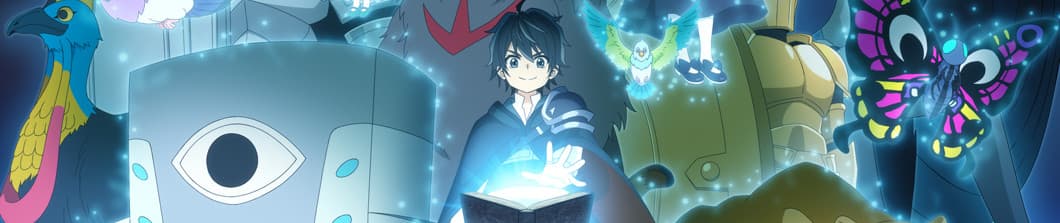
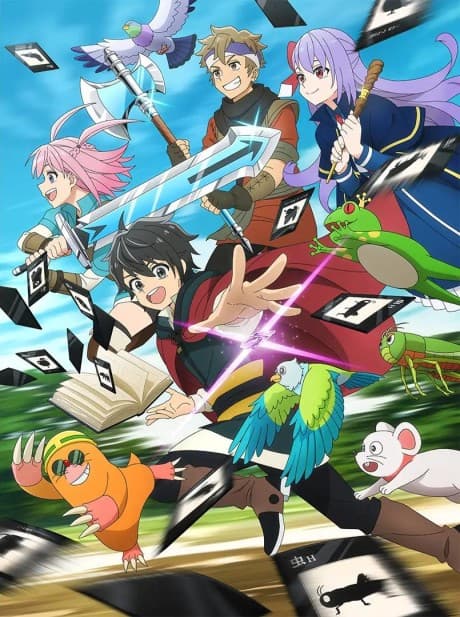
Hell Mode opens with what might be the most honest title sequence in anime history. The protagonist's name is Allen, but he was Kenichi Yamada, a 35-year-old MMORPG addict who specifically chooses a game mode called "Hell Mode" because modern games have become too easy. Within the first five minutes, we get transported to another world, reincarnation as a baby, a family of serfs to save, and a mysterious class system to master. The show moves through these beats with the efficiency of someone checking items off a grocery list. There's no attempt to justify why this particular gamer gets isekai'd, no philosophical musings about the nature of reality versus gaming—just the cold, hard mechanics of genre convention. In its refusal to dress up its premise, Hell Mode achieves a kind of brutal honesty. It's the isekai equivalent of a fast-food burger: you know exactly what you're getting, the nutritional information is right there on the wrapper, and any complaints about originality feel disingenuous when you willingly ordered from the value menu.
Allen: The protagonist as spreadsheet
What makes Allen fascinating isn't his personality—he has about as much character depth as a loading screen—but what he represents about contemporary power fantasy. Unlike Kirito from Sword Art Online or Subaru from Re:Zero, Allen doesn't struggle with the psychological implications of his new reality. He doesn't mourn his old life or question his purpose. Instead, he approaches his new world with the cold, calculating logic of a min-maxer optimizing a character build. When he discovers he's been reborn as a Summoner, he doesn't wonder about the ethical implications of commanding magical creatures—he immediately starts strategizing about how to exploit the class's mechanics. This makes him less a character and more a vehicle for gaming logic, a walking spreadsheet of stats and optimization strategies. In a genre filled with protagonists who angst about their specialness, Allen's unapologetic embrace of his gamer mindset feels almost revolutionary in its lack of sentimentality. He's not here to make friends or find love; he's here to beat the game, and everyone else is either an NPC or party member.
Yokohama Animation Lab's aesthetic of adequacy
Visually, Hell Mode exists in that peculiar anime middle-ground where nothing is technically bad, but nothing is particularly memorable either. The character designs are serviceable, the magic effects competent, and the action sequences functional. Director Makoto Tamagawa, working with what we can assume is a modest budget, makes the smart choice to focus on clarity over spectacle. When Allen summons his creatures, we can actually see what's happening—a small victory in an era where many action anime dissolve into incomprehensible light shows. The color palette leans heavily into fantasy standards: lush greens for forests, earthy browns for villages, and the occasional burst of magical blue or red. It's the visual equivalent of elevator music for the eyes—pleasant enough while it's on, impossible to recall five minutes later. The opening theme "Haku" by Atarayo and the score by Reiko Abe, BeauDamian, and Shuichiro Fukuhiro follow this same philosophy of pleasant adequacy, providing exactly the kind of generic fantasy ambiance you'd expect without ever surprising you.
The garbage balancing act of modern isekai
Hell Mode's subtitle—"with Garbage Balancing"—is its most interesting philosophical statement, even if it's probably unintentional. The phrase suggests a critique of game design, but it works equally well as a critique of the isekai genre itself. These stories have always been about imbalance: ordinary person gets extraordinary power in a world that can't handle it. But where earlier isekai like The Vision of Escaflowne or Now and Then, Here and There used that imbalance to explore themes of responsibility and cultural collision, modern isekai has largely abandoned such concerns in favor of pure power fantasy. Hell Mode embraces this completely. Allen's "garbage balancing" isn't a problem to be solved but a feature to be exploited. The show makes no pretense about creating a fair or believable world; it's a game system waiting to be broken, and Allen is the player who will do the breaking. In this sense, Hell Mode is the logical endpoint of a genre that has gradually shed all pretense of being anything other than wish fulfillment. It's not trying to balance its narrative or themes—it's leaning into the imbalance, making the garbage part of the appeal.
The light novel industrial complex on full display
Hell Mode's origins as a light novel adaptation explain nearly everything about its structure and pacing. The 12-episode format feels less like a complete story and more like a commercial for the source material, hitting familiar beats at predictable intervals while always pointing toward the next volume. This isn't necessarily a criticism—it's simply the reality of modern anime production, where shows exist primarily to drive manga and light novel sales. What's fascinating about Hell Mode is how transparent it is about this relationship. The plot progresses in clearly delineated "chapters," each ending with a hook for what comes next. Character development happens in quantifiable skill upgrades rather than emotional growth. Even the world-building feels modular, introducing new game mechanics exactly when the plot needs them rather than creating a coherent setting. It's content designed for binging and then immediately moving on to the next thing, the narrative equivalent of snack food that leaves you hungry for more of exactly the same thing.
Why 6.75/10 might be the most honest score on MyAnimeList
Hell Mode's MAL score of 6.75/10 (ranked #5928, popularity #4240) tells us everything we need to know about its place in the anime ecosystem. This isn't a score that indicates quality so much as it indicates adequacy. It's the numerical equivalent of "it does what it says on the tin." The show has 35,511 members but only 78 favorites—a ratio that suggests viewers are watching it, acknowledging its existence, and then promptly forgetting about it. In an attention economy where being either brilliant or terrible is more valuable than being competent, Hell Mode occupies the dangerous middle ground of being just good enough to finish but not good enough to remember. This might be the most damning indictment of the current isekai landscape: we've reached a point where a show can execute all the genre conventions with technical competence and still fail to leave any meaningful impression. The 6.75 isn't a judgment of quality so much as a measurement of how thoroughly we've normalized this particular flavor of content.
The bottom line: Hell Mode as cultural artifact
Final Score: 6.5/10 – The isekai genre's equivalent of background noise.
Watching Hell Mode: The Hardcore Gamer Dominates in Another World with Garbage Balancing feels less like engaging with a story and more like observing a cultural phenomenon in its most distilled form. This isn't a bad show—it's too competently made for that label—but it is an utterly unnecessary one. It adds nothing to the conversation, pushes no boundaries, and makes no attempt to distinguish itself from the dozens of similar shows released every season. And yet, there's something almost admirable in its lack of ambition. In an era where every piece of media seems desperate to be Important or Meaningful or at least Twitter-worthy, Hell Mode is content to be exactly what it is: a serviceable power fantasy for people who want to turn their brains off for 23 minutes at a time. It's the anime equivalent of comfort food that you know isn't good for you, but you eat it anyway because sometimes you just want something familiar and undemanding. The real hell mode isn't in the game Allen plays—it's in being an anime fan in 2024, scrolling through endless catalogs of content that all look exactly the same, wondering when exactly we decided that adequacy was enough.