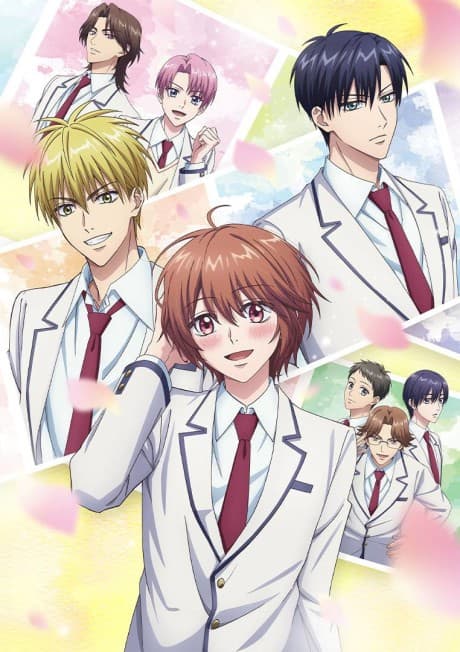
Hana-Kimi's four-minute gender-bender feels like a speedrun through anime's most tired tropes
There's something almost admirable about the sheer audacity of trying to tell a gender-bending boarding school romance in four-minute episodes. It's like watching someone attempt to perform Shakespeare's entire canon in a series of TikTok videos—the ambition is there, but the execution feels destined for failure. Hana-Kimi, Signal.MD's latest offering, takes the classic 'girl disguises as boy to infiltrate all-male school' premise that's been a staple of shojo manga since the 1990s and compresses it into bite-sized chunks that somehow manage to feel both rushed and tedious simultaneously. In an era where anime is pushing boundaries with complex narratives and nuanced character studies, Hana-Kimi arrives as a throwback to simpler times—though whether that's a feature or a bug depends entirely on your tolerance for formulaic storytelling.
The four-minute format: A constraint that exposes creative bankruptcy
At just four minutes per episode, Hana-Kimi operates under severe narrative constraints that should theoretically force creative solutions. Instead, director Gko and the team at Signal.MD use the format as an excuse for storytelling shortcuts that would make even the most forgiving viewer wince. Each episode feels less like a complete narrative unit and more like a series of disconnected vignettes, with Mizuki Ashiya's central mission—to meet her idol, high jump star Izumi Sano—reduced to a series of repetitive beats. The format exposes the show's fundamental weakness: when you strip away the padding that typically fills out 24-minute episodes, you're left with a skeleton of a story that's been told better countless times before. It's the anime equivalent of trying to build a cathedral with toothpicks—the ambition is there, but the materials simply aren't up to the task.
Mizuki Ashiya: A protagonist trapped in 1990s gender politics
Mizuki Ashiya represents everything that's both charming and frustrating about classic shojo heroines. Her determination to infiltrate an all-boys school to meet her athletic idol has a certain retro appeal, like discovering a forgotten Tamagotchi in your childhood bedroom. But in 2024, her characterization feels like a time capsule from an era when female protagonists were defined primarily by their devotion to male love interests. The show attempts to give her agency—she's the one making the bold choice to cross-dress and enroll—but her motivations remain frustratingly one-dimensional. Compare Mizuki to more contemporary gender-bending protagonists like Ouran High School Host Club's Haruhi Fujioka, who subverts gender expectations with genuine wit and self-awareness, and Mizuki feels like a relic. Her entire personality orbits around Izumi Sano, and while that might have felt romantic in 1998, today it reads as disappointingly regressive.
The boarding school setting: A stage with no players
All-male boarding schools have been a staple of anime romance since at least Hana-Kimi's spiritual predecessor, Hana Yori Dango, but here the setting feels less like a vibrant ecosystem and more like a hastily assembled backdrop. With only four minutes to establish characters and relationships, the supporting cast of male students becomes a blur of interchangeable faces, their personalities reduced to single traits if they're lucky enough to get any development at all. The chaos of dorm life that the synopsis promises manifests as generic anime hijinks—pratfalls, misunderstandings, and the occasional blush—without the breathing room needed to make these moments feel earned. It's a shame, because the premise of a girl navigating male spaces has rich potential for exploring gender performance and social dynamics, but Hana-Kimi treats its setting as mere decoration rather than a meaningful component of the narrative.
Izumi Sano's mysterious retirement: A plot device in search of a purpose
The central twist—that Mizuki's idol has quit high jumping—should be the engine that drives the narrative forward, creating tension and forcing character growth. Instead, it functions as a narrative speed bump, something to be overcome rather than explored. Izumi's retirement from sports could have been an opportunity to examine the pressures of athletic stardom, the psychology of quitting, or the identity crisis that follows when your defining characteristic disappears. Instead, it's treated as a simple obstacle for Mizuki to navigate, reducing what could have been complex character work to a straightforward romantic goal. The show's refusal to engage with the emotional weight of Izumi's decision speaks to its broader unwillingness to dig beneath the surface of its own premise.
Signal.MD's production: When minimalism becomes minimal effort
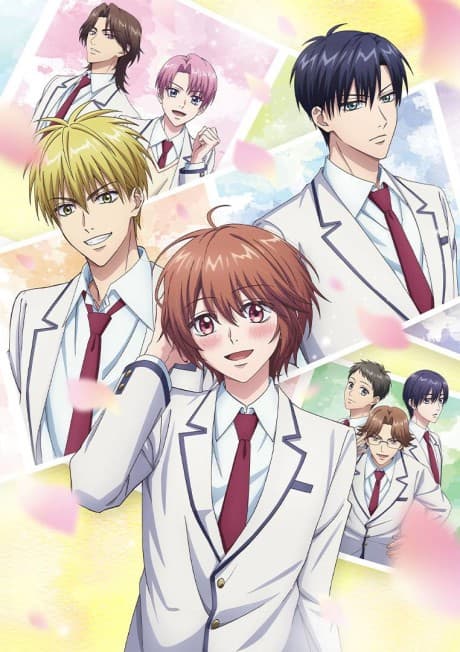
Signal.MD has built a reputation for competent, if unspectacular, animation work, and Hana-Kimi does little to challenge that assessment. The character designs are pleasant but generic, the backgrounds serviceable but lacking personality, and the animation itself rarely rises above functional. In a four-minute format, every frame should count, but Hana-Kimi often feels visually inert, as if the production team recognized the limitations of their runtime and decided not to bother pushing beyond them. Compare this to other short-form anime like Teekyu or Inferno Cop, which use their constrained formats as opportunities for visual experimentation and stylistic boldness, and Hana-Kimi feels like a missed opportunity. The show's G rating and 'All Ages' designation might explain some of its visual conservatism, but great children's media has never been afraid of visual innovation—just look at Studio Ghibli's catalog.
The music theme: An afterthought in search of relevance
According to the MyAnimeList data, Hana-Kimi includes music as a theme, though you'd be hard-pressed to identify its significance based on the available episodes. In a better version of this show, music could have served as a bridge between Mizuki and Izumi, a shared language that transcends their gender divide. It could have provided emotional texture, character insight, or simply been a source of joy in an otherwise stressful situation. Instead, music feels like an item on a checklist rather than an integrated element of the narrative. This disconnect between stated themes and actual content speaks to a broader issue with Hana-Kimi: it's a show that seems to be following a template rather than discovering its own unique voice.
The cultural context: Gender-bending in an era of gender fluidity
Hana-Kimi arrives at a fascinating cultural moment, when conversations about gender identity and expression have moved from niche academic discussions to mainstream discourse. In this context, a show about cross-dressing and gender performance could have been timely and relevant, exploring what it means to present as a different gender and how that affects relationships and self-perception. Instead, Hana-Kimi treats Mizuki's disguise as a simple plot device, with none of the psychological complexity that the premise suggests. There's no exploration of how wearing male clothing affects her sense of self, no examination of the privileges or limitations of male presentation, and no meaningful engagement with the social dynamics of gender. In an era when shows like Wandering Son and Hourou Musuko have explored gender identity with sensitivity and depth, Hana-Kimi's approach feels disappointingly superficial.
The bottom line: A show that misunderstands its own potential
With a MAL score of 6.6/10 and only 133 members, Hana-Kimi exists in that peculiar anime purgatory reserved for shows that are neither terrible enough to hate-watch nor good enough to recommend. Its four-minute format should have been an opportunity for tight, efficient storytelling, but instead it exposes the thinness of the material. The characters feel underdeveloped, the romance lacks chemistry, and the central premise never evolves beyond its initial setup. Director Gko and the team at Signal.MD have created a show that feels like a first draft of a better idea, a collection of familiar tropes assembled without the care or insight needed to make them feel fresh. In the crowded landscape of anime romance, Hana-Kimi is the equivalent of fast food—quick, convenient, and ultimately unsatisfying. Final Score: 5/10 – A forgettable entry in a genre that deserves better.