Gintama weaponizes absurdity to deliver the most sincere samurai story ever told
There's a moment in Gintama's 201-episode odyssey where protagonist Gintoki Sakata, having just defeated an alien warlord with a wooden sword while wearing nothing but underwear and a traffic cone on his head, turns to the camera and explains that life is like a toilet—sometimes you just have to flush and move on. This isn't just a throwaway gag in a comedy series; it's the entire thesis of Hideaki Sorachi's masterpiece, a show that somehow manages to be the funniest anime ever made while simultaneously delivering one of the most profound meditations on trauma, friendship, and what it means to be human in a world that's lost its mind. In an era where anime often takes itself too seriously or not seriously enough, Gintama found the perfect middle ground by being completely unserious about everything except the things that actually matter.

The greatest trick Gintama ever pulled was convincing us it was just a comedy
At first glance, Gintama appears to be exactly what its synopsis promises: a sci-fi samurai comedy set in an alternate Edo period where aliens have conquered Japan and banned swords. The show's early episodes lean heavily into this premise, delivering rapid-fire gags, fourth-wall breaks, and parodies of everything from Dragon Ball to Japanese variety shows. Director Youichi Fujita and his team at Sunrise understand something crucial about comedy—it's not just about being funny, but about establishing a rhythm and a world where the absurd feels normal. The genius of Gintama's humor lies in its commitment to its own ridiculousness. When Gintoki explains the concept of 'Stands' from JoJo's Bizarre Adventure to a confused Shinpachi, or when the show dedicates an entire episode to a parody of Japanese game shows featuring characters from other anime, it's not just random comedy—it's world-building through absurdity.
What makes this approach revolutionary is how it sets up the show's dramatic turns. Community reviewer myvelouria notes that "fun things are fun," but Gintama understands that the inverse is also true: serious things are more serious when they emerge from a foundation of comedy. The show's most heartbreaking moments—Gintoki's backstory as a child soldier during the Joui War, Kagura's complicated relationship with her violent Yato clan heritage, Shinpachi's struggle to protect his sister's dojo—land with devastating impact precisely because we've spent dozens of episodes laughing with these characters. It's a narrative sleight of hand that few shows have ever pulled off successfully. The A.V. Club's audience of pop culture obsessives will recognize this as similar to what shows like BoJack Horseman or Fleabag accomplish, but Gintama was doing it in anime form years before either existed.
Gintoki Sakata: The reluctant hero who taught a generation how to live
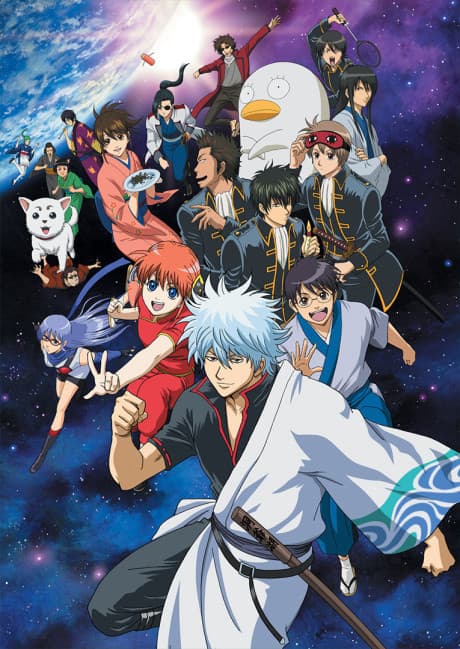
With 76,066 favorites on MyAnimeList, Gintoki isn't just popular—he's iconic. But what makes him such an enduring character isn't his silver perm or his sweet tooth or even his wooden sword. It's his profound humanity in a world that's increasingly inhuman. Gintoki is a samurai in a world that has no use for samurai, a relic of a bygone era who refuses to become a relic. He's lazy, perpetually broke, and would rather read Shounen Jump than save the world, but when it matters—and Gintama is very specific about what matters—he's the most reliable person in Edo.
Community reviewer JabroniPie calls Gintama their favorite series of all time, and much of that affection stems from Gintoki's unique philosophy. Unlike typical shonen protagonists who scream about their dreams and ambitions, Gintoki's entire worldview is built around protecting the small, everyday moments of happiness. His famous line, "The best way to live a full life is to be a child, no matter what your age," isn't just a cute saying—it's the core of his character. Having survived a war that killed his mentor and comrades, Gintoki understands better than anyone that life is fragile and temporary. His refusal to "grow up" in the conventional sense—his love of sweets, his childish humor, his avoidance of responsibility—isn't immaturity; it's a conscious choice to find joy in a world that's constantly trying to take it away.

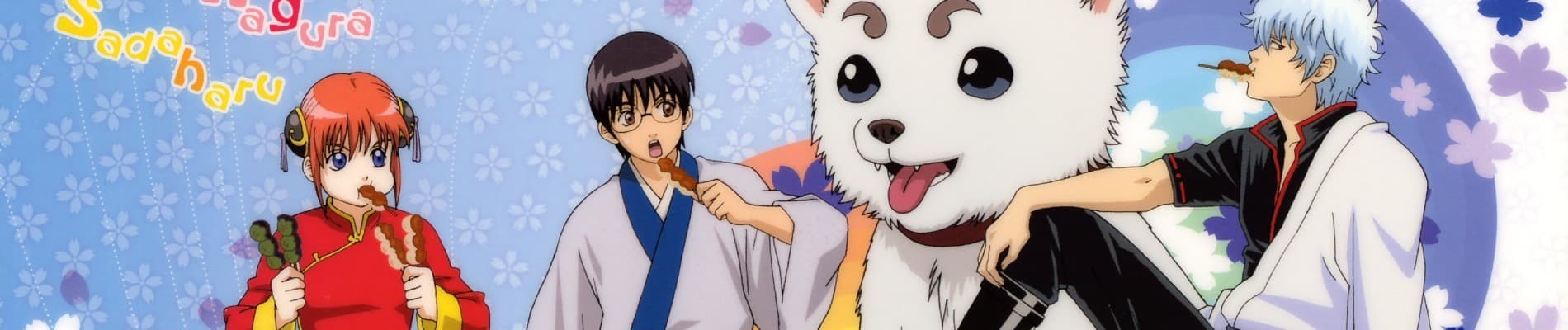
This philosophy extends to the entire Odd Jobs crew. Kagura, with her 12,823 favorites, represents the immigrant experience in microcosm—an alien trying to find her place in a society that fears her kind. Shinpachi, despite having only 1,834 favorites (a criminal underrating), serves as the audience surrogate, the "straight man" in a comedy duo that somehow includes everyone in Edo. Even supporting characters like Hasegawa Taizou, the "Madao" (useless man), become profound commentaries on failure, dignity, and what it means to be a man in a society that values productivity over humanity. Gintama's character work is so effective because it understands that the most interesting stories aren't about heroes saving the world, but about broken people learning to save each other.
Sunrise's production alchemy: How to make 201 episodes feel essential
Let's address the elephant in the room: 201 episodes is a commitment. In an era of 12-episode seasonal anime, Gintama's length can be intimidating. Community reviewer TheAnimeBingeWatcher acknowledges this directly: "Don't let the length intimid you: it's all 100% worth it." But what's fascinating about Gintama's production history is how its length became its greatest strength rather than a liability. Unlike many long-running shonen series that stretch thin material across endless episodes, Gintama uses its runtime to build a living, breathing world.
Sunrise's approach to the adaptation is nothing short of masterful. The studio, best known for the Gundam franchise, brings a level of technical polish to Gintama that it frankly doesn't deserve—and that's the point. The contrast between the show's high-quality animation during serious arcs and its deliberately sloppy, fourth-wall-breaking comedy sequences creates a unique visual language. Sound director Katsuyoshi Kobayashi deserves particular praise for a soundtrack that can pivot from epic samurai battle music to ridiculous game show themes without missing a beat.
The episodic directors—Jet Inoue, Yasuhiro Minami, Shuuji Miyahara, and others—bring distinct voices to different arcs while maintaining a cohesive whole. This isn't a show with one vision; it's a show with dozens of visions that somehow coalesce into something greater than the sum of its parts. The production team understood that to sustain 201 episodes, they couldn't just tell one story—they had to create a universe where any story was possible. From parody episodes that mock the anime industry itself to serious arcs that would feel at home in the best seinen dramas, Gintama's variety isn't just entertainment—it's survival strategy.
The parody that became the thing it parodied
Gintama's relationship with other media is complicated. On one level, it's the ultimate parody anime, referencing everything from Bleach to Death Note to Japanese politics with equal irreverence. But somewhere around the 100-episode mark, something remarkable happens: Gintama stops being just a parody and starts being the thing other shows parody. The community-sourced image of Gintoki explaining "Stands" is perfect evidence of this—he's not just making a JoJo reference; he's creating a meta-commentary on how anime references work.
This evolution speaks to Gintama's unique place in anime history. When it began airing in 2006, the shonen genre was dominated by the "Big Three"—Naruto, Bleach, and One Piece. Gintama positioned itself as the anti-shonen, mocking every trope from power-ups to tournament arcs to tragic backstories. But as the series progressed, it began to engage with these tropes seriously. The Shinsengumi Crisis arc isn't just a parody of police procedurals; it's a genuine exploration of duty, loyalty, and what happens when the institutions you serve become corrupt. The Farewell, Shinsengumi arc isn't just a dramatic storyline; it's one of the best samurai narratives in anime, period.

This duality explains why Gintama's MAL score sits at an impressive 9.02/10 (ranked #11 overall) despite its daunting length. The show rewards both casual viewers looking for laughs and serious fans looking for depth. Its themes—gag humor, historical fiction, parody, samurai—aren't separate elements but interconnected layers of the same experience. When Gintama parodies something, it's not just making a joke; it's engaging in a conversation with the entire medium of anime. It's asking why we care about these stories, what they mean to us, and how they shape our understanding of heroism, friendship, and sacrifice.
The legacy of laughter: Why Gintama still matters
As Gintama concludes its story (with sequels like Gintama': Enchousen expanding but not diluting the narrative), its influence is everywhere in modern anime. Shows like SKET Dance (which shares 5 votes with Gintama in the "fans also liked" section) and Danshi Koukousei no Nichijou (4 votes) owe a clear debt to Gintama's blend of absurd humor and genuine heart. But more importantly, Gintama represents a particular moment in anime history—a bridge between the shonen dominance of the 2000s and the more diverse landscape of the 2010s.
Community reviewer GuacoTaco asks, "Where do I begin?" with Gintama, and that's precisely the point. You begin anywhere. You begin with episode 25, the legendary "JUMP Festa" parody episode. You begin with the Benizakura arc, where the show first proves it can do serious storytelling. You begin with the character introduction of Takasugi, one of anime's greatest antagonists. Gintama's episodic structure means there's no wrong entry point, only different paths to the same destination.
What ultimately makes Gintama essential viewing isn't its humor or its drama or even its technical achievements. It's its humanity. In a genre often obsessed with power levels and destiny, Gintama argues that the most heroic thing you can do is protect the people you care about and find joy in the small moments. It's a show about failure as much as success, about ordinary people trying to live extraordinary lives in a world that doesn't make sense. As Gintoki himself might say, life is like a toilet—sometimes messy, sometimes embarrassing, but always worth flushing and trying again.
Final Score: 9.5/10 – Not just one of the best anime ever made, but one of the best arguments for why anime matters.