Fullmetal Alchemist: Brotherhood weaponizes shonen optimism against its own darkest impulses
There's a moment in Fullmetal Alchemist: Brotherhood that feels like the entire series in microcosm: Edward Elric, having just lost his automail arm in battle, stares at the bloody stump and declares, "I'll get it back." Not "I'll get a new one"—he'll get it back, the specific arm he just sacrificed. This isn't just determination; it's a fundamental misunderstanding of the show's own central philosophy, the Law of Equivalent Exchange. The brilliance of Hiromu Arakawa's manga, brought to life with startling fidelity by studio Bones under Yasuhiro Irie's direction, lies in how it weaponizes shonen optimism against its own darkest impulses. While the community consensus on MyAnimeList (where it sits at a lofty 9.1/10, ranked #4) often frames it as a flawless masterpiece, the real story is more complicated—and more interesting. Brotherhood isn't just great because it executes shonen tropes well; it's great because it systematically interrogates them, using a sprawling 64-episode canvas to ask what happens when the power of friendship meets the reality of genocide.

The alchemy of adaptation: When faithfulness becomes radical
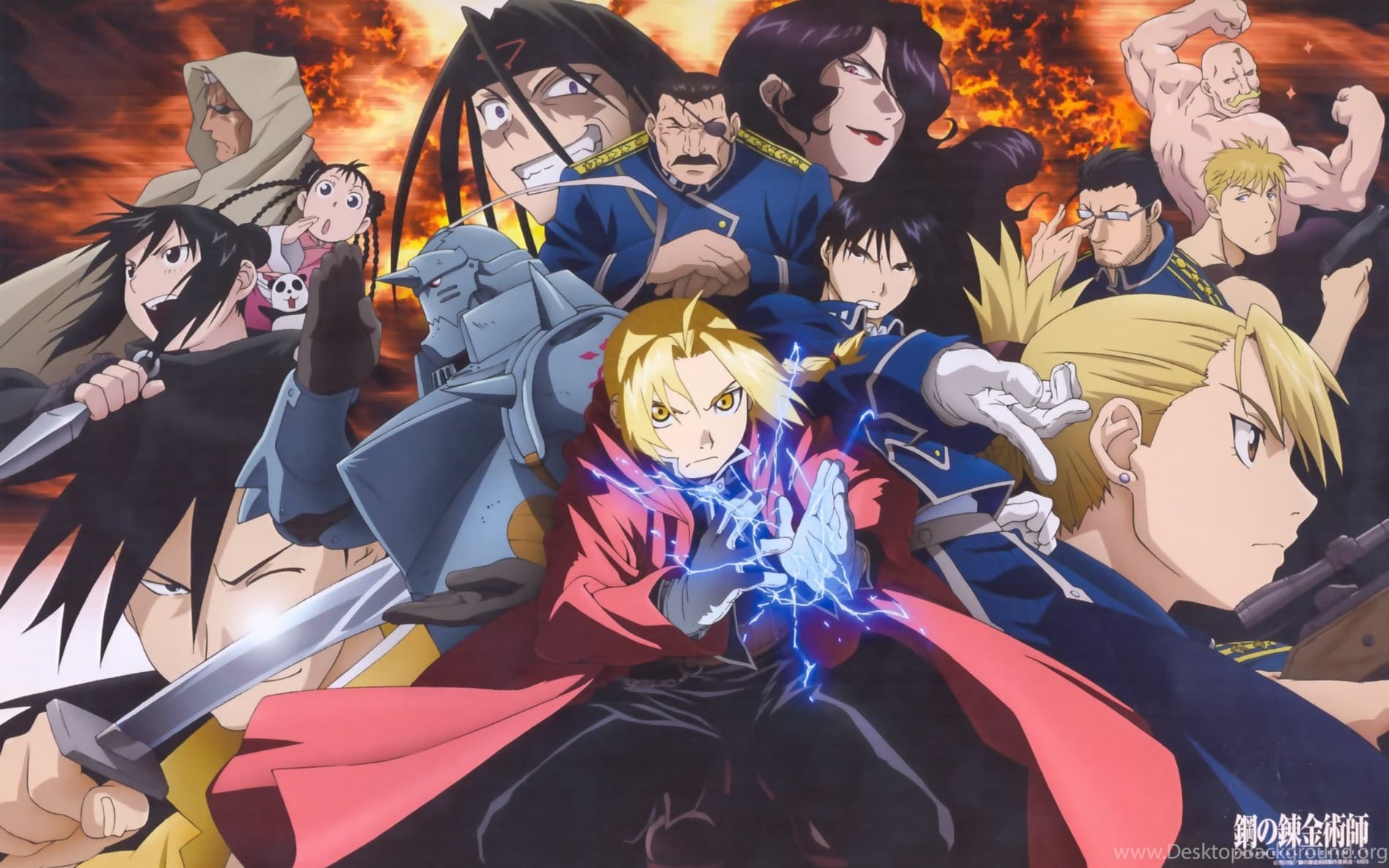
Let's address the elephant in the room first: Brotherhood exists in the shadow of the 2003 adaptation, which famously diverged from the manga when it caught up to the source material. The 2009 version, by contrast, follows Arakawa's complete story with near-religious devotion. This isn't just a production choice—it's a philosophical stance. Where the 2003 series embraced ambiguity and tragedy as endpoints, Brotherhood insists on coherence and resolution. Director Yasuhiro Irie and his team of episode directors (including Takuya Igarashi and Hiroshi Ikehata) treat the manga not as a blueprint but as scripture, creating what might be the most faithful long-form adaptation in anime history. This creates an interesting tension: in an industry that often treats source material as mere suggestion, Brotherhood's fidelity feels almost radical. The community is divided on this point—some, like user "AllLuckBased," find the faithfulness disappointing compared to the 2003 version's daring departures, while others celebrate it as the "definitive" version. But both miss the real achievement: Brotherhood proves that faithfulness, when executed with this level of craft, can be its own form of innovation. The meticulous pacing (24 minutes per episode across 64 episodes) allows themes to simmer and characters to breathe in ways most shonen adaptations never attempt.
Equivalent Exchange as narrative engine, not just philosophy
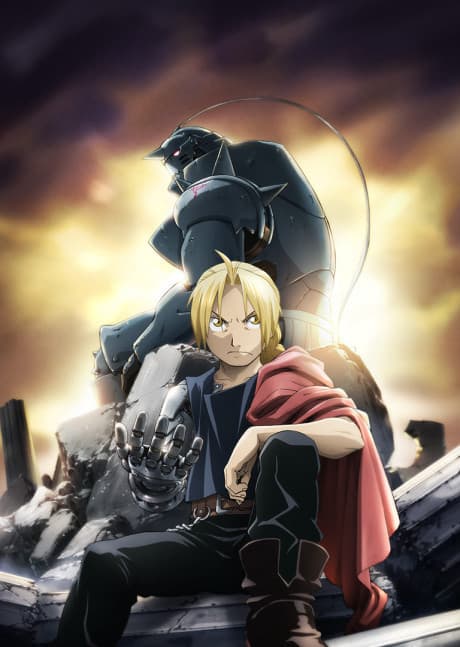
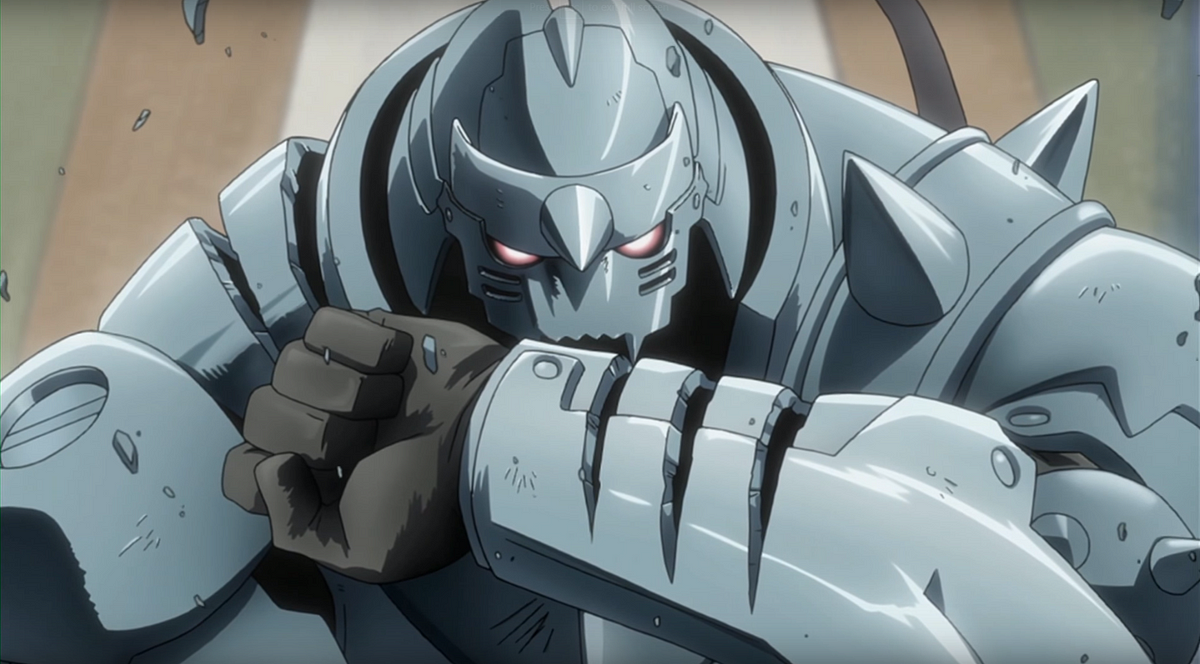
"In order for something to be obtained, something of equal value must be lost." The Law of Equivalent Exchange isn't just world-building—it's the show's narrative DNA. Every major plot development, from the Elric brothers' initial transgression to the final confrontation with Father, operates under this principle. But what makes Brotherhood special is how it weaponizes this concept against traditional shonen storytelling. In most series of this genre, characters gain power through training arcs or emotional breakthroughs; here, every advancement comes at a cost. Edward's automail isn't a cool upgrade—it's a constant reminder of failure. Alphonse's armored body isn't a superpower—it's a prison. Even the Philosopher's Stone, the mythical MacGuffin that seems to promise a cheat code, is revealed to be powered by human souls. This creates a fascinating tension with the show's demographic: as a shonen series, it's theoretically aimed at young boys who want to see heroes overcome obstacles through sheer will. Instead, it gives them a world where will alone is never enough, where every victory leaves scars. The military themes aren't just backdrop—they're integral to this critique, showing how systems (whether alchemical or governmental) demand sacrifice from individuals. When Colonel Roy Mustang seeks revenge for Maes Hughes' death, he's not just being cool; he's demonstrating how the cycle of violence perpetuates itself through equivalent exchanges of pain.
The homunculi problem: When your villains are more interesting than your heroes
Let's be honest: Edward and Alphonse Elric are great protagonists, but the homunculi steal the show. Lust, Gluttony, Envy, Greed, Sloth, Pride, Wrath—these aren't just cool villains with thematic names; they're walking critiques of the human condition. Each represents a sin they simultaneously embody and critique. Envy's shapeshifting ability makes him the perfect metaphor for insecurity, while Greed's evolution from pure selfishness to something more complex challenges the very definition of his name. What's particularly brilliant is how these characters interact with the show's themes. As user "flashpool" noted in their review, the question "What are we fighting for?" finds its answer in these antagonists: we're fighting against our own worst impulses, externalized and given terrifying power. The homunculi are literally born from human transgression, making them both monsters and mirrors. This creates a moral complexity rare in the genre—when Bradley (Wrath) delivers his monologue about being "the perfect human," he's not just boasting; he's articulating a philosophy that the heroes must ultimately reject but can't entirely dismiss. The show's R-17+ rating for violence and profanity feels earned not because of gore (though there's plenty), but because of how seriously it treats these psychological horrors.
Brotherhood as corrective to shonen individualism
One of the most subversive aspects of Fullmetal Alchemist: Brotherhood is how it systematically dismantles the "lone hero" myth. Edward may be the Fullmetal Alchemist, but he's constantly relying on others: Winry for his automail, Mustang for political cover, even minor characters like Barry the Chopper for unexpected assistance. This isn't just practical—it's ideological. The show argues that true strength comes from community, not isolation. Look at the Armstrong siblings: Alex Louis represents traditional shonen bravado, all muscles and sparkles, while Olivier Mira (with her 4,022 favorites on MAL) embodies a colder, more strategic form of power. Their dynamic shows that there's no one "right" way to be strong. This extends to the narrative structure itself—the sprawling cast (from Major Armstrong to the surprisingly popular Black Hayate, the dog with 138 favorites) creates a sense that the story belongs to everyone, not just the protagonists. It's why the title includes "Brotherhood"—this isn't just about blood relations, but about the bonds that form through shared struggle. In a genre often criticized for hyper-individualism, Brotherhood offers a corrective: your power matters, but only as part of something larger.

The sound of alchemy: How music and silence shape meaning
Masafumi Mima's sound direction deserves more attention than it typically receives. The opening themes—YUI's "again" and SID's "Uso"—aren't just catchy songs; they're tonal statements. "again" captures the relentless forward momentum of the early episodes, while "Uso" (which translates to "Lie") hints at the deceptions to come. But the real mastery is in the use of silence. Alchemy in Brotherhood isn't accompanied by bombastic orchestras; it's often marked by the clap of hands, the scrape of transmutation circles, and then—quiet. This creates a sense of weight, of consequences being felt in the absence of sound. Compare this to shows like Hunter x Hunter (2011) or Kimetsu no Yaiba (both frequently recommended to Brotherhood fans), where power-ups are typically accompanied by musical crescendos. Here, the lack of fanfare makes the magic feel more like science, more like something that could exist in our world. It's a subtle choice that pays dividends across 64 episodes, grounding even the most fantastical moments in aural realism.
The final transmutation: Why Brotherhood endures
So why does Fullmetal Alchemist: Brotherhood maintain its cultural relevance more than a decade after its completion? It's not just the tight plotting or memorable characters—though it has both in spades. It's because the show understands that the most interesting stories aren't about overcoming evil, but about defining it. The community user "Wynautt" got it right when they wrote that the show "taught me how extraordinary it is to be ordinary." In a genre filled with chosen ones and destiny, the Elric brothers are remarkable precisely because they're not special—they're just two kids who made a terrible mistake and are trying to fix it. Their journey isn't about becoming gods; it's about becoming human again. This humility gives the show its emotional power. When Edward finally gives up his alchemy to bring Alphonse back, he's not making a sacrifice—he's making a choice. He's rejecting the very power that defined him in favor of something more important. In that moment, Brotherhood transcends its genre, becoming not just a great shonen anime, but a great story period. It proves that sometimes, the most radical act isn't breaking the rules, but understanding them so completely that you can write new ones.
Final Score: 9/10 – A masterclass in genre interrogation that rewards every minute of its 64-episode investment.