Frieren: Beyond Journey's End turns immortality into the ultimate character flaw
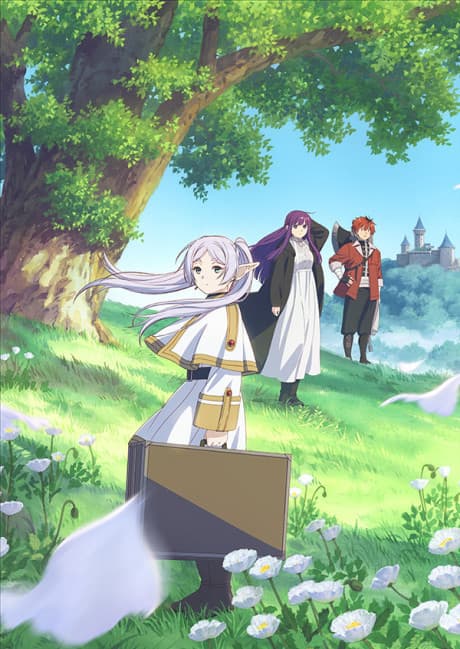
There's a moment early in Frieren: Beyond Journey's End that feels like watching someone discover gravity for the first time, only to realize they've been falling their entire life. Our elven mage protagonist—who has lived for over a thousand years and just helped save the world—attends the funeral of her human companion Himmel, the hero who led their party to victory against the Demon King. As she stands there, watching humans mourn with an intensity that seems almost alien to her, Frieren realizes something devastating: she never really knew him. Not really. Not in the way that matters. The adventure ended, everyone went home, and she spent the next fifty years collecting spells before bothering to check in. When she finally returns, Himmel is dead, and she's left with the haunting realization that for all her magical prowess and centuries of existence, she's been sleepwalking through relationships. This isn't just another fantasy anime about defeating evil—it's a meditation on what happens when you win, and then have to figure out how to live with the victory.
When the credits roll but life keeps playing
Most fantasy stories end where Frieren begins. The Demon King is defeated, peace is restored, and everyone presumably lives happily ever after. Director Keiichirou Saitou and the team at MADHOUSE understand this cultural shorthand so well that they weaponize it against us. We're conditioned to expect closure when the big bad falls, but Frieren asks the uncomfortable question: what if closure is a human invention? What if, for an elf who will live for millennia, "ever after" is just the beginning of another story? The series smartly positions itself as a post-postmodern fantasy—it's not deconstructing the genre so much as examining what happens in the quiet spaces between the epic moments. When Frieren sets out on her new journey to understand her departed friends, she's essentially retracing the narrative steps we've seen in countless shonen adventures, but this time with the wisdom (and regret) of hindsight. It's like watching someone reread their own diary and realizing how much they missed the first time through.

The unbearable lightness of being immortal
What makes Frieren such a fascinating protagonist isn't her magical abilities or her centuries of knowledge—it's her emotional illiteracy. She's essentially a time traveler moving at normal speed while everyone around her accelerates toward their inevitable end. The series explores this dynamic with heartbreaking precision through her relationships with Fern and Stark, her new traveling companions who represent the next generation of adventurers. Where Frieren sees decades as brief intervals ("I'll see you in 50 years"), Fern and Stark experience them as entire lifetimes. This temporal dissonance creates some of the series' most poignant moments, like when Frieren casually mentions knowing someone "a hundred years ago" and Fern has to remind her that for humans, that's multiple generations. The community voice on AniList captures this perfectly when user flashpool describes the series as "what it means to be human, as taught by an elf." But I'd argue it's more nuanced than that—it's about what it means to be mortal, as observed by someone who isn't.
Memory as both curse and compass
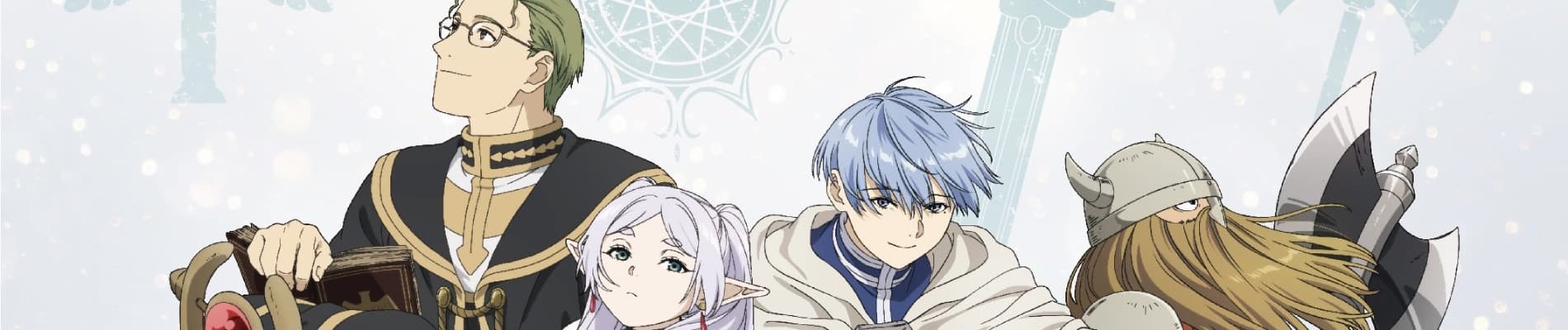
Frieren operates on two parallel timelines: the present-day journey to fulfill her friends' last wishes, and flashbacks to the original adventure with Himmel, Heiter, and Eisen. This narrative structure isn't just clever storytelling—it's essential to the series' thematic core. The flashbacks aren't nostalgic trips down memory lane; they're forensic examinations of moments Frieren failed to appreciate when they happened. We see Himmel picking flowers for her, making small talk, sharing quiet moments that seemed insignificant at the time but now carry the weight of finality. The series suggests that memory isn't a static recording but an evolving relationship with the past. As Frieren revisits these moments with new understanding, they transform from simple recollections into emotional artifacts. This is where the MAL demographic data becomes interesting—despite being classified as shonen, Frieren feels more like literary fiction in anime form, concerned less with power progression than with emotional archaeology.
The magic system as metaphor for emotional connection
In most fantasy series, magic is a tool for solving problems—fireballs for enemies, healing spells for allies. In Frieren, magic becomes something far more interesting: a language. Frieren's obsession with collecting spells isn't just a quirky character trait—it's her way of connecting with people across time. When she learns a new spell, she's not just acquiring power; she's preserving a piece of someone's legacy. The series introduces us to mages like Flamme, Frieren's mentor from centuries past, whose teachings continue to influence her long after their deaths. This creates a beautiful parallel between magical inheritance and emotional inheritance—both require someone to carry them forward. The spells Frieren collects become like photographs in an album, each one capturing a moment with someone who mattered. It's no coincidence that some of the series' most powerful moments involve seemingly useless magic—spells that make flowers bloom, or create pretty lights, or do nothing more practical than bring someone joy. In a genre obsessed with combat applications, Frieren reminds us that sometimes the most powerful magic is the kind that connects rather than destroys.

Why this shouldn't work as shonen (and why it does)
On paper, Frieren breaks every rule in the shonen playbook. There's no tournament arc, no power scaling debates, no training montages leading to explosive climaxes. The combat, when it happens, is often resolved through clever application of established magic rather than dramatic power-ups. The series moves at what community reviewer Anthony08282 calls "a mere ten year journey" pace—deliberate, contemplative, and unafraid of silence. Yet it currently sits at #1 on MyAnimeList with a 9.28/10 score, outperforming flashier, more action-packed series. Why? Because Frieren understands that the most compelling conflict isn't between good and evil, but between different experiences of time. When Frieren faces off against demons (who, like elves, live for centuries), the tension comes not from who's stronger, but from who better understands the fleeting nature of human life. The demons see humans as ephemeral insects; Frieren is learning to see them as fireworks—brief, beautiful, and worth paying attention to while they last.
The soundtrack of slow realization
Music in Frieren serves as emotional punctuation rather than dramatic enhancement. YOASOBI's opening theme "Yuusha" (which translates to "Hero") feels almost ironic when paired with a story about what happens after heroism. The song's upbeat tempo and hopeful lyrics contrast beautifully with the series' melancholic tone, creating a kind of cognitive dissonance that mirrors Frieren's own disconnect between her legendary past and her uncertain present. Meanwhile, milet's ending theme "Anytime Anywhere" functions as an emotional decompression chamber—a space to process what we've just witnessed. The sound direction by Shouji Hata deserves particular praise for its restraint. In a genre where scores often tell you exactly how to feel, Frieren's soundtrack trusts the audience to sit with ambiguity. The silence between notes becomes as important as the notes themselves, much like the spaces between moments become the series' true subject.
The community's emotional consensus (and why they're mostly right)
Scanning through the AniList reviews reveals something fascinating: near-universal emotional resonance. User ArielAnime claims "This Anime Will Make You Appreciate Life," while befalt describes it as "fascinating, fulfilling, and full of feelings." What's striking isn't just the praise, but the specific language being used—words like "appreciate," "fulfilling," "feelings." This isn't a fandom debating plot twists or power levels; it's a community sharing an emotional experience. The 9.1/10 score on the source platform and #1 ranking on MAL suggest Frieren has tapped into something deeper than typical anime appeal. It's speaking to our collective anxiety about time—about friendships that drift, moments we failed to appreciate, and the terrifying speed at which life moves. When Fireality's review says "Cherish yesterday, dream tomorrow, live today," they're not just summarizing the theme; they're articulating the series' emotional thesis.

The legacy problem: When being perfect creates impossible expectations
Here's the uncomfortable truth about Frieren's critical reception: its perfection might be its biggest problem moving forward. With a sequel season announced and the manga still ongoing, the series now carries the burden of its own excellence. How do you follow up a story that so completely fulfilled its premise? The related works section shows a franchise expanding—side stories, adaptations, continuations—but the original 28-episode run feels so complete that more risks feeling unnecessary. This is the paradox of masterpieces: they leave us wanting more while making us fear that more might diminish what came before. The series currently exists in that rare sweet spot where ambition and execution align perfectly, but franchise expansion has a way of complicating such purity.
The final spell: Why this matters beyond the screen
Frieren: Beyond Journey's End arrives at a cultural moment obsessed with legacy—with what we leave behind, how we're remembered, and whether any of it matters. In an age of digital permanence where everything is recorded but nothing is felt, the series offers a quiet rebellion: it suggests that what matters isn't how long something lasts, but how deeply it's experienced while it does. Frieren's journey from detached observer to engaged participant mirrors our own struggle to be present in a world designed to distract us. The series doesn't offer easy answers about mortality or meaning—instead, it offers something better: questions worth sitting with. When Frieren finally begins to understand what her human companions tried to teach her, it's not through grand revelation but through accumulated small moments. She learns to appreciate sunsets not because they're beautiful (though they are), but because someone she cared about thought they were worth sharing with her.
Final Score: 9.5/10 – A masterpiece that redefines what fantasy can be.
Frieren: Beyond Journey's End achieves something remarkable: it makes immortality look like a tragedy and mortality look like a gift. In a genre crowded with stories about saving the world, it gives us one about saving moments—about learning to see the extraordinary in ordinary time. The adventure may be over, but as Frieren discovers, the living is just beginning. And maybe that's the most heroic journey of all.