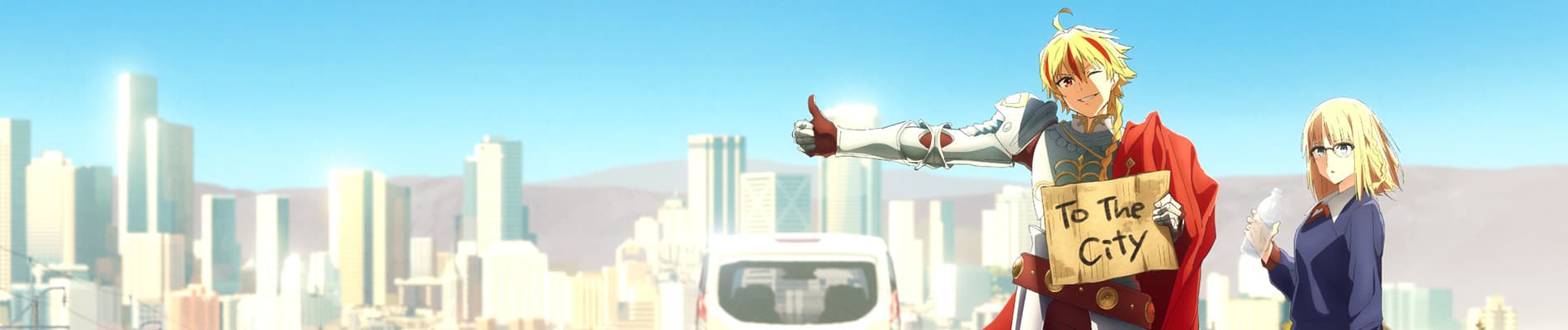
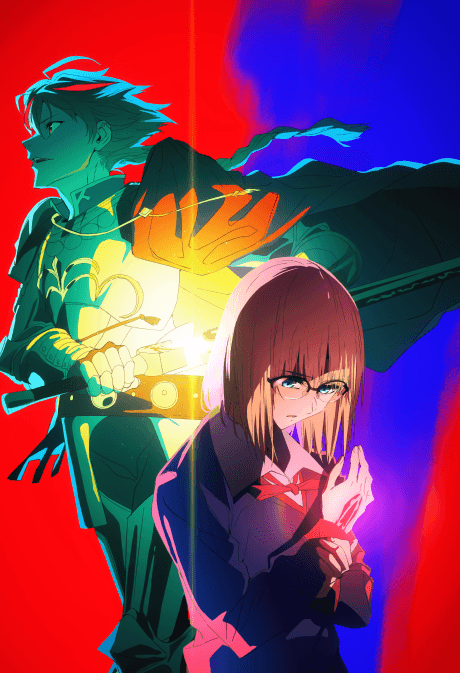
Fate/strange Fake weaponizes franchise fatigue into glorious, chaotic reinvention
There comes a moment in every long-running franchise when the formula becomes so calcified that watching it feels less like entertainment and more like ritual. You know the beats before they land, recognize the archetypes before they speak, and can predict the narrative turns with the weary certainty of someone who's seen this magic trick performed one too many times. For the Fate series—that sprawling, labyrinthine universe of mages, heroic spirits, and wish-granting cups—that moment arrived somewhere around the 47th iteration of the Holy Grail War. Enter Fate/strange Fake, the franchise's most audacious and self-aware entry yet, which doesn't just acknowledge its own formulaic nature but weaponizes it, turning franchise fatigue into the very engine of its narrative. Set in the artificial American city of Snowfield, this isn't just another Holy Grail War—it's a Holy Grail War that knows it's a Holy Grail War, complete with missing Servant classes, impossible summonings, and a creeping sense that the entire premise might be one elaborate cosmic joke. Under the direction of Shun Enokido and Takahito Sakazume, what could have been franchise filler instead becomes a thrilling deconstruction of everything that makes Fate, well, Fate.
When the ritual becomes the problem
From its opening moments, Fate/strange Fake establishes itself as something different by being something familiar. The setup is classic Fate: mages gather, servants are summoned, and a city becomes a battleground for the omnipotent Holy Grail. But director Enokido, working from Daisuke Oohigashi's series composition, immediately begins pulling at the threads of this established tapestry. Snowfield isn't a real city but a constructed one, built specifically to host this conflict—a literal stage for the ritual to play out. This meta-commentary runs through the entire series, transforming what could be rote world-building into a fascinating exploration of narrative inevitability. When characters like Tine Chelc and Flatt Escardos enter the fray, they're not just participating in a magical death match; they're actors in a play where the script has been written generations before their arrival. The series asks a question most long-running franchises are too afraid to confront: what happens when the characters realize they're trapped in a formula? The answer, it turns out, is glorious chaos.
Gilgamesh returns, but not as you remember him
No character embodies Fate/strange Fake's subversive approach better than Gilgamesh, the franchise's most iconic and frequently deployed Servant. With over 16,000 favorites on MyAnimeList, Gilgamesh represents everything familiar about the Fate universe—the arrogant, golden-clad King of Heroes whose power is matched only by his ego. But here, his presence feels different. When he appears alongside Enkidu (another franchise favorite with 504 MAL favorites), their dynamic isn't just fan service but a deliberate callback that serves the narrative's larger themes. Gilgamesh isn't just participating in another Holy Grail War; he's observing it with the weary detachment of someone who's seen this story play out too many times. His interactions with other characters, particularly the mysterious Assassin (who has quietly amassed 17 favorites despite minimal screen time), suggest a being who understands he's part of a system that keeps repeating itself. This isn't the Gilgamesh of Fate/Zero or Fate/stay night—this is a Gilgamesh who has become self-aware, and the series is all the more fascinating for it.
The sound of chaos, composed by SawanoHiroyuki[nZk]
If the narrative structure of Fate/strange Fake represents a deliberate fracturing of franchise expectations, its sound design under Masaki Tsuchiya serves as the perfect auditory counterpart to this thematic ambition. The opening theme "Belong" by SawanoHiroyuki[nZk]:Yosh and ending theme "FAKEit" by SawanoHiroyuki[nZk]:Laco aren't just catchy anime tracks—they're musical statements about the series' core themes of identity and deception. Sawano's signature style—that blend of orchestral grandeur and electronic experimentation—mirrors the show's own fusion of traditional fantasy elements with modern, almost postmodern narrative techniques. The score doesn't just accompany the action; it comments on it, with swelling strings during moments of supposed heroism that suddenly give way to discordant electronic pulses when the facade cracks. In a series about a "false" Holy Grail War, the music becomes another layer of deception, promising epic fantasy while delivering something far more complex and self-referential.
A-1 Pictures and the art of controlled chaos
Studio A-1 Pictures has always been something of a chameleon in the anime industry, capable of both stunning visual achievements (Your Lie in April) and serviceable but unremarkable adaptations (too many to list). With Fate/strange Fake, they've found a perfect middle ground—animation that's consistently impressive without calling attention to itself, allowing the narrative's complexities to take center stage. The character designs maintain the franchise's distinctive aesthetic while introducing subtle variations that reflect the American setting and the story's more experimental nature. Snowfield itself is rendered with a particular attention to detail that makes its artificiality feel intentional rather than budgetary—the too-perfect streets, the slightly off architectural proportions, the way light falls just a little differently than it should. This isn't flashy animation for animation's sake; it's thoughtful visual storytelling that understands its role in supporting the larger thematic concerns. When the action does explode—and it does, with the kind of magical spectacle Fate fans expect—it feels earned rather than obligatory, a release of narrative tension rather than a checkbox for the genre requirements.
Why strange Fake might be Fate's most important entry
In the crowded landscape of the Fate franchise—with its multiple timelines, alternate universes, and spin-offs that sometimes feel like they're being generated by a Holy Grail War content algorithm—Fate/strange Fake stands out not despite its weirdness but because of it. At a time when franchise fatigue threatens to turn even the most beloved universes into content mills, this series dares to ask what happens when the characters become aware of their own narrative constraints. The "missing Servant class" and "impossible Servant summonings" mentioned in the synopsis aren't just plot devices; they're manifestations of a system breaking down, of a formula that can no longer contain the stories trying to burst through it. When characters like Caster (with her mere 2 MAL favorites suggesting she's either deeply underrated or deliberately underdeveloped) and the various Masters interact, their conversations feel less like exposition and more like people trying to understand the rules of a game that keeps changing. This is urban fantasy that's actually about urbanity—about cities as constructs, narratives as prisons, and the desperate human (and non-human) desire to break free from predetermined roles.
The bottom line
Fate/strange Fake arrives at a crucial moment for its franchise and for anime more broadly. As the industry increasingly relies on established properties and safe bets, this series represents a different path—one where familiarity becomes not a crutch but a springboard for innovation. With its 8.51/10 MAL score and #155 ranking, it's clear that audiences are responding to something more substantial than just another Holy Grail War. They're responding to a series that respects their intelligence, that assumes they've seen this all before and then shows them something they haven't. In a media landscape saturated with reboots, sequels, and franchise extensions, Fate/strange Fake offers something genuinely rare: a continuation that feels like a conversation rather than a repetition. It's not perfect—the large cast sometimes strains against the 13-episode format, and not every narrative risk pays off—but its ambition is undeniable. Final Score: 8.5/10 – A brilliant deconstruction that remembers to be thrilling entertainment first.