
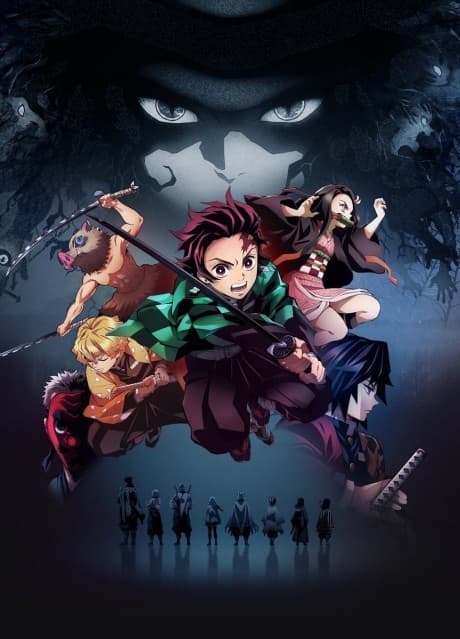
Demon Slayer: Kimetsu no Yaiba is a breathtaking spectacle that can't quite escape its shonen DNA
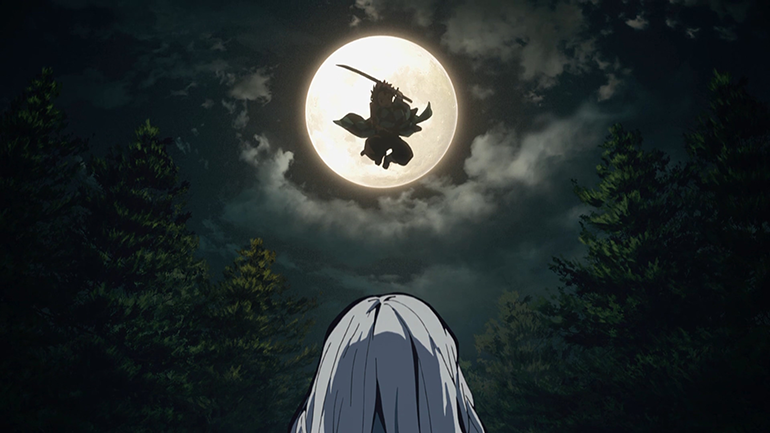
There's a moment in the third episode of Demon Slayer: Kimetsu no Yaiba that feels like a declaration of intent. Tanjiro Kamado, our earnest charcoal-seller-turned-demon-slayer, faces off against a swamp demon in a moonlit forest. As he unleashes his Water Breathing technique, the screen erupts in a cascade of liquid light—a torrent of blue energy that flows like calligraphy, each movement traced with particle effects so detailed you could count the droplets. It's beautiful, it's kinetic, and it announces with zero subtlety that ufotable has arrived to flex their animation muscles. This is the central tension of Demon Slayer's first season: a production so technically accomplished it could make paint drying look like ballet, wrapped around a story that often feels like it's checking boxes on the shonen bingo card. The result is something both frustrating and fascinating—a show that's simultaneously a masterpiece of craft and a case study in how production values can elevate (or perhaps disguise) familiar tropes.
When Unlimited Budget Works meets Taisho-era melancholy
Director Haruo Sotozaki and the ufotable team have created something genuinely special in the visual department, and it's worth pausing to appreciate just how much heavy lifting the animation does. The studio, fresh off their work on the Fate series, brings that same commitment to visual extravagance to Demon Slayer, but with a distinctly Japanese aesthetic. The Taisho period setting (1912-1926) provides a perfect canvas—a moment in history where traditional Japan was colliding with Western modernity. You see it in the details: the Western-style suits worn by city dwellers, the electric lights beginning to appear alongside paper lanterns, the trains that will become central to the film sequel. This isn't just background dressing; it's thematic texture. The demons represent a primal, ancient evil, while the demon slayers themselves are part of an organization clinging to tradition even as the world changes around them. The visual language reinforces this: traditional woodblock print influences in the backgrounds, ukiyo-e-inspired compositions, and a color palette that shifts from the warm earth tones of Tanjiro's mountain home to the cold blues and purples of demon-haunted nights. It's a level of environmental storytelling that many anime never attempt, let alone execute this well.
The Kamado siblings: A relationship that carries the emotional weight
At its heart, Demon Slayer is the story of two siblings, and it's here that the show finds its most compelling emotional core. Tanjiro and Nezuko's relationship transcends the usual anime sibling dynamics precisely because it's been fundamentally altered by trauma. Nezuko's transformation into a demon—and her subsequent choice to protect humans despite her nature—creates a fascinating dynamic. She's simultaneously Tanjiro's motivation, his burden, and his most powerful ally. The show smartly avoids making her a damsel in distress; instead, she's a ticking clock, a constant reminder of what's at stake. Tanjiro himself is an interesting case study in shonen protagonist design. He's kind to a fault, empathetic even to the demons he must kill, and his determination feels earned rather than merely plot-mandated. When community reviewer "CodeBlazeFate" criticizes the show for "forcing feelings rather than earning them," they're not entirely wrong about some of the supporting cast, but they miss how effectively the central relationship works. Tanjiro's grief for his family isn't just backstory—it's a living presence in every episode, manifesting in his determination to save Nezuko and his refusal to dehumanize even his enemies. It's this emotional throughline that keeps the show from becoming just another monster-of-the-week affair.

The supporting cast: When tropes become characters (and when they don't)
This is where Demon Slayer stumbles, and where the community division becomes most apparent. Zenitsu Agatsuma and Inosuke Hashibira join Tanjiro as the show's central trio, and they represent two very different approaches to shonen sidekickery. Zenitsu is the coward with hidden power, screaming and crying through every fight until he passes out and his "sleeping self" takes over to demonstrate incredible skill. It's a gag that wears thin remarkably quickly, especially across 26 episodes. Inosuke, the boar-headed wild boy raised by boars (yes, really), fares better—his feral energy and complete lack of social graces provide genuine comedy, and his gradual development from rival to comrade feels earned. But both characters highlight the show's struggle with tone. Demon Slayer wants to be a serious drama about grief and determination, but it also feels obligated to deliver the comic relief and rivalry dynamics that shonen demographics demand. The result is a sometimes-jarring oscillation between poignant character moments and broad comedy that undermines the atmosphere. When compared to shows like Dororo (which appears in the "fans also liked" list), which maintains a consistently grim tone throughout, Demon Slayer can feel tonally uncertain. Yet, interestingly, this hasn't stopped Zenitsu and Inosuke from becoming fan favorites—their MAL favorite counts (16,812 and 15,403 respectively) suggest that for many viewers, these tropes are features, not bugs.
The demon problem: Villainy with a human face
One of Demon Slayer's more interesting narrative choices is its treatment of the demons themselves. Unlike the mindless monsters of many fantasy series, these demons are almost always former humans, and the show takes time to explore their backstories before Tanjiro dispatches them. This creates a moral complexity that elevates the material—these aren't just obstacles to be overcome, but tragedies to be acknowledged. The Hand Demon from the Final Selection arc, for instance, is revealed to have been a former demon slayer candidate who held a grudge against Urokodaki's students for decades. Tanjiro's response—offering sympathy even as he delivers the killing blow—establishes the show's ethical framework. It's a approach that recalls classic series like Bleach (another show in the "fans also liked" list), where understanding your enemy is part of defeating them. But Demon Slayer pushes this further by making Tanjiro's empathy a core character trait rather than just a narrative device. This creates fascinating tension: can you truly sympathize with creatures who eat humans? Should you? The show doesn't provide easy answers, instead letting the question hang over each confrontation. It's a sophistication that belies the show's sometimes-simple surface, and it's one reason why the community is divided between those who see depth and those who see pretension.

The sound of determination: LiSA's anthem and atmospheric scoring
No discussion of Demon Slayer's impact would be complete without addressing "Gurenge," LiSA's opening theme that became a cultural phenomenon in its own right. The song's explosive energy and lyrics about blooming crimson flowers perfectly capture the show's ethos—beauty born from struggle. What's particularly interesting is how the show uses the same song as both opening and ending for episodes 1 and 26, creating a musical bookend that emphasizes the journey's cyclical nature. The rest of the soundtrack, while less immediately iconic, does important atmospheric work. Traditional Japanese instruments (shakuhachi, koto) blend with orchestral arrangements to create a soundscape that feels both timeless and urgent. During fight scenes, the music often drops out entirely, letting the sound design—the whoosh of blades, the crunch of impact, the eerie silence of demon regeneration—carry the tension. It's a smart choice that prevents the action from becoming sensory overload and allows ufotable's visual fireworks to truly shine.
The cultural moment: Why this, why now?
Demon Slayer arrived in 2019 and quickly became a global phenomenon, eventually winning the Animation of the Year award at the Tokyo Anime Award Festival in 2020. Its timing was perfect—arriving as the shonen landscape was transitioning from the "Big Three" era (Naruto, Bleach, One Piece) to a new generation of hits like Jujutsu Kaisen and Chainsaw Man. Demon Slayer sits at an interesting midpoint between tradition and innovation. It has all the classic shonen elements: the determined hero, the power system (Breathing Styles), the training arcs, the tournament-like structure of the Demon Slayer Corps. But it executes them with a visual polish that felt new and a emotional sincerity that resonated with audiences exhausted by irony. The community review from "Mob" captures this perfectly when they say the aim wasn't to make the best anime ever, but "to make the best Demon Slayer: Kimetsu no Yaiba." The show knows exactly what it is and who it's for, and it delivers that experience with unprecedented technical excellence. In an era where anime production is increasingly rushed and under-resourced, Demon Slayer' commitment to quality—26 episodes of consistently stunning animation—felt like a statement. It proved that traditional shonen storytelling could still dominate the cultural conversation if executed with enough care and craft.
The bottom line: A flawed masterpiece or masterful fluff?
So where does this leave us with Demon Slayer's first season? The community is sharply divided, and both sides have valid points. Reviewers like "KaizokuOtaku" who call it "a mediocre story with nothing new" aren't wrong about the narrative bones—this is fundamentally a classic hero's journey with familiar tropes. But they underestimate how much execution matters. The difference between a good meal and a great one isn't the recipe, but the skill of the chef and quality of the ingredients. ufotable are master chefs working with premium ingredients, and the result is a feast for the senses even when the narrative menu feels familiar. Conversely, reviewers like "Scientiiaa" who praise its emotional depth are responding to something real in the Kamado siblings' relationship, even if the show sometimes undermines that depth with tonal whiplash. The truth, as is often the case, lies somewhere in between. Demon Slayer: Kimetsu no Yaiba is a show of extraordinary craft wrapped around a solid but conventional shonen core. It's not rewriting the genre like Chainsaw Man or deconstructing it like Jujutsu Kaisen, but it's executing the traditional form with such breathtaking skill that it becomes something special anyway. For 26 episodes, it offers a masterclass in animation, a compelling central relationship, and just enough thematic depth to justify the spectacle. In the end, perhaps that's enough.
Final Score: 8/10 – A visually stunning execution of familiar tropes that succeeds through sheer craft and emotional sincerity.