Death Note's descent from psychological masterpiece to shonen spectacle reveals the limits of its own premise
There's a moment in Death Note's early episodes that feels like the show is about to become something truly revolutionary—not just for anime, but for psychological thrillers in any medium. Light Yagami, the brilliant high school student turned self-appointed god of death, sits in his perfectly appointed bedroom, contemplating the first name he'll write in his newly acquired Death Note. The camera lingers on his face, the lighting shifting from the warm glow of his desk lamp to something colder, more clinical. In that moment, we're not just watching a teenager with a supernatural notebook; we're witnessing the birth of a monster who believes he's a messiah. This is Death Note at its best: a taut, intellectual chess match between two geniuses that asks genuinely uncomfortable questions about justice, morality, and the corrupting nature of absolute power. The tragedy isn't just what happens to Light, but what happens to the show itself—how it gradually abandons its philosophical ambitions for increasingly convoluted plot twists and shonen spectacle, becoming a victim of its own success.
The genius of the first act: When Death Note was actually about death
What makes Death Note's initial 15 episodes so compelling isn't the supernatural premise—though a notebook that kills anyone whose name is written in it is certainly a killer hook—but how director Tetsurou Araki and the MADHOUSE team treat that premise with deadly seriousness. This isn't a superhero origin story; it's a psychological autopsy of a young man's moral decay. Light Yagami begins as an idealist, genuinely believing he's creating a better world by eliminating criminals. The show's brilliance lies in how it makes us complicit in his thinking. When we see criminals on television news reports, we're conditioned to think 'they deserve it'—and Death Note weaponizes that instinct. The early episodes function like a dark thought experiment: What if you could actually do something about all the evil in the world? What if you had the power to be judge, jury, and executioner? Light's descent into megalomania isn't sudden; it's incremental, logical, and terrifyingly relatable. Each kill makes the next one easier, each justification more elaborate, until he's not just killing criminals but anyone who threatens his new world order. The show understands that absolute power doesn't just corrupt—it convinces you that corruption is righteousness.

L vs. Light: The greatest cat-and-mouse game anime ever produced
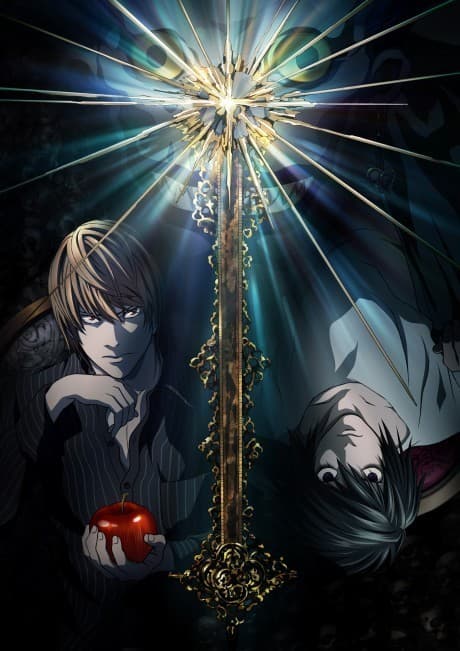
The introduction of L, the eccentric detective played by Kappei Yamaguchi with a voice that somehow manages to sound both bored and intensely focused, elevates Death Note from interesting premise to genuine masterpiece territory. Their intellectual duel represents the show at its absolute peak—a battle of wits where every move is calculated, every bluff analyzed, every assumption questioned. What makes their dynamic so compelling is how they mirror each other. Both are geniuses isolated by their intellect, both believe they're on the side of justice, and both are willing to bend or break rules to achieve their goals. L's unorthodox methods—announcing his investigation on television, using himself as bait, manipulating the media—aren't that different from Light's own manipulations. The difference is that L acknowledges his methods are questionable, while Light believes his are divinely justified. Their relationship is less detective-versus-criminal and more two sides of the same coin, each reflecting the other's darkness back at them. When L dies halfway through the series (a spoiler that's somehow still shocking despite being one of anime's most famous plot points), it's not just the loss of a great character—it's the show losing its perfect counterbalance, its moral and intellectual anchor.
The second act collapse: When cleverness becomes convoluted
This is where Death Note's critical consensus fractures, and where community reviewers like CaninnTurtle have a point when they say the show 'overstays its welcome.' After L's death, the introduction of Near and Mello as his successors feels less like a natural progression and more like the writers realizing they'd killed their golden goose too early. The problem isn't that Near and Mello are bad characters (though Near's emotionless demeanor makes him a less compelling foil than L), but that their introduction marks a tonal shift from psychological thriller to something closer to conventional shonen battle anime. The intellectual chess match becomes a series of increasingly elaborate gambits that strain credibility. Light's plans become so convoluted they require supernatural explanations (the Death Note's rules multiply like rabbits), and the show's tight focus on two brilliant minds clashing gives way to a crowded cast of characters who never quite achieve the same depth. It's telling that the most memorable moments post-L involve Ryuk, the bored shinigami who serves as the series' Greek chorus. Ryuk understands what the show sometimes forgets: that this isn't really about justice or morality—it's about entertainment, about watching a human play god and inevitably fail.

The visual language of god complex: How MADHOUSE makes boredom compelling
One of Death Note's most underappreciated achievements is how it makes what should be boring—people thinking, writing in notebooks, watching surveillance footage—visually compelling. Director Tetsurou Araki and his team understand that this isn't an action series; it's a psychological one, and the tension comes from what's happening inside characters' heads, not from what they're doing with their bodies. The visual style is deliberately stark and minimalist, with clean lines, dramatic lighting, and a color palette that grows increasingly monochromatic as Light's soul darkens. Scenes are often framed like chessboards, with characters positioned as opposing pieces. The famous 'thinking pose'—characters sitting with knees drawn up, fingers steepled—becomes a visual shorthand for intellectual engagement. Even the notebook itself is designed with disturbing simplicity: black cover, white pages, no embellishment. It looks like what it is: a tool for killing, nothing more. The soundtrack, particularly the first opening 'The World' by Nightmare and the second 'What's up, people?!' by Maximum the Hormone, perfectly captures the show's dual nature—the former all gothic grandeur and operatic tragedy, the latter pure punk-rock chaos. They're two sides of the same Death Note: the god complex and the teenage rebellion.
Death Note's cultural legacy: The anime that made everyone feel smart
Part of Death Note's enduring popularity (it's still ranked #96 on MyAnimeList with over 4.2 million members) comes from how it makes viewers feel like they're part of the intellectual game. Unlike more emotionally driven anime, Death Note invites you to solve the puzzle alongside Light and L. You're not just watching characters be smart—you're being asked to be smart too. This explains its crossover appeal to audiences who don't typically watch anime; it feels less like Japanese animation and more like a particularly clever crime procedural with supernatural elements. Its influence is everywhere in the 'fans also liked' recommendations: Code Geass's strategic mind games, Monster's psychological depth, even Mirai Nikki's battle royale with notebooks. But what sets Death Note apart from its spiritual successors is its willingness to let its protagonist be genuinely, irredeemably villainous. Light isn't an anti-hero with a heart of gold; he's a narcissistic sociopath who happens to be targeting criminals. The show never lets us forget that, even as it makes us root for him. This moral complexity is what makes the ending so satisfying—not because Light gets what he deserves (though he does), but because the show has the courage to follow its premise to its logical, brutal conclusion.

The final judgment: A flawed masterpiece that changed anime forever
So where does that leave us with Death Note nearly two decades after its premiere? Community reviewer hanari calls it 'a classic,' and they're not wrong—but it's a classic with significant cracks in its foundation. The first half is arguably the best psychological thriller anime has ever produced, a masterclass in tension, character development, and moral ambiguity. The second half, while still entertaining, feels like a different show—one more concerned with plot mechanics than philosophical questions. Yet even its flaws are interesting. The show's decline mirrors Light's own: it starts with a clear, compelling vision (create a perfect world) and ends lost in its own convoluted mythology (changing rules, introducing new characters, escalating stakes beyond reason). In this sense, Death Note is a perfect artifact of the mid-2000s anime boom—ambitious, intelligent, wildly popular, and ultimately unable to sustain its own brilliance for its entire run. But here's the thing: we remember the highs more than the lows. We remember Light's first kill, L's introduction, the potato chip scene, the final confrontation. We remember a show that dared to ask big questions about justice and power, even if it didn't always have satisfying answers. And in an era of safe, formulaic entertainment, that ambition alone makes Death Note essential viewing.
Final Score: 8.4/10 – A brilliant, flawed masterpiece whose first act is so good it almost makes you forgive the second. Essential for anyone interested in psychological thrillers, moral philosophy, or just watching two very smart people try to outthink each other to death.