
Cosmic Princess Kaguya! reinvents folklore as a virtual concert that actually has something to say
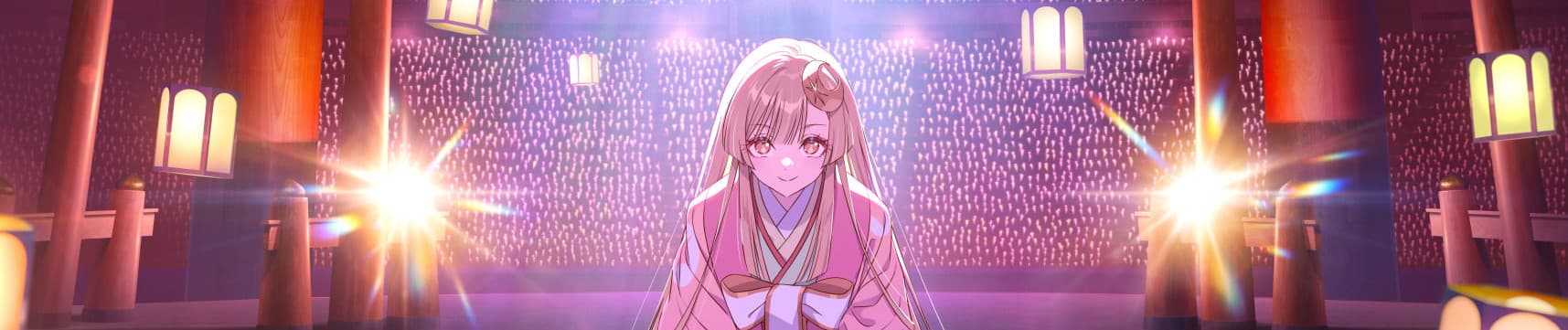
There's a moment about forty minutes into Cosmic Princess Kaguya! where the titular celestial princess, voiced with ethereal precision, stands at the precipice of the virtual realm Tsukuyomi and sings a ballad about earthly longing that feels simultaneously ancient and freshly minted. Director Shingo Yamashita's film—a 143-minute hybrid of concert film, fantasy epic, and folklore adaptation—doesn't just update The Tale of the Bamboo Cutter for the digital age; it weaponizes its musicality to explore why we keep retelling the same stories across centuries. This isn't your grandmother's Kaguya-hime, nor is it the melancholic Studio Ghibli version from a decade ago. Instead, Studio Colorido has created something that feels like if Hadestown had a baby with a Vocaloid concert, then raised it on a steady diet of Flip Flappers' visual psychedelia. The result is a work that shouldn't work at all—a two-and-a-half-hour animated musical about a 10th-century folktale—but somehow emerges as one of the most compelling arguments for why anime remains the most flexible storytelling medium on the planet.

When folklore becomes a live performance, the audience becomes part of the myth
Yamashita's most radical decision—and the one that initially seems most likely to alienate traditionalists—is framing the entire narrative as a live performance within the virtual world of Tsukuyomi. This isn't just aesthetic window dressing; it fundamentally changes how we engage with the story. The Bamboo Cutter becomes a stage manager, the celestial suitors become audience members, and Kaguya's journey between worlds becomes a theatrical production. As one AniList reviewer noted, this approach creates "a sort of Hadestown take on the Tale of the Bamboo Cutter," and they're not wrong—both works understand that mythology isn't something to be preserved under glass, but rather a living thing that changes with each retelling. The film's structure acknowledges what folklorists have known for centuries: stories evolve through performance. When Kaguya (the character) sings about her loneliness, she's simultaneously Kaguya (the performer) connecting with her virtual audience. This meta-layer could have been distracting, but Yamashita and his team integrate it so seamlessly that by the film's midpoint, you stop noticing the distinction between "story" and "performance" entirely. The virtual realm becomes just as real as the earthly one, which is precisely the point—in our digital age, where do we draw the line between authentic experience and curated performance?
Studio Colorido's visual language turns tradition into pure spectacle
If you've seen any of Studio Colorido's previous work—from the whimsical A Whisker Away to the emotionally devastating The Girl Who Leapt Through Time director's cut—you know they specialize in animation that feels both technically polished and emotionally raw. Cosmic Princess Kaguya! represents their most ambitious visual experiment to date. Director of Photography Daisuke Chiba and Animation Director Sunao Chikaoka have created a world where traditional Japanese art motifs (delicate ink wash backgrounds, ukiyo-e-inspired compositions) collide with hyper-modern 3D camerawork and digital effects that would make Makoto Shinkai blush. During musical numbers, the camera swoops through virtual spaces with impossible fluidity, tracking shots that would require million-dollar drone rigs in live-action. Yet these technical fireworks never feel gratuitous—they serve the story's central tension between tradition and innovation. When Kaguya performs her signature song "Celestial Longing," the animation shifts from delicate 2D character animation to fully 3D-rendered cosmic landscapes, then back again, creating a visual representation of her divided identity. It's a far cry from the restrained watercolor aesthetic of Isao Takahata's The Tale of the Princess Kaguya, and that's the point. As community reviewer heychrisfox observed, this is "classic folklore with modern presentation," but that undersells how radically the visual language recontextualizes the source material. This isn't just updating the aesthetics; it's using those aesthetics to ask what "authenticity" even means when dealing with thousand-year-old stories.
The music doesn't just accompany the story—it is the story
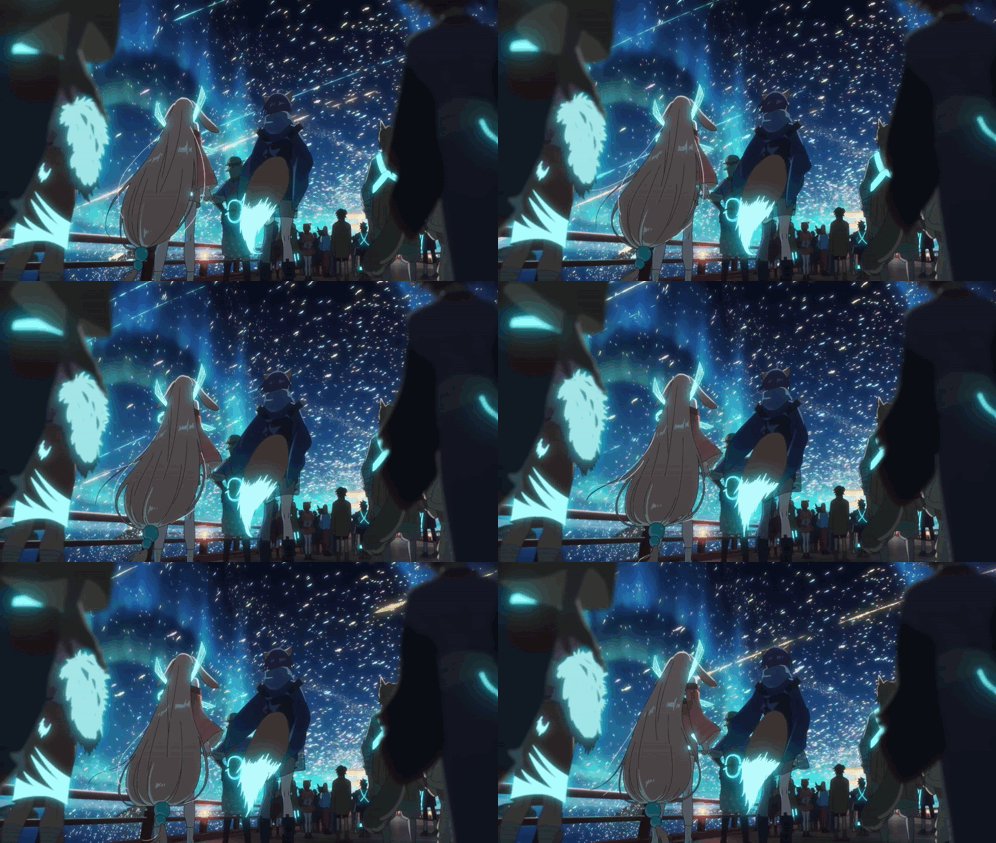
Most anime musicals treat songs as emotional punctuation—big production numbers that advance plot or develop character. Cosmic Princess Kaguya! operates on a more ambitious level: the music is the narrative engine. Sound Director Keiichirou Miyoshi (whose credits include the similarly musically complex Carole & Tuesday) has crafted a soundtrack where musical genres correspond to different realms and emotional states. Earthbound scenes feature acoustic instrumentation with traditional Japanese elements, while Tsukuyomi sequences explode into electronic pop that wouldn't feel out of place at a Perfume concert. The genius lies in how these styles gradually bleed into each other as Kaguya's identities merge. By the film's climax, when she sings the show-stopping "Between Two Worlds," the arrangement seamlessly incorporates shamisen, synthesizers, and string quartet—a musical representation of her hybrid existence. This approach explains why the film works as a single 143-minute episode rather than a series; the musical arc requires the sustained immersion of a feature film. The community seems divided on this aspect—some reviewers praise the "original music married to Yamashita's signature style," while others wish for more traditional storytelling beats—but that division itself is telling. The film demands you engage with it on its own musical terms, refusing to be just another folktale adaptation with songs sprinkled in. When supporting characters Runami Yachiyo and Iroha Sakayori (who deserve their own spin-off, frankly) join Kaguya for the trio number "Three Lights in the Virtual Sky," the harmonies don't just sound beautiful—they visually manifest as interconnected light patterns in the virtual space, making the music literally visible.
Why this Kaguya matters now: mythology in the age of digital identity
At its core, The Tale of the Bamboo Cutter has always been about belonging—an otherworldly being trying to find her place in a world not her own. Previous adaptations have emphasized the melancholy of this displacement, but Yamashita's version finds something more contemporary: the possibility of creating your own space between worlds. In an era where we all maintain multiple identities—professional, personal, digital—Kaguya's struggle feels less like ancient mythology and more like Tuesday. The virtual realm Tsukuyomi isn't presented as an escape from reality, but as a parallel reality with its own rules and consequences. When Kaguya tells her earthly companions, "I'm not leaving one world for another—I'm learning to live in both," it lands with the weight of a generation that came of age with social media. This thematic resonance explains the film's surprisingly high MAL score (8.51, ranked #154) despite its relatively niche appeal. It's not just pretty animation and catchy songs—though it has both in abundance—but rather how it uses an ancient framework to explore modern anxieties about authenticity and connection. The community reviews hint at this without fully articulating it; Zaneq's 100/100 review calls it "a masterpiece" but focuses on emotional impact, while Souvlakigr praises how it makes "something new" from familiar material. Both are right, but they're describing symptoms of the film's deeper achievement: it makes a millennium-old story feel urgently contemporary without sacrificing what made it endure in the first place.

The bottom line: not perfect, but gloriously ambitious
Cosmic Princess Kaguya! stumbles occasionally—some supporting characters could use more development, and the runtime might test viewers who prefer tighter narratives. But in an anime landscape increasingly dominated by safe adaptations and franchise extensions, its ambition feels revolutionary. It takes genuine risks: merging concert film with fantasy epic, trusting musical storytelling over conventional dialogue, reimagining foundational folklore as a commentary on digital existence. The fact that it mostly succeeds is a testament to Studio Colorido's growing confidence and Yamashita's clear directorial vision. For viewers who loved the visual inventiveness of Flip Flappers or the musical ambition of Lycoris Recoil (both listed as "fans also liked" on MAL), this represents a fascinating evolution of those ideas. It's not for everyone—the 2 hour 23 minute single-episode format alone will deter casual viewers—but for those willing to meet it on its own terms, it offers something increasingly rare: an anime that feels genuinely new. Final Score: 8.5/10 – A dazzling, ambitious reinvention that proves some stories can live forever if we're brave enough to let them change.