Champignon Witch brews a quiet tragedy in the shadow of better witch stories
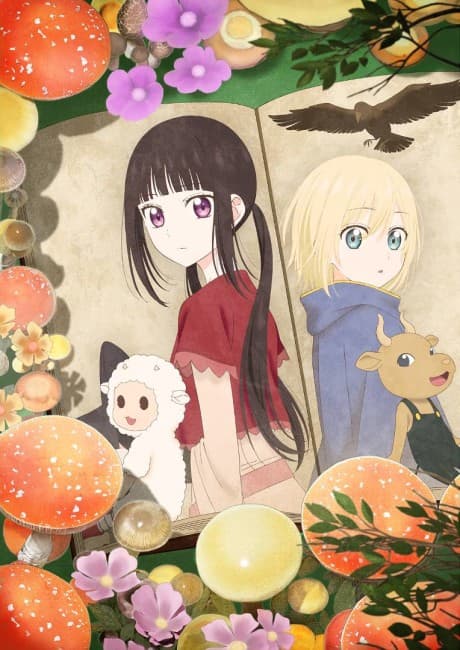
There's something almost perversely admirable about an anime that commits so completely to its own melancholy. In an era where fantasy series often feel obligated to deliver bombastic magical battles or sprawling world-building, Champignon Witch—the latest from studio Qzil.la—chooses instead to steep itself in the quiet desperation of its protagonist, Luna, a witch whose very touch is rumored to be fatal. This isn't a story about saving the world or discovering hidden powers; it's about a woman who makes medicine in a city that fears her, living in a poisonous mushroom house deep in the Black Forest, carefully drawing out a life devoid of human warmth. The premise feels like a mashup of Kiki's Delivery Service if Kiki had been exiled to the woods and The Little Match Girl if she'd been given magical powers instead of matches. Director Yousuke Kubo seems determined to explore what happens when a witch's greatest curse isn't her magic, but her isolation—a theme that should resonate in our increasingly disconnected digital age, yet somehow manages to feel more like a beautifully rendered still life than a living, breathing narrative.
The poisonous mushroom house as both sanctuary and prison
Luna's mushroom house in the Black Forest isn't just a setting—it's the physical manifestation of her psychological state. The poisonous nature of her home mirrors the toxic reputation that precedes her in the city, creating a fascinating visual metaphor that the show's art direction, led by Yukiko Iijima, executes with subtle precision. Unlike the cozy, inviting witch cottages of Little Witch Academia or the grand magical academies of Magi, Luna's dwelling feels deliberately unwelcoming, a place where even the architecture reinforces her separation from humanity. The poisonous mushrooms aren't just decorative; they're a warning system, a barrier between Luna and the world that fears her. This spatial storytelling is where Champignon Witch shines brightest, using its fantasy elements not for spectacle but for psychological depth. When Luna ventures into the city to sell her high-efficiency medicines, the contrast between her dark, organic forest home and the structured, human-built city creates a visual tension that speaks volumes about her alienation. It's a shame, then, that the series doesn't push this metaphor further—the mushroom house remains more symbol than character, a beautiful cage that never quite feels lived in.
The medicine maker who cannot heal herself
Luna's profession as a creator of high-efficiency medicines while being perceived as a bringer of death presents the series' most compelling irony, one that echoes the tragic paradox of Mary Shelley's Frankenstein or the alchemical melancholy of Fullmetal Alchemist. Here is a woman who dedicates herself to healing, yet her very presence is believed to cause harm. This disconnect between intention and perception should be fertile ground for character development, but Champignon Witch often treats it as atmospheric backdrop rather than active narrative engine. We see Luna carefully preparing her remedies, but we rarely see the emotional weight of knowing that those she helps might still cross the street to avoid her. Compare this to Silent Witch: Chinmoku no Majo no Kakushigoto (one of the shows fans also liked), where the protagonist's silence becomes an active part of her character arc rather than just a personality trait. Luna's isolation feels more like a condition than a choice, which robs her journey of agency. When she does interact with other characters—including the puzzlingly underdeveloped Lize—the exchanges often feel like vignettes rather than meaningful connections. The series seems afraid to let its protagonist actually touch anyone, literally or metaphorically, keeping her at a safe distance that ultimately keeps the audience at a distance too.
A soundtrack that yearns for connection the show won't allow
If there's one element of Champignon Witch that consistently transcends its narrative limitations, it's the audio landscape crafted by sound director Yuuichi Imaizumi and composer Takeshi Hama. The opening theme, "Mahoutsukai no Nikki (魔法使いの日記)" by Rosu, carries a melancholic hopefulness that the series itself often lacks, while Ms.OOJA's ending theme "Kimi wa (君は)" feels like the emotional release the show never quite delivers. Hama's score deserves particular praise for its restraint—instead of sweeping orchestral themes, we get delicate piano motifs and ambient forest sounds that create an immersive, lonely atmosphere. The sound design becomes a character in itself, filling the silences that the script leaves empty. In a particularly effective sequence, the absence of music during Luna's solitary walks through the forest speaks louder than any dialogue could. This audio approach recalls the atmospheric work in Somali to Mori no Kamisama (another fan-recommended title), where the soundscape becomes integral to world-building. Yet here, the disconnect between the emotional richness of the music and the emotional reticence of the storytelling creates a curious dissonance—it's as if the soundtrack is trying to tell a more compelling story than the one on screen.
The curse of being a witch story in 2023
Champignon Witch arrives at a peculiar moment for witch narratives in anime. We've moved beyond the simple magical girl tropes into more nuanced explorations of witchcraft as metaphor—for feminism in Junketsu no Maria, for class struggle in Shinigami Bocchan to Kuro Maid, for neurodivergence in recent seasons. Against this backdrop, Luna's story feels curiously retrograde. Her isolation isn't framed as political resistance or personal choice, but as simple misfortune. She's not a witch challenging societal norms like Maria from Junketsu no Maria; she's a witch resigned to her fate. This passivity becomes the series' greatest weakness. In an age where audiences crave active protagonists with agency, Luna often feels like she's waiting for the plot to happen to her rather than driving it forward. The 12-episode format exacerbates this issue—with limited runtime, the series can't afford the leisurely pacing of something like Mushishi, which earns its contemplative tone through decades of storytelling. Champignon Witch wants to be a character study, but it never quite decides what it wants to study about its character beyond her loneliness.
When beautiful animation isn't enough
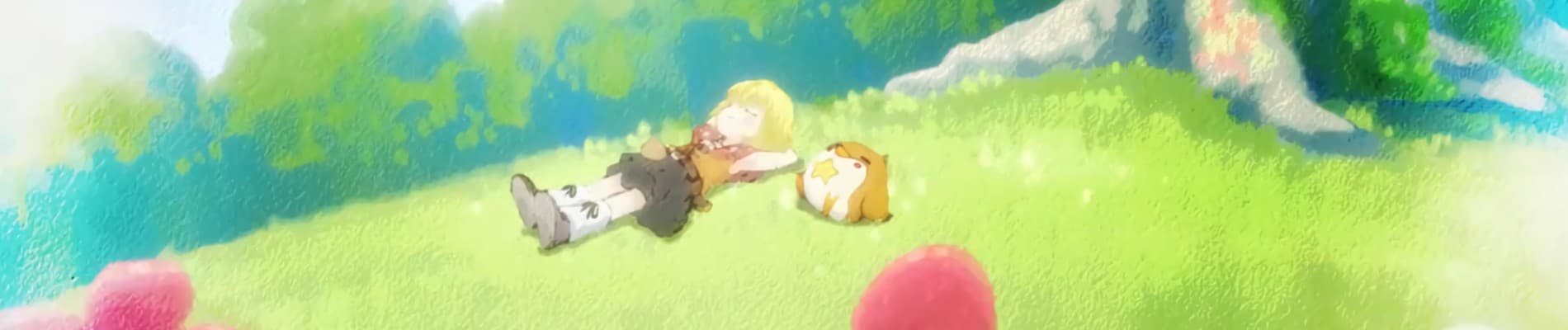
Qzil.la's visual execution deserves recognition for its consistent aesthetic vision. The Black Forest sequences in particular showcase a painterly quality that elevates the material, with careful attention to lighting and texture that makes Luna's world feel tangible. The poisonous mushrooms glow with an eerie bioluminescence, the city scenes bustle with just enough life to emphasize Luna's outsider status, and the character designs—while not particularly distinctive—serve the story's subdued tone. Yet this technical competence highlights the narrative shortcomings. Beautiful animation can enhance a good story, but it can't compensate for a thin one. The series becomes a collection of lovely moments that never quite coalesce into a satisfying whole. Each episode feels like another brushstroke in a painting that remains frustratingly incomplete after 12 installments. This isn't a failure of craft, but of ambition—the show seems content to be pretty when it could have been profound.
The bottom line
Champignon Witch is the anime equivalent of a beautifully crafted music box: intricate, delicate, and ultimately limited in its emotional range. It creates a mood of melancholy isolation with impressive consistency, supported by strong audio design and competent animation from studio Qzil.la. Yet for all its atmospheric achievements, the series never quite finds the narrative courage to match its aesthetic ambitions. Luna remains a sketch of a character when she should have been a portrait, her story a series of vignettes when it should have been a journey. The MAL score of 7.17/10 feels about right—this is a competent, often beautiful series that will satisfy viewers looking for quiet fantasy, but it lacks the thematic depth or character development to truly stand out in the crowded field of witch narratives. In the end, Champignon Witch brews a potion that's pleasant to look at and listen to, but ultimately fails to deliver the emotional potency its premise promises.
Final Score: 6.5/10 – Aesthetic melancholy that never quite finds its heart.