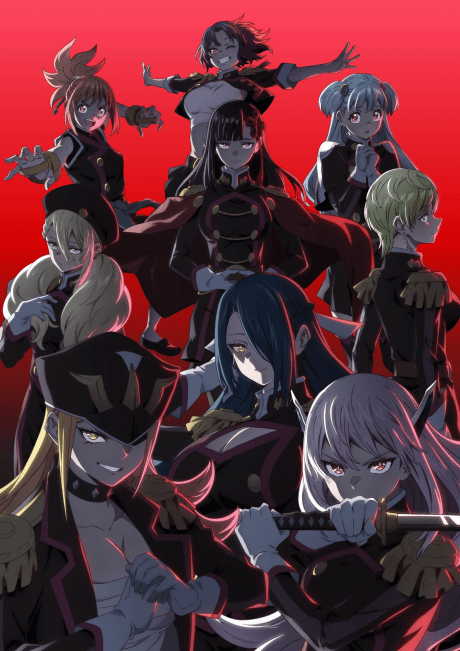
Chained Soldier Season 2: When Harem Tropes Become a Prison of Their Own Making
There's a particular moment in the second season of Chained Soldier—or Mato Seihei no Slave, if we're being formal—that perfectly encapsulates its entire artistic dilemma. Yuuki Wakura, our perpetually flustered protagonist, finds himself once again transformed into a powerful weapon by the stoic Kyouka Uzen, only this time the transformation sequence lingers just a bit too long on the ecchi elements, the camera angles becoming so gratuitous they border on parody. It's a scene that wants to have its cake and eat it too: to be taken seriously as a shonen action series while simultaneously winking at the audience with the kind of fan service that would make even the most dedicated harem anime veteran blush. This tension—between genuine world-building ambition and genre convention obligation—defines Chained Soldier Season 2 in ways both frustrating and fascinating. Director Masafumi Tamura and his team at Studio Passione are clearly talented enough to create compelling action sequences and develop interesting character dynamics, yet they remain chained (pun very much intended) to the very tropes that prevent the series from achieving its full potential.
The Prison of Expectations: When Genre Becomes a Straightjacket
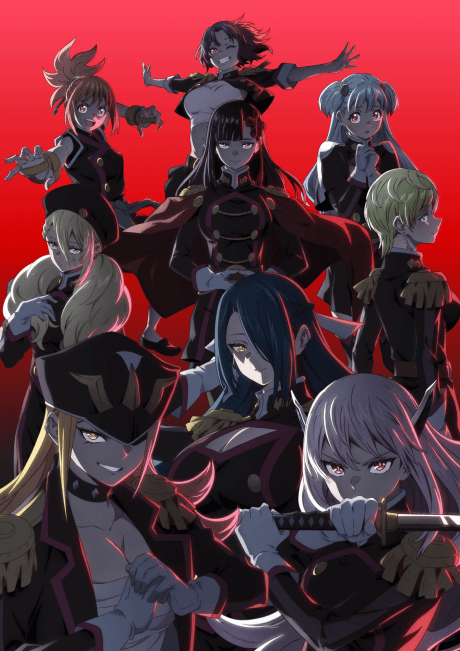
Chained Soldier exists in that peculiar space where ambition meets obligation. On one hand, there's a genuinely interesting fantasy world here—the Mato dimension with its mysterious peach trees that grant powers, the bureaucratic military structure of the Anti-Demon Corps, the political machinations hinted at throughout the series. On the other hand, there's the undeniable reality that this is, at its core, a harem series with all the accompanying baggage. The character dynamics follow a predictable pattern: Yuuki's power requires him to be subservient to various female characters, each representing a different archetype—the stoic leader (Kyouka), the energetic tomboy (Shushu), the mysterious newcomer (Himari), and so on. What's fascinating about Season 2 isn't that it breaks from this formula, but rather how it attempts to work within its constraints while occasionally straining against them. The series wants to be Attack on Titan with its military hierarchy and existential threats, but keeps getting pulled back toward High School DxD territory by its own premise. This creates a tonal whiplash that's never fully resolved—one moment we're dealing with genuine character development for Nei Ookawamura, the next we're treated to another transformation sequence that feels like it was focus-grouped for maximum fan service appeal.
Studio Passione's Visual Language: Beauty in Chains
Visually, Chained Soldier Season 2 represents both Studio Passione's strengths and the limitations of its production circumstances. The action sequences, particularly those involving Yuuki's various transformations, display a fluidity and creativity that suggests a team with genuine passion for the material. There's a kinetic energy to the combat that recalls the best moments of Jujutsu Kaisen or Demon Slayer, albeit on a more modest budget. Director Masafumi Tamura, pulling triple duty as director, episode director, and animation director on various episodes, demonstrates a clear understanding of how to stage dynamic sequences that serve both character and plot. Yet the production can't escape its own genre trappings—the camera lingers on certain angles with such frequency that it becomes distracting, pulling viewers out of the narrative just as they're becoming invested. It's as if the show is constantly reminding us, "Yes, we know what you're here for," even when the material suggests it could be so much more. The character designs by Takahiro Kishida (carried over from the first season) remain distinctive, with each member of the growing cast having a visual identity that reflects their personality and abilities, but they're often framed in ways that prioritize titillation over character expression.
The Harem as Bureaucracy: Power Dynamics in a Post-#MeToo World
What makes Chained Soldier particularly interesting from a cultural analysis perspective is how it navigates power dynamics in an era increasingly sensitive to such issues. Yuuki's literal subservience—his transformation into a "slave" who must obey his female masters—could be read as either progressive fantasy or regressive fetish material, depending on your perspective. Season 2 complicates this further by introducing more nuanced relationships between the female characters themselves, particularly the evolving dynamic between Kyouka and Himari Azuma. There are moments where the series seems to be commenting on the very power structures it employs—the way authority is distributed, the politics of who gets to control whom, the emotional toll of constant combat. Yet these moments are often undercut by the next fan service sequence, creating a cognitive dissonance that's emblematic of modern shonen's struggle to evolve. In an era where series like Chainsaw Man have redefined what shonen can be, Chained Soldier feels caught between wanting to join that conversation and being obligated to service its established fanbase. The result is a series that occasionally gestures toward deeper themes about consent, agency, and partnership, but never fully commits to exploring them.
Sound as Character: Yokota's Audio Landscape and Kitou's Opening Theme
Sound director Chikako Yokota creates an audio environment that often feels more ambitious than the visuals deserve. The sound design during transformation sequences—the metallic clinks of chains, the otherworldly echoes of power activation, the subtle environmental details of the Mato dimension—creates a sense of place that the animation sometimes struggles to convey. Akari Kitou's opening theme "Hikari yo, Boku ni." ("Light, Come to Me") deserves particular attention—its soaring vocals and hopeful lyrics suggest a series more concerned with emotional resonance than the actual content often delivers. There's a disconnect here between what the music promises and what the show provides, creating an interesting meta-commentary on anime production itself. Kana Hanazawa's ending theme "Cipher Cipher" similarly hints at deeper emotional layers that the series only occasionally accesses. The score, when allowed to breathe during quieter character moments, suggests the show Chained Soldier could be if it trusted its audience enough to move beyond genre expectations. It's in these audio details that we see the potential for a more nuanced series struggling to emerge.
Character as Archetype: When Favorites Tell the Whole Story
The MAL favorite counts provided in the data tell their own story about Chained Soldier's priorities and audience engagement. Kyouka Uzen's 619 favorites dwarf the other main characters', suggesting that her particular brand of stoic authority mixed with occasional vulnerability resonates most strongly with viewers. Fubuki Azuma's 129 favorites as a supporting character indicate that even secondary figures can make an impact when given distinctive personalities and motivations. Meanwhile, Nei Ookawamura's mere 29 favorites speak volumes about how certain archetypes (in her case, the quiet, mysterious type) fail to connect when not given sufficient development. Season 2 attempts to address some of these imbalances—Himari Azuma gets more screen time that explores her complicated relationship with her sister Fubuki, Shushu Suruga's energetic personality is given more emotional depth—but the fundamental hierarchy remains. The characters serve their narrative functions efficiently, but rarely transcend them to become truly memorable individuals. They're pieces in a harem puzzle that the series seems both committed to maintaining and occasionally frustrated by.
The Adaptation Dilemma: Manga Faithfulness vs. Anime Originality
As an adaptation of Takahiro's ongoing manga, Chained Soldier Season 2 faces the classic dilemma of all middle-chapter adaptations: how to serve existing fans while remaining accessible to newcomers, and how to translate static images into dynamic animation without losing the source material's essence. The series generally errs on the side of faithfulness, which creates both its strengths and weaknesses. The detailed world-building of the manga translates well to the screen, giving the Mato dimension a tangible sense of history and rules. However, the manga's more gratuitous elements become amplified in animation, where motion and camera angles can emphasize fan service in ways static panels cannot. Episode directors Hiroshi Ayuma, Takahide Ejiri, and Masaru Kawashima each bring slightly different sensibilities to their respective episodes, creating a patchwork quality that sometimes works in the series' favor (variety in pacing and tone) and sometimes against it (inconsistent character focus). The result is an adaptation that feels both respectful of its source material and occasionally trapped by it, unable to make the bold choices that might elevate it beyond competent adaptation to essential viewing.
The Bottom Line: Competent, Conflicted, and Ultimately Constrained
Chained Soldier Season 2 is, in many ways, a perfect case study in modern anime production—talented creators working within genre constraints, occasional flashes of brilliance struggling against commercial expectations, and a central premise that both enables and limits narrative possibilities. With a MAL score of 7.49/10 and ranking around #2123, it occupies that middle ground of anime that's perfectly watchable but unlikely to be anyone's favorite. The 7.2/10 score for this season specifically suggests consistency rather than evolution. For fans of the first season or the manga, there's plenty to enjoy here—the action remains solid, the world continues to expand, and the character dynamics develop in satisfying if predictable ways. For those hoping the series might break free from its harem shackles and embrace its more ambitious fantasy elements, however, disappointment awaits. Director Masafumi Tamura and Studio Passione have created a season that knows exactly what it is and delivers that competently, but one can't help but wonder what they might create if unchained from genre expectations. In the end, Chained Soldier Season 2 is less a slave to its female characters than to the very tropes that define it, creating a series that's good at what it does but never quite manages to be more than the sum of its parts.
Final Score: 7/10 – A competent continuation that satisfies existing fans but won't convert skeptics.