Bleach's hollow heart: How style became substance in shonen's most fashionable ghost story
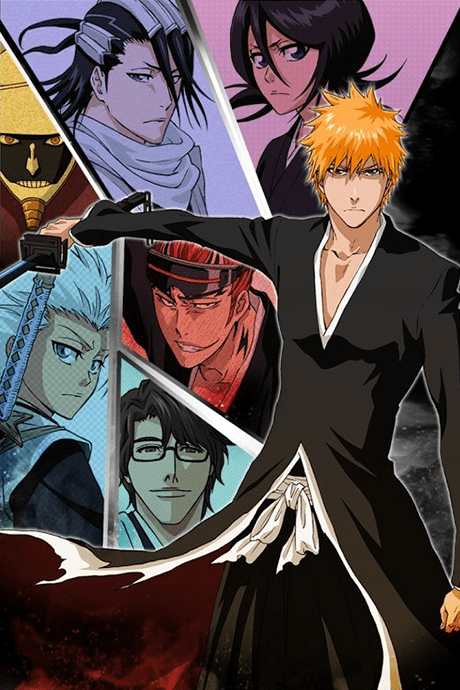
There's a moment early in Bleach when Ichigo Kurosaki, our orange-haired, perpetually scowling protagonist, first dons his shinigami robes and wields his oversized zanpakutō. The transformation isn't just about gaining supernatural powers—it's a fashion statement. The black kimono with its white hakama, the way the fabric billows dramatically in non-existent wind, the sheer impracticality of fighting in what amounts to ceremonial garb: this is where Bleach reveals its true soul. While contemporaries like Naruto were building elaborate political systems and One Piece was constructing entire worlds, Tite Kubo's creation was busy perfecting the art of looking cool while fighting ghosts. For 366 episodes across 15 years, Bleach became less a story about spiritual warriors and more a masterclass in aesthetic maximalism, where character designs were as important as character development and every sword had not just a name, but an entire personality. The result is a series that feels simultaneously essential and empty, a ghost story that sometimes forgets to have ghosts.
When the Spanish guitar starts strumming, you know someone's about to look fabulous
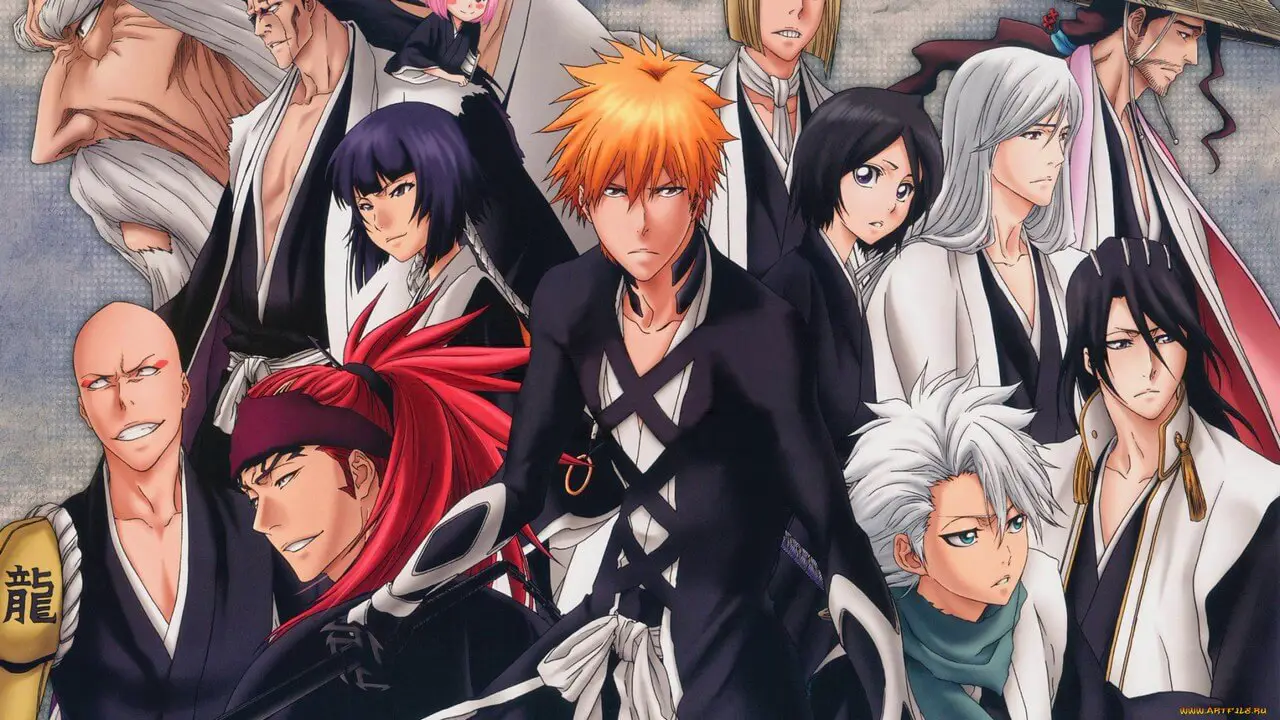
Let's address the elephant in the soul society: Bleach is, at its core, a fashion show with occasional sword fights. From the moment Orange Range's "*Asterisk" kicks in during the opening credits, the series establishes its priorities. Director Noriyuki Abe and his team at Studio Pierrot understood something fundamental about Kubo's manga: the drip matters. Each character isn't just defined by their abilities or backstory, but by their visual presentation. Rukia's school uniform with its oversized sleeves, Renji's tribal tattoos and fur stole, Uryū Ishida's Quincy cross and glasses—these aren't just character designs, they're personality manifestos. The series' obsession with aesthetics reaches its zenith in the Soul Society arc, where every captain of the Gotei 13 gets not just a unique power, but an entire visual theme. Captain Byakuya Kuchiki's cherry blossom motif isn't just pretty—it's a narrative device that tells us everything about his cold, beautiful, and ultimately fragile nature before he even speaks. This commitment to style over substance (or perhaps style as substance) explains why Bleach has endured in the cultural imagination long after its narrative shortcomings became apparent. As one AniList reviewer noted, "When the Spanish guitar starts strumming, I start sweating"—not from tension, but from anticipation of the next visually stunning transformation.
The hollow promise of filler: How Bleach became its own worst enemy
Here's where we need to talk about the 366-episode elephant in the room. Bleach's runtime is both its greatest strength and most glaring weakness. Adapting only 54 volumes of manga across those episodes meant Studio Pierrot had to get creative—or, more accurately, had to pad. The four anime-original arcs inserted between manga adaptations aren't just distractions; they're symptoms of a fundamental tension between Kubo's deliberate pacing and television's relentless hunger for content. The Bount arc, the New Captain Shūsuke Amagai arc, the Zanpakutō Unknown Tales arc, the Gotei 13 Invading Army arc—these aren't just filler, they're alternate universe versions of Bleach where the rules change and characters behave slightly off-key. For some viewers, like AniList user OneGles who skipped most filler, this creates a cleaner, more focused experience. For others, it fractures the narrative into something resembling a patchwork quilt of varying quality. The irony is that these filler arcs often contain some of the series' most interesting ideas—exploring the nature of zanpakutō spirits, introducing new factions—but they're hamstrung by their non-canon status. It's as if Bleach kept having interesting dreams it wasn't allowed to remember upon waking.
Ichigo Kurosaki and the burden of being special
At the center of this stylish maelstrom stands Ichigo Kurosaki, a character whose popularity (36,380 favorites on MyAnimeList) suggests he tapped into something deeper than just cool hair. Ichigo represents a fascinating evolution of the shonen protagonist archetype. Unlike Naruto's desperate need for recognition or Luffy's single-minded pursuit of freedom, Ichigo's motivation is fundamentally reactive. He doesn't want to be a shinigami; he becomes one because circumstances force his hand. He doesn't seek power for its own sake; he acquires it to protect people. This creates a protagonist who's perpetually grumpy about his own heroism—a refreshing change from the endlessly optimistic shonen leads of the era. Yet this very quality becomes Bleach's narrative Achilles' heel. Ichigo's journey isn't one of growth so much as revelation. He's already special from the beginning (able to see ghosts, descended from multiple powerful lineages), and much of the series involves him discovering just how special he is. This creates what critic ChillLaChill identified as "style over substance"—the spectacle of Ichigo unlocking new forms (Bankai, Hollow mask, Fullbring) becomes the point, rather than what those transformations mean for his character. He's less a person changing than a video game character leveling up, complete with new costumes and attack animations.

The supporting cast that deserved better: Rukia, Orihime, and the art of being sidelined
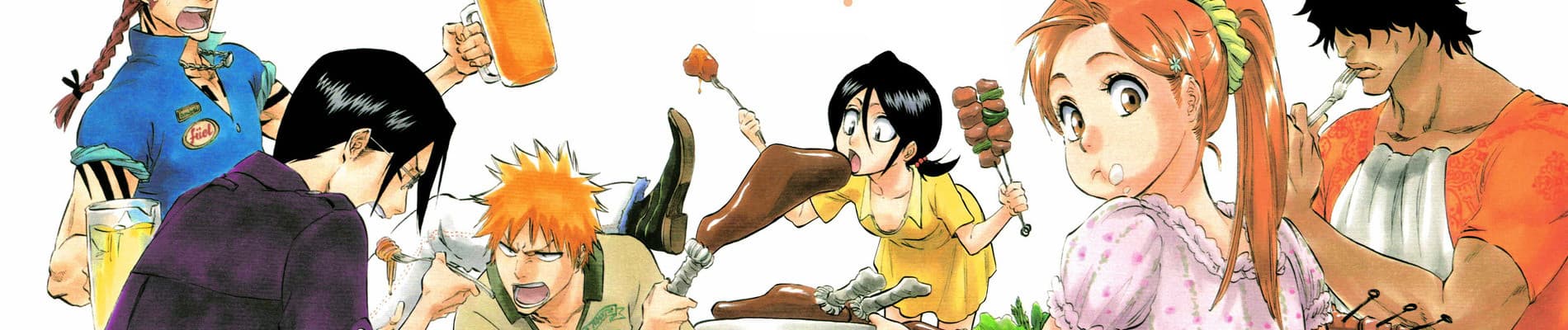
If Ichigo is the sun around which Bleach orbits, then the supporting characters are planets with fascinating geology that we never get to properly explore. Rukia Kuchiki (9,985 favorites) begins the series as the catalyst—the wounded shinigami who transfers her powers to Ichigo—but gradually recedes into the background, becoming less a co-protagonist and more a damsel in distress during the Soul Society arc. Orihime Inoue (3,445 favorites) possesses one of the series' most interesting abilities (rejection of phenomena through her Shun Shun Rikka) but is often reduced to healing and worrying about Ichigo. Uryū Ishida (1,850 favorites) represents the Quincy, an entire race of spirit weapon users with a fascinating history and complex relationship with shinigami, yet his arc frequently gets interrupted or sidelined. Yasutora "Chad" Sado (1,011 favorites) has perhaps the rawest deal—a character with immense physical power and a gentle soul who becomes increasingly irrelevant as the power scaling escalates. This isn't to say these characters aren't compelling; it's that Bleach consistently introduces fascinating ideas about them (Rukia's guilt over Kaien Shiba's death, Orihime's trauma from her brother's transformation, Uryū's Quincy pride) only to return to Ichigo's latest power-up. The series becomes a victim of its own shonen DNA, where escalating threats require escalating power from the protagonist, leaving everyone else to cheer from the sidelines.
Bleach's cultural afterlife: Why it still matters in the age of Jujutsu Kaisen
Watching Bleach in 2024, with its sequel Bleach: Thousand-Year Blood War completing the story, feels like witnessing a ghost return to claim its throne. The series that once defined a generation of shonen anime now exists in conversation with its successors. When MyAnimeList users say they also liked Jujutsu Kaisen (41 votes), they're recognizing a spiritual successor—another series about teenagers fighting curses with stylish techniques and elaborate power systems. But the comparison reveals what made Bleach both revolutionary and limited. Jujutsu Kaisen streamlines what Bleach made convoluted, focusing on tighter storytelling and more consistent power scaling while maintaining the aesthetic flair. Yu Yu Hakusho (41 votes), another comparison, shows what Bleach might have been with better pacing and more focused character work. Yet Bleach's influence is undeniable. Its emphasis on character design as character, its integration of music and atmosphere (Rie Fu's "Life is Like a Boat" remains one of anime's great ending themes), its willingness to blend Japanese spiritualism with punk aesthetics—these elements have become part of the shonen DNA. The series may not have aged as gracefully as some of its Big Three contemporaries, but it aged distinctively. As user MooNStick called it, "the forgotten but Hype Infected third child of Shonen"—a description that captures both its cultural displacement and enduring appeal.

The final verdict: Style points count, but substance matters more
Bleach occupies a strange space in anime history—too influential to ignore, too flawed to unequivocally praise. Its 7.99/10 MyAnimeList score feels about right: solidly above average but not quite elite. The series' greatest achievement is its aesthetic coherence, the way every element from character design to soundtrack to fight choreography serves a unified vision of cool. Its greatest failure is its inability to maintain narrative momentum across its sprawling runtime, sacrificing character development for spectacle and padding its story with filler that often feels like fan fiction. Yet there's something undeniably compelling about returning to Karakura Town, about watching Ichigo swing Zangetsu while Orange Range plays in the background, about the sheer audacity of a series that made fashion as important as fighting. Bleach may not be the best shonen anime ever made, but it might be the most stylish—and in a genre where presentation often matters as much as plot, that's not nothing. It's a ghost story that sometimes forgets its ghosts, but remembers to make every exorcism look absolutely fabulous.
Final Score: 7.5/10 – Flawed but essential viewing for anyone who wants to understand modern shonen's obsession with style. Watch it for the aesthetic, forgive it for the filler, and appreciate it for proving that sometimes, looking cool really is a superpower.