Attack on Titan's Final Season trades spectacle for the uncomfortable truth that heroes become monsters
There's a moment in Attack on Titan: The Final Season that feels like the entire series exhaling after holding its breath for nearly a decade. It's not one of the spectacular Titan battles that defined the show's early seasons, nor is it the shocking revelation that upended everything we thought we knew about Paradis and Marley. Instead, it's a quiet scene where Armin Arlert, once the timid strategist who needed Eren Yeager to protect him, stares at the ocean that once represented freedom and sees only the blood that will inevitably stain it. This is the season where Attack on Titan stops being about fighting monsters and starts being about becoming them—a transition so unsettling that it makes the show's earlier, more straightforward conflicts feel almost quaint by comparison. Under director Yuuichirou Hayashi's steady hand, MAPPA's adaptation of Hajime Isayama's manga doesn't just conclude a story; it interrogates the very nature of heroism in a world where survival demands moral compromise.
From shonen spectacle to grimdark political thriller: How Attack on Titan grew up
When Attack on Titan first exploded onto screens in 2013, it was easy to mistake it for another shonen action series with particularly gruesome monsters. The Titans were terrifying, yes, but they were also conveniently external—a clear enemy that could be fought without moral ambiguity. The Final Season systematically dismantles that simplicity, revealing that the real horror wasn't the Titans but the human systems that created and weaponized them. This isn't just a tonal shift; it's a complete genre transformation. The series evolves from survival horror into something closer to Legend of the Galactic Heroes or Vinland Saga—stories where political maneuvering and ethical dilemmas carry more weight than any physical battle. The community has been divided on this evolution, with some praising the increased complexity while others miss the straightforward action of earlier seasons. User Inferno792's description of the series as a "modern masterpiece" feels particularly apt here, but what makes it masterful isn't consistency of tone but rather its willingness to evolve beyond what made it initially successful. The show that began with teenagers fighting giant monsters ends with those same teenagers grappling with genocide, colonialism, and whether any cause justifies becoming the very monsters they swore to destroy.

Eren Yeager's descent: When the protagonist becomes the problem
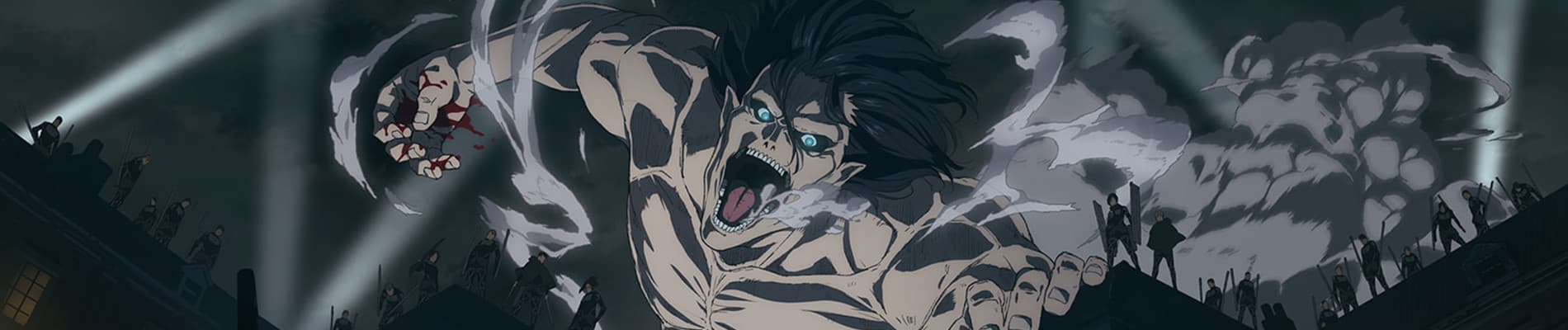
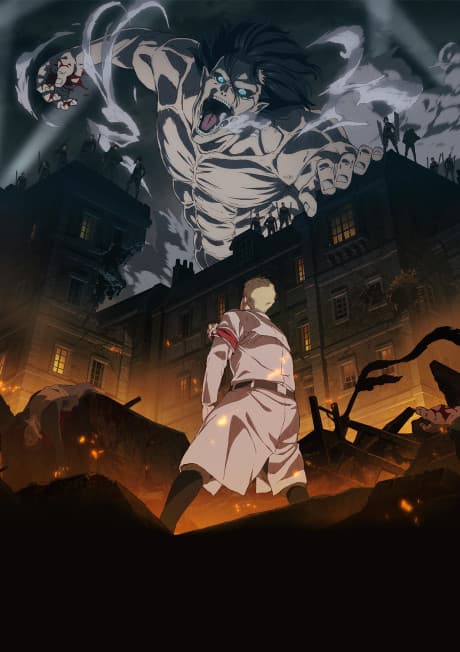
Eren's absence in the season's early episodes isn't just a narrative device; it's a statement of purpose. The Final Season forces us to view Eren through the eyes of others—through Mikasa's conflicted loyalty, Armin's growing horror, and the Marleyan soldiers who see him not as a hero but as a terrorist. By the time he reappears, he's no longer the hot-headed but fundamentally righteous protagonist we followed for three seasons. He's something colder, more calculating, and infinitely more dangerous. The community has been wrestling with this transformation since the manga chapters first dropped, with debates raging about whether Eren is justified, tragic, or simply monstrous. User eshan327's claim that this is "the best season of Attack on Titan" hinges largely on this character work—the way the show forces us to confront that the boy who screamed about freedom has become the architect of a plan that would deny it to millions. This isn't a simple villain turn; it's a meticulously charted descent into moral darkness that asks uncomfortable questions about what happens when someone's convictions harden into dogma. Eren's journey mirrors real-world radicalization patterns with unsettling accuracy, making his final scenes not just dramatic but genuinely disturbing in their implications.
MAPPA's visual language: Trading WIT Studio's fluidity for psychological weight
The transition from WIT Studio to MAPPA for the final season was met with understandable anxiety from fans accustomed to the former's distinctive animation style. What MAPPA delivers isn't a replication but a reinvention—one that perfectly suits the season's darker, more psychological tone. Where WIT excelled at fluid, dynamic action sequences, MAPPA focuses on stillness and composition, using shadow and framing to emphasize the characters' internal turmoil. Director Yuuichirou Hayashi and his team of episode directors—including Kouki Aoshima, Yi Cao, and Yasuhiro Geshi—create a visual language that feels heavier, more deliberate, like the show itself is carrying the weight of everything that came before. The Titan battles are still impressive, but they're no longer the main attraction. Instead, the most memorable visual moments are the quiet ones: the way light filters through a window as characters debate genocide, or the careful composition of a shot that makes a conversation feel like a confrontation. This isn't to say the action suffers—the War Hammer Titan battle remains one of the series' most inventive sequences—but rather that the priorities have shifted. The animation serves the story's evolution from physical to psychological conflict, a choice that some fans (like megatheminion, who praised MAPPA's bravery) recognized as essential to adapting this particular arc.
The soundtrack of moral collapse: How music underscores the end of innocence
Sound director Masafumi Mima's work in The Final Season represents a subtle but significant departure from previous seasons' more bombastic scores. The opening theme, "Boku no Sensou" by Shinsei Kamattechan, sets the tone immediately—it's discordant, unsettling, and lacks the anthemic quality of earlier openings like "Guren no Yumiya." This isn't music for heroes; it's music for people who have realized heroism might be a lie. Throughout the season, the soundtrack emphasizes dissonance and unease, using atonal elements and irregular rhythms to mirror the characters' fractured moral compasses. The ending theme, Yuuko Andou's "Shougeki," provides a haunting counterpoint—a melancholic reflection on the impact of violence that plays over credits showing the human cost of each episode's events. This musical approach reinforces the season's central theme: that victory, if it comes, will be pyrrhic at best. The community has noted how the music contributes to the season's oppressive atmosphere, with many praising how it enhances rather than distracts from the narrative's growing darkness. In a series where sound design has always been crucial—from the iconic Titan roar to the ODM gear's distinctive whir—The Final Season uses audio to signal that we've moved beyond simple good versus evil into murkier, more complicated territory.

The supporting cast's moral reckoning: When bystanders become accomplices
While Eren's transformation dominates the narrative, The Final Season's true brilliance lies in how it handles characters like Mikasa, Armin, and the surviving members of the Scout Regiment. These aren't just sidekicks reacting to the protagonist's choices; they're fully realized characters forced to confront their own complicity in what's unfolding. Mikasa's struggle between her love for Eren and her growing horror at his actions provides the season's emotional core, while Armin's evolution from dreamer to reluctant pragmatist mirrors the show's larger themes about the cost of survival. Even supporting characters like Sasha Blouse—whose death early in the season serves as a brutal reminder that no one is safe—contribute to the sense that every choice has consequences that ripple outward. The community has particularly engaged with these character arcs, with debates about whether Mikasa should have stopped Eren sooner or whether Armin's attempts at diplomacy are naive or necessary. User KazahanaEdits noted that the season "got so much better as it went on," and much of that improvement comes from how these supporting characters' dilemmas deepen and complicate. They're not just reacting to events; they're making active choices that determine what kind of people they'll become in a world that seems determined to strip them of their humanity.
The legacy problem: How to end a cultural phenomenon without disappointing everyone
Attack on Titan wasn't just an anime; it was a cultural event that brought new audiences to the medium and redefined what mainstream success could look like for the industry. The Final Season carries the impossible weight of concluding not just a story but an era. Every narrative choice is scrutinized not just for how it serves the plot but for how it measures up to nearly a decade of audience investment and expectation. The season's willingness to embrace ambiguity—to refuse easy answers about who was right or what freedom really means—is both its greatest strength and its most controversial aspect. Some viewers, like NextUniverse in their review, celebrate this complexity, while others crave the catharsis of a clearer resolution. What makes The Final Season remarkable is how it navigates this tension, offering moments of spectacular payoff (the Rumbling's activation, the final confrontation) while maintaining the moral ambiguity that defines its later chapters. It's an ending that understands some questions don't have answers, only consequences—a mature perspective that sets it apart from most shonen conclusions. The series that began with a boy vowing to kill every last Titan ends with the realization that the monsters were never the point; the point was what fighting them turned us into.
Final thoughts: An imperfect masterpiece that redefined what anime could be
Attack on Titan: The Final Season isn't flawless—the pacing occasionally stumbles under the weight of its political exposition, and some character moments feel rushed in the adaptation from manga to screen. But these are minor quibbles in what represents one of the most ambitious and successfully executed final acts in recent anime history. With a score of 8.6/10 (and an even higher 8.78 on MyAnimeList), the consensus recognizes something special here: a series that evolved beyond its initial premise to tackle questions most entertainment avoids. It's a story about cycles of violence that understands those cycles don't end with a single victory but continue as long as people choose retribution over reconciliation. In an era where pop culture often offers simplistic moral frameworks, Attack on Titan's messy, complicated, and deeply uncomfortable finale feels like a necessary corrective. It's the rare conclusion that doesn't just satisfy narrative threads but leaves viewers genuinely grappling with what they've witnessed—a fitting end for a series that always asked more of its audience than mere passive consumption. The Titans may be gone, but the questions they raised will linger long after the credits roll.